The automotive industry is undergoing a profound transformation, and one of the most dynamic sub-segments powering this evolution is exterior LED lighting. Once considered a luxury feature, LED lighting has rapidly become a core component of modern vehicle design, merging functionality with aesthetics. From enhancing road safety to enabling futuristic design language, automotive exterior LED lighting plays a pivotal role in shaping the next generation of mobility.
The Rise of LED Lighting in Automobiles
Today’s vehicles are more than just mechanically efficient machines — they are reflections of technological innovation and design ethos. Exterior LED lighting systems contribute significantly to this progression. LEDs (Light Emitting Diodes) have distinct advantages over traditional halogen and xenon lamps, including higher luminous efficiency, lower power consumption, and longer operational lifespan. These characteristics align perfectly with the automotive industry’s drive toward energy efficiency and sustainability.
Manufacturers are increasingly equipping vehicles with advanced LED systems not only because they consume less energy but also because LEDs offer greater flexibility in design and performance. Unlike older lighting technologies, LEDs can be arranged in intricate patterns, enabling designers to create unique lighting signatures that enhance brand identity while meeting functional requirements like improved visibility and safety.
Technological Advancements Fuel Adoption
One of the primary reasons behind the rapid adoption of LED exterior lighting is the sheer pace of technological innovation within the field. Lighting systems have advanced far beyond simple illumination. Modern LED solutions include adaptive headlights that adjust beam patterns based on driving conditions, dynamic turn signals that improve communication with surrounding traffic, and matrix LED systems that optimize light distribution without blinding oncoming drivers.
These innovations are not limited to premium segments. Although luxury and high-end vehicles showcase the most sophisticated lighting suites, mid-range and mass-market models are also increasingly featuring LED headlamps, daytime running lights (DRLs), tail lamps, and fog lamps. The widespread adoption of LED technology across vehicle segments reflects a broader trend: consumers and regulators alike demand improvements in both safety and design.
Safety and Regulation: Key Market Drivers
Safety is a perennial concern in the automotive world, and exterior lighting significantly influences a driver’s ability to react to changing road conditions. LED lighting systems deliver sharper, brighter illumination, which enhances nighttime visibility and reduces the risk of accidents. Stricter safety regulations in major automotive markets — particularly in Europe and North America — have encouraged automakers to integrate advanced lighting technologies that not only comply with but exceed regulatory requirements.
Furthermore, LED lighting systems support the functionality of advanced driver-assistance systems (ADAS). When paired with sensor arrays and control systems, LED lights can contribute to features such as pedestrian detection cues, automated high-beam control, and interactive signaling for autonomous driving. These capabilities place exterior LED lighting at the intersection of safety and next-generation vehicle intelligence.
Market Segmentation and End-Use Trends
The automotive exterior LED lighting landscape can be segmented in multiple ways — by vehicle type, application, and sales channel. Passenger vehicles remain the dominant segment, with LEDs widely used for headlights, DRLs, and taillights that enhance both safety and consumer appeal. Commercial vehicles are also increasingly adopting LED lighting solutions for improved visibility and reduced maintenance needs, especially in fleet operations.
Original Equipment Manufacturers (OEMs) lead in integrating LED lighting into new vehicles during production. These integrations offer automakers a seamless way to enhance vehicle design and performance while aligning with regulatory trends. Meanwhile, the aftermarket segment is experiencing rapid growth as consumers seek to upgrade older vehicles with high-performance LED lighting kits. Custom LED solutions appeal to buyers who want enhanced aesthetics and better visibility without purchasing a new vehicle.
Voltage architecture also plays a role in technology adoption. Traditional 12-volt systems remain widespread, especially in passenger vehicles and light-duty models. However, higher voltage systems — often used in hybrid and electric vehicles — support advanced lighting features with more power headroom, enabling premium lighting functions like matrix beams and intelligent adaptive systems.
Regional Dynamics and Growth Hotspots
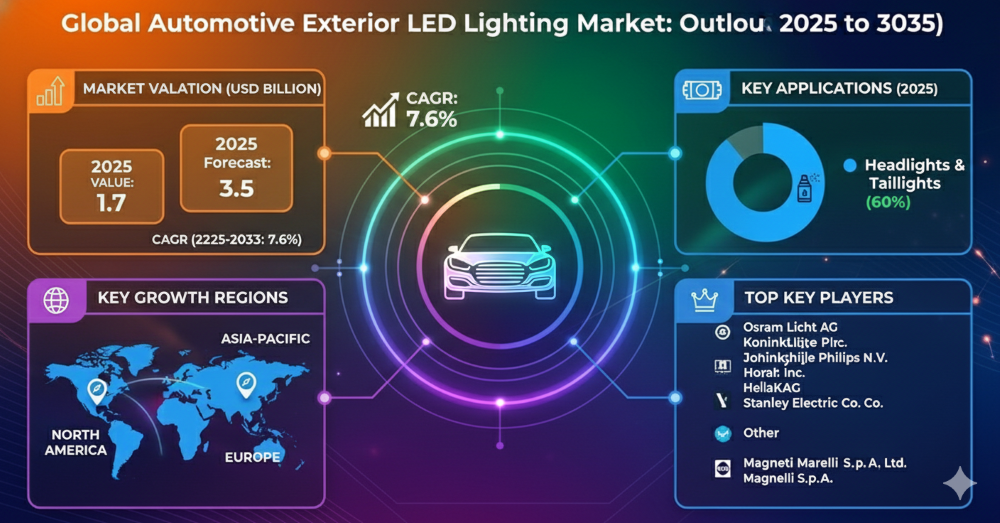
Geographically, the automotive exterior LED lighting market is truly global, but patterns of adoption vary. Asia-Pacific stands out as a major hub for manufacturing and consumption, driven by rapid vehicle production in countries such as China, Japan, and South Korea. These markets benefit from robust automotive supply chains and a strong emphasis on cost-effective yet high-tech components, making LED lighting a natural fit as environmental and efficiency priorities rise.
In North America and Europe, stringent safety norms and consumer preferences for premium features support widespread LED integration. Premium automakers in these regions frequently showcase innovations like animated DRLs and signature lighting firmware that elevate the driving experience. Emerging markets in Latin America and the Middle East & Africa, while still developing, are gradually increasing LED adoption as vehicle ownership rises and technology costs decline.
Challenges and Restraining Factors
Despite its many advantages, the exterior LED lighting market does face challenges. One ongoing issue is the higher upfront cost of LED systems compared to traditional lighting technologies. Although LED prices have decreased over time, advanced modules — especially adaptive and matrix systems — still require considerable investment. This can deter adoption in lower-cost vehicle segments.
Thermal management presents another engineering challenge. High-performance LEDs generate significant heat, requiring sophisticated cooling solutions to maintain performance and longevity. Integrating effective thermal management systems without adding excessive weight or cost remains a technical hurdle.
Moreover, inconsistent standards across international markets can slow uniform adoption. While regions like Europe push adaptive lighting forward, others lag in regulation, creating fragmented demand. Additionally, cheaper, low-quality LED products in some markets can erode consumer confidence and raise safety concerns.
Looking Ahead: A Bright Future
The trajectory of the automotive exterior LED lighting market points upward. As vehicles become smarter, safer, and more energy efficient, LED lighting will play an even more central role in automotive design and function. Automakers and lighting suppliers alike continue to invest in research and development to enhance LED performance, integrate lighting with connected vehicle systems, and push aesthetic boundaries.
From practical safety enhancements to distinctive visual signatures that reflect brand identity, exterior LED lighting is more than a feature — it’s a defining element of modern mobility. As consumer expectations evolve and technology advances, this market segment will remain a bright spot in the global automotive landscape.
Browse Full Report – https://www.factmr.com/report/150/automotive-exterior-led-lighting-market