Adaptive robotics is redefining how machines interact with dynamic environments. Unlike traditional robots that rely on pre-programmed instructions, adaptive robots use advanced technologies such as artificial intelligence, machine learning, and real-time sensing to adjust their actions based on changing conditions. As industries increasingly demand flexibility, efficiency, and precision, adaptive robotics is emerging as a critical enabler of next-generation automation. From manufacturing floors to healthcare facilities, these intelligent systems are reshaping operational capabilities and improving productivity.
Market Overview
The adaptive robotics market revolves around robotic systems capable of learning, evolving, and responding autonomously to environmental changes. These robots integrate technologies such as computer vision, force sensing, and data analytics to make informed decisions without constant human intervention.
Businesses are rapidly adopting adaptive robotics to address challenges such as labor shortages, rising operational costs, and the need for high customization. Unlike conventional automation systems, adaptive robots can handle complex and unpredictable tasks, making them ideal for industries where variability is high.
Additionally, advancements in collaborative robots (cobots) have made adaptive robotics more accessible to small and medium-sized enterprises. These robots can safely work alongside humans, enhancing productivity while maintaining workplace safety. As digital transformation accelerates globally, adaptive robotics is becoming a cornerstone of smart manufacturing and Industry 4.0 initiatives.
Regional Insights
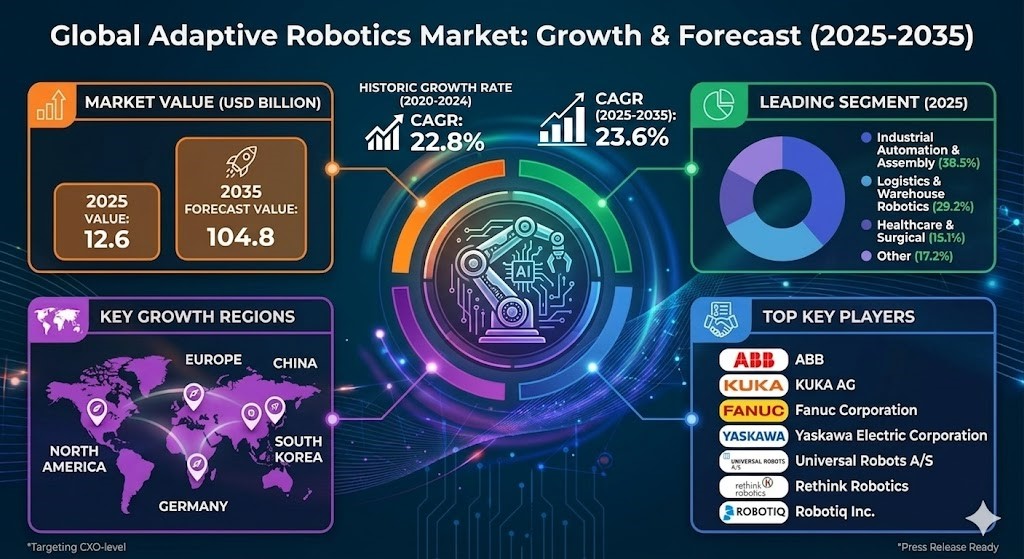
North America continues to be a leading hub for adaptive robotics innovation, driven by strong investments in research and development and the early adoption of automation technologies. The presence of major technology companies and robotics startups further strengthens the region’s position.
Europe is also witnessing substantial growth, supported by stringent workplace safety standards and a strong focus on advanced manufacturing. Countries such as Germany and France are at the forefront, integrating adaptive robotics into automotive and industrial sectors.
The Asia-Pacific region is rapidly emerging as a key growth engine for the market. Countries like China, Japan, and South Korea are heavily investing in robotics to enhance manufacturing efficiency and remain globally competitive. Rising industrialization and government initiatives promoting automation are accelerating adoption across the region.
Meanwhile, regions such as Latin America and the Middle East & Africa are gradually embracing adaptive robotics, primarily in sectors like logistics, oil & gas, and construction, where automation can significantly improve operational efficiency.
Key Trends & Forecast
The adaptive robotics market is evolving quickly, with several transformative trends shaping its future. One of the most prominent trends is the integration of artificial intelligence and machine learning, enabling robots to continuously learn from data and improve their performance over time. This capability allows businesses to optimize operations and reduce downtime.
Another key trend is the growing adoption of human-robot collaboration. Modern adaptive robots are designed to work safely alongside humans, enhancing productivity without replacing the workforce entirely. This collaborative approach is particularly beneficial in industries that require precision and human oversight.
The development of advanced sensor technologies is also playing a crucial role in market growth. High-resolution cameras, tactile sensors, and LiDAR systems enable robots to perceive their surroundings more accurately, leading to better decision-making and improved efficiency.
Cloud robotics and edge computing are further transforming the landscape by enabling real-time data processing and remote monitoring. These technologies allow organizations to scale their robotic operations while maintaining control and flexibility.
Looking ahead, the market is expected to witness sustained growth as industries continue to prioritize automation, efficiency, and adaptability. Continuous innovation in robotics software and hardware will further expand the capabilities of adaptive systems.
Applications & End-Use Outlook
Adaptive robotics is finding applications across a wide range of industries, each benefiting from its flexibility and intelligence.
In manufacturing, adaptive robots are used for tasks such as assembly, welding, inspection, and material handling. Their ability to adjust to different product designs makes them ideal for high-mix, low-volume production environments.
The healthcare sector is increasingly adopting adaptive robotics for surgical assistance, rehabilitation, and patient care. These robots enhance precision and reduce the risk of human error, improving overall patient outcomes.
In logistics and warehousing, adaptive robots are revolutionizing operations by automating picking, sorting, and transportation tasks. Their ability to navigate dynamic environments ensures faster and more efficient order fulfillment.
Retail and e-commerce companies are also leveraging adaptive robotics to streamline inventory management and enhance customer experience. From automated checkout systems to intelligent restocking solutions, these robots are transforming retail operations.
Additionally, sectors such as agriculture, construction, and aerospace are exploring adaptive robotics to improve productivity and address labor challenges. The versatility of these systems makes them suitable for a wide range of complex and evolving applications.
Conclusion
The adaptive robotics market is at the forefront of the automation revolution, offering intelligent solutions that go beyond traditional robotics. By enabling machines to learn, adapt, and collaborate with humans, adaptive robotics is unlocking new levels of efficiency and innovation across industries.
As businesses continue to embrace digital transformation, the demand for flexible and intelligent automation solutions will only grow. Adaptive robotics not only addresses current operational challenges but also prepares organizations for a future where agility and responsiveness are key to success.
Investing in adaptive robotics and understanding market trends can help organizations stay competitive and build resilient, future-ready operations.
Browse Full Report – https://www.factmr.com/report/adaptive-robotics-market