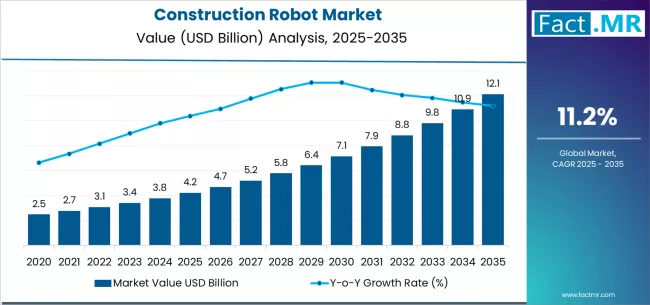
The global construction industry is undergoing a significant transformation as automation and robotics reshape traditional building practices. The Construction Robot Market is gaining momentum as contractors, developers, and infrastructure companies increasingly adopt robotic systems to enhance productivity, safety, and precision. With rising labor shortages, growing urbanization, and the need for faster project completion, construction robots are emerging as a game-changing solution across residential, commercial, and industrial projects.
Robotic technologies are no longer limited to manufacturing floors—they are now active participants on construction sites, handling tasks ranging from bricklaying and concrete dispensing to demolition and material handling. As digital construction integrates with AI, IoT, and Building Information Modeling (BIM), robots are becoming central to modern construction strategies.
Market Overview
Construction robots are automated or semi-automated machines designed to perform repetitive, dangerous, or precision-based tasks on job sites. These systems are equipped with sensors, AI-driven controls, and advanced mobility mechanisms to operate efficiently in complex environments.
The market is segmented by robot type, automation level, function, and end-use sector. Fully autonomous robots are gaining attention, though semi-autonomous and remotely operated machines remain widely adopted due to their flexibility and lower integration complexity.
Key robot categories include:
- Demolition robots
- Bricklaying robots
- Concrete and plastering robots
- 3D printing robots
- Material handling robots
- Inspection and surveillance robots
Among these, bricklaying and 3D printing robots are experiencing notable traction as the industry shifts toward modular and prefabricated construction techniques.
Key Market Drivers
- Labor Shortages in Construction
One of the strongest growth drivers for construction robots is the global shortage of skilled labor. Many regions are facing aging workforces and reduced interest in manual construction jobs. Robotics helps bridge this gap by improving productivity while reducing dependency on manual labor.
- Rising Demand for Workplace Safety
Construction sites are inherently hazardous. Robots reduce human exposure to dangerous tasks such as demolition, working at heights, heavy lifting, and handling toxic materials. By minimizing workplace accidents, companies can lower insurance costs and comply with stringent safety regulations.
- Growing Adoption of Automation and Digital Construction
The integration of robotics with BIM, drones, AI, and IoT systems enhances project planning and execution. Construction robots can follow digital blueprints with high precision, reducing material wastage and improving quality control.
- Infrastructure Development and Urbanization
Rapid urban expansion and government-led infrastructure projects across developing and developed economies are boosting the demand for efficient construction solutions. Robots enable faster project timelines, making them valuable for large-scale infrastructure initiatives.
Regional Insights
North America
North America holds a significant share of the construction robot market, driven by high technology adoption, advanced infrastructure projects, and increasing labor costs. The region’s focus on smart cities and sustainable construction further supports robotics integration.
Europe
Europe is witnessing strong adoption due to strict safety regulations and sustainability goals. Countries are emphasizing automation to improve efficiency and reduce carbon footprints in construction operations. Investments in research and robotics innovation are also strengthening the regional market landscape.
Asia-Pacific
Asia-Pacific is emerging as a dynamic growth region, supported by rapid urbanization, expanding real estate sectors, and government infrastructure programs. Countries with large-scale construction activities are increasingly adopting robotics to manage high project volumes and tight timelines.
Middle East & Africa
Mega infrastructure projects and smart city developments are driving interest in advanced construction technologies in the Middle East. Robotics adoption is gradually increasing as companies seek to enhance productivity and precision.
Key Trends Shaping the Market
Expansion of 3D Construction Printing
Robotic 3D printing systems are transforming how structures are built. These robots can construct walls and entire building sections using concrete-based materials with minimal human intervention. The technology reduces waste, shortens construction cycles, and enables innovative architectural designs.
Integration with Artificial Intelligence
AI-powered construction robots can analyze job site data, detect errors, and adapt to environmental conditions. Machine learning capabilities allow robots to improve accuracy over time, making them more reliable and efficient.
Rise of Modular and Prefabricated Construction
Robotics is playing a critical role in off-site construction facilities. Automated systems assemble prefabricated components with high precision, ensuring consistent quality while reducing on-site complexity.
Collaborative Robots (Cobots)
Collaborative robots designed to work alongside human workers are gaining traction. These robots enhance productivity without completely replacing human labor, promoting a balanced automation approach.
Applications & End-Use Outlook
Construction robots are being deployed across multiple segments of the industry:
- Residential Construction: Bricklaying robots, plastering systems, and 3D printers improve housing project efficiency.
- Commercial Projects: Robots assist in large-scale office buildings, malls, and hospitality projects by accelerating repetitive tasks.
- Industrial Construction: Automated systems handle heavy material movement, steel assembly, and hazardous tasks.
- Infrastructure Development: Robots support bridge construction, tunnel inspection, and road maintenance operations.
End users include construction contractors, real estate developers, government infrastructure agencies, and engineering firms. Large enterprises are currently leading adoption due to higher investment capacity, though small and medium-sized contractors are gradually integrating robotic systems as technology becomes more accessible.
Challenges in the Market
Despite strong growth potential, certain challenges remain:
- High initial investment and integration costs
- Limited awareness among small contractors
- Technical complexity and need for skilled operators
- Regulatory uncertainties in some regions
However, ongoing technological advancements and declining equipment costs are expected to gradually address these barriers.
Competitive Landscape
The construction robot market is characterized by continuous innovation and strategic collaborations. Companies are focusing on product development, partnerships with construction firms, and expanding geographic presence to strengthen their market position. Research and development activities are centered on improving mobility, autonomy, and multi-tasking capabilities of robotic systems.
Startups are also entering the market with specialized solutions such as robotic masonry systems and automated rebar tying machines, intensifying competition and accelerating innovation.
Future Outlook
The future of the construction robot market looks promising as automation becomes a strategic priority for the construction sector. The shift toward digital transformation, sustainable building practices, and cost-efficient project execution will continue to drive robotic adoption.
As robotics technology becomes more intelligent, flexible, and affordable, it is expected to move from being a niche innovation to a mainstream construction tool. Companies that embrace automation early will gain competitive advantages through improved efficiency, safety, and project quality.
Conclusion
The construction robot market represents a pivotal shift in how buildings and infrastructure are designed and developed. By enhancing safety, precision, and operational efficiency, robotic systems are redefining construction processes worldwide.
With growing labor challenges, rising safety standards, and increasing demand for faster project delivery, construction robotics is poised to play a central role in the industry’s future. For businesses aiming to stay competitive in an evolving landscape, investing in construction robotics and understanding market dynamics is becoming increasingly essential.
Browse Full Report – https://www.factmr.com/report/construction-robot-market