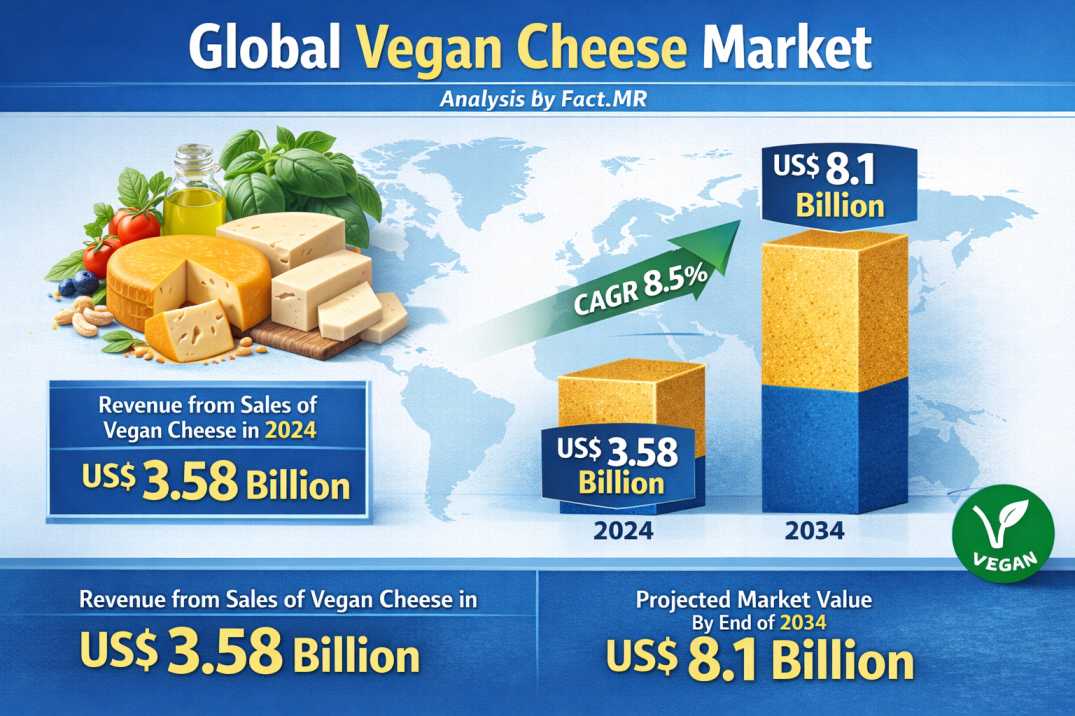
The global Vegan Cheese Market is projected to sustain strong expansion over the next decade as consumer demand for plant-based foods, health-oriented alternatives, and sustainable eating options continues to rise. Industry analysts estimate that the market, valued at approximately USD 3.1 billion in 2025, will surpass USD 7.2 billion by 2035, registering a compound annual growth rate (CAGR) of about 9.0% during the forecast period.
Vegan cheese — derived from plant-based ingredients such as nuts, seeds, soy, coconut, and oats — is designed to mimic the taste, texture, and functionality of traditional dairy cheese without animal-derived components. Its rapid adoption in households, foodservice, and retail is driven by shifting dietary preferences, lactose intolerance awareness, environmental concerns, and broader interest in ethical consumption.
Get Access of Report Sample: https://www.factmr.com/connectus/sample?flag=S&rep_id=10217
Market Context: Plant-Based Eating and Functional Alternatives
Growing awareness of the health impacts associated with excessive dairy consumption, rising rates of lactose intolerance, and increased recognition of environmental impacts from animal agriculture have propelled consumers toward plant-based eating. Vegan cheese, once a niche product, now features prominently in mainstream retail aisles, menus, meal delivery kits, and home kitchens.
Food formulators are innovating with diverse ingredient bases and advanced processing techniques to deliver vegan cheeses with improved meltability, flavor complexity, stretch, and nutritional profiles. These innovations support broad applications ranging from pizza and sandwiches to gourmet cheese boards and culinary sauces.
Key Growth Drivers
Strong Consumer Health and Wellness Trends
Shoppers are increasingly prioritizing foods perceived as healthier and free from hormones, antibiotics, and cholesterol. Vegan cheese aligns with these preferences by offering dairy-free alternatives that appeal to health-conscious, flexitarian, and plant-focused diets.
Dietary Restrictions and Allergen Considerations
Lactose intolerance and dairy allergies are major motivators for consumers selecting plant-based cheese alternatives. Vegan cheese serves as a functional substitute that allows broader consumer groups to enjoy cheese-like foods without digestive discomfort or allergen concerns.
Sustainability and Ethical Consumption
Environmental and ethical considerations are central to the plant-based movement. Reducing reliance on animal products — including dairy — aligns with sustainability goals related to greenhouse gas emissions, land use, and water consumption, reinforcing vegan cheese demand among eco-minded buyers.
Culinary Innovation and Mainstream Adoption
Restaurants, foodservice operators, and ready-to-eat brands are repeatedly incorporating vegan cheese into menus and products to meet consumer expectations for plant-based options. High-quality plant-based cheeses that perform well in cooking and baking are expanding applications beyond cold servings into heated dishes and gourmet food offerings.
Market Segmentation
By Ingredient Base:
- Nut-Based Cheese — Almond, cashew, macadamia, and other nut derivatives known for rich texture and flavor.
- Soy-Based Cheese — One of the earliest plant-based cheese formats with broad applications.
- Coconut-Based Cheese — Provides creaminess and high-fat mouthfeel.
- Oat-Based and Grain-Derived Cheese — Emerging segment with allergen-friendly appeal.
- Other Plant Bases — Pea protein, tapioca, and blended botanical formulations tailored to taste and texture.
By Product Type:
- Sliced Cheese — Convenient format for sandwiches and cold applications.
- Shredded Cheese — Popular for pizza, pastas, and toppings.
- Block and Wheel Cheese — Traditional format for slicing, grating, and direct consumption.
- Spreadable and Cream Cheese — Used in dips, bagels, and culinary sauces.
- Specialty and Artisanal Vegan Cheese — Gourmet products with premium positioning.
By Distribution Channel:
- Retail Grocery and Supermarkets — Mainstream access for everyday shoppers.
- Specialty Health and Natural Food Stores — Focused plant-based ingredient offerings.
- E-Commerce and Direct-to-Consumer — Rapidly expanding segment supporting subscriptions and niche products.
- Foodservice and HoReCa (Hotels, Restaurants, Cafes) — Institutional use for menu integration.
Regional Insights
North America holds a significant share of the global vegan cheese market, supported by high consumer awareness of plant-based diets, strong retail penetration, and robust innovation across food brands. The United States and Canada are major contributors, with supermarkets and foodservice channels offering an expanding array of vegan cheese options.
Europe exhibits steady growth, driven by health and sustainability trends in Western Europe and increasing plant-based adoption across urban centers. Countries such as the United Kingdom, Germany, and the Netherlands are notable for strong consumer acceptance and product innovation.
Asia-Pacific is one of the fastest-growing regions, bolstered by rising incomes, expanding retail networks, and growing interest in Western dietary trends. Urban populations in China, Japan, South Korea, and Southeast Asia are embracing plant-based alternatives, including vegan cheeses.
Emerging consumer markets in Latin America and the Middle East & Africa are also contributing to growth as plant-based awareness and product availability rise through retail and e-commerce channels.
Competitive Landscape and Key Players
The vegan cheese market is moderately competitive and features global food manufacturers, plant-based specialists, and artisanal producers focused on texture innovation, flavor improvement, and distribution expansion. Leading companies active in the market include:
- Daiya Foods Inc.
- Violife (Upfield)
- Miyoko’s Creamery
- Follow Your Heart
- Field Roast Grain Meat Co.
- Good Planet Foods
- Treeline Cheese
- Nutty Bruce
- Sunfed Meats (Vegan Cheese Lines)
- Various Regional Artisan Producers
These companies are investing in research and development to improve melt performance, sensory attributes, nutritional profiles, and consumer education regarding plant-based dairy alternatives.
Challenges and Opportunities
Challenges:
- Perception gaps between vegan and traditional dairy cheese in terms of melt and flavor
- Ingredient cost variability for premium plant bases
- Regulatory and labeling considerations across regions
Opportunities:
- Expansion of functional and gut-health-oriented vegan cheese formulas
- Growth of plant-based cheese in foodservice and hospitality menus
- Development of regional flavor profiles tailored to local culinary traditions
Market Outlook
The global vegan cheese market is expected to maintain strong growth through 2035 as consumer preferences evolve toward plant-based, sustainable, and health-oriented eating patterns. Continued product innovation, broader retail access, and increased culinary adoption will expand the role of vegan cheese in both mainstream and specialty food sectors worldwide.
Browse Full Report : https://www.factmr.com/report/vegan-cheese-market
About Fact.MR
Fact.MR is a global market research and consulting firm, trusted by Fortune 500 companies and emerging businesses for reliable insights and strategic intelligence. With a presence across the U.S., UK, India, and Dubai, we deliver data-driven research and tailored consulting solutions across 30+ industries and 1,000+ markets. Backed by deep expertise and advanced analytics, Fact.MR helps organizations uncover opportunities, reduce risks, and make informed decisions for sustainable growth.