The V/TI Monitor (Vehicle / Track Interaction) market is becoming increasingly important in the modern railway industry as rail operators focus on improving safety, operational efficiency, and infrastructure reliability. Rail networks are expanding worldwide to support growing passenger and freight transportation needs. As trains operate at higher speeds and carry heavier loads, maintaining proper interaction between vehicles and tracks becomes essential. V/TI monitoring systems help railway operators analyze and control the dynamic relationship between trains and railway tracks, ensuring safer and more efficient rail operations.
Market Overview:
A V/TI monitor is a specialized monitoring system designed to measure and evaluate the interaction between railway vehicles and track infrastructure. This technology collects real-time data related to wheel forces, track conditions, vibrations, and other dynamic factors that influence train performance and track stability.
The purpose of V/TI monitoring is to detect irregularities in the vehicle-track relationship that may lead to excessive wear, structural damage, or safety risks. By continuously monitoring these interactions, railway authorities can identify potential problems before they become serious issues. This proactive approach allows operators to schedule maintenance activities more efficiently and reduce the risk of accidents.
The growing emphasis on railway safety and predictive maintenance is driving the adoption of advanced monitoring technologies across rail networks. Modern V/TI monitoring systems often incorporate digital sensors, data analytics platforms, and automated reporting tools that help railway engineers analyze track performance and vehicle behavior with greater accuracy.
Regional Insights:
The demand for V/TI monitoring systems is expanding across several major regions as rail infrastructure continues to develop.
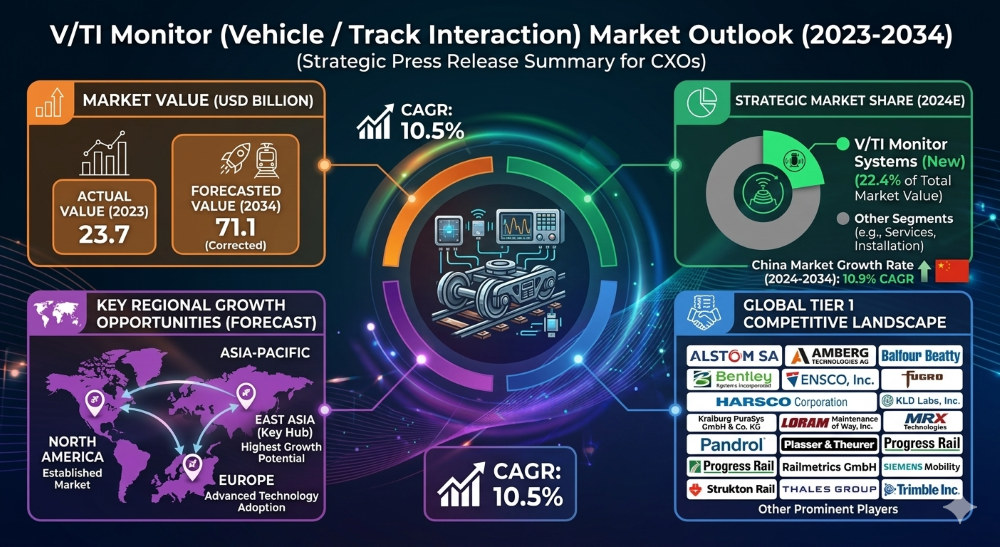
North America represents an important market due to its extensive freight rail network and ongoing investments in railway modernization. Rail operators in the region are increasingly adopting advanced monitoring technologies to ensure track safety, improve operational reliability, and reduce maintenance costs.
Europe is also a significant market for V/TI monitors, driven by the region’s advanced rail transportation systems and strict safety standards. European railway operators focus heavily on infrastructure monitoring and preventive maintenance, which has led to increased adoption of sophisticated vehicle-track interaction monitoring solutions.
The Asia-Pacific region is experiencing strong growth in the V/TI monitor market as countries invest heavily in railway expansion and high-speed rail projects. Rapid urbanization and population growth are increasing the demand for efficient public transportation systems, prompting governments to modernize rail infrastructure and adopt advanced monitoring technologies.
Emerging economies in the Middle East and Latin America are also witnessing rising demand for rail infrastructure improvements. Investments in new railway corridors, metro systems, and freight transportation networks are creating additional opportunities for V/TI monitoring technologies.
Key Trends & Forecast:
Several key trends are influencing the development of the V/TI monitor market.
One major trend is the growing integration of smart monitoring technologies in railway systems. Modern V/TI monitoring solutions use advanced sensors and digital platforms to collect detailed data on train movements and track conditions. These systems enable real-time analysis, allowing railway operators to quickly identify potential safety risks or infrastructure issues.
Another important trend is the adoption of predictive maintenance strategies. Instead of relying solely on routine inspections, railway companies are increasingly using monitoring systems to predict when maintenance is needed. By analyzing vehicle-track interaction data, engineers can detect early signs of wear or damage and take preventive action before failures occur.
The use of automation and data analytics is also transforming the railway monitoring landscape. Advanced software platforms can process large volumes of data collected from V/TI monitors and provide actionable insights for railway operators. This helps improve decision-making and optimize maintenance schedules.
Additionally, the growing development of high-speed rail systems is increasing the importance of accurate vehicle-track monitoring. High-speed trains require extremely precise track conditions and stable vehicle dynamics. V/TI monitoring systems play a crucial role in ensuring that these conditions are maintained to support safe and efficient train operations.
Applications & End-Use Outlook:
V/TI monitoring systems are primarily used in railway infrastructure management and train performance monitoring. Rail operators use these systems to monitor wheel forces, track alignment, vibration levels, and other factors that influence train stability and safety.
Passenger rail networks represent a significant application area for V/TI monitors. As passenger trains operate at high speeds and carry large numbers of commuters, maintaining safe vehicle-track interaction is critical for preventing derailments and ensuring smooth travel.
Freight rail operations also rely heavily on V/TI monitoring technologies. Freight trains often carry heavy loads across long distances, placing significant stress on railway tracks. Monitoring systems help identify areas where track conditions may deteriorate due to heavy freight operations.
Urban metro systems and light rail networks are another important end-use segment. These systems require precise track maintenance to ensure reliable daily operations and passenger safety. V/TI monitoring solutions help transit authorities maintain track quality and improve service reliability.
Railway infrastructure management agencies, transportation authorities, and rail maintenance service providers are among the primary users of V/TI monitoring systems. These organizations rely on advanced monitoring technologies to ensure efficient rail operations and long-term infrastructure sustainability.
Conclusion:
The V/TI Monitor (Vehicle / Track Interaction) market plays a vital role in improving the safety, reliability, and efficiency of modern railway systems. By providing detailed insights into the dynamic relationship between trains and tracks, these monitoring systems enable railway operators to detect potential issues early and maintain optimal infrastructure performance.
As global rail networks continue to expand and high-speed rail projects gain momentum, the demand for advanced monitoring technologies is expected to increase. Innovations in sensor technology, data analytics, and predictive maintenance solutions are further enhancing the capabilities of V/TI monitoring systems.
With growing investments in railway modernization and infrastructure development worldwide, the V/TI monitor market is positioned for steady growth in the coming years. Companies that focus on technological innovation and reliable monitoring solutions will play an important role in supporting the future of safe and efficient rail transportation.
Browse Full Report – https://www.factmr.com/report/vehicle-track-interaction-vti-monitor-market