The global UV-Stabilized PCR Polymer Market is poised for significant growth through 2036 as molecular diagnostics, genomic research, clinical testing, and biotechnology applications expand worldwide. UV-stabilized PCR polymers are specialized polymerase enzymes engineered to maintain activity and fidelity under exposure to ultraviolet (UV) light, enabling improved performance in workflows that incorporate UV decontamination, photochemical control, or multi-step preparative processes. These advanced polymerase systems enhance reliability, reduce contamination risk, and support high-throughput, sensitive amplification in diverse research and clinical environments.
With increasing reliance on polymerase chain reaction (PCR) for pathogen detection, genetic analysis, cancer profiling, and biopharmaceutical development, demand for robust, contamination-resilient reagents is growing. UV-stabilized PCR polymers deliver consistent performance in settings where standard polymerases might degrade, and they play an important role in quality-sensitive workflows such as infectious disease testing, environmental monitoring, and advanced genetic research.
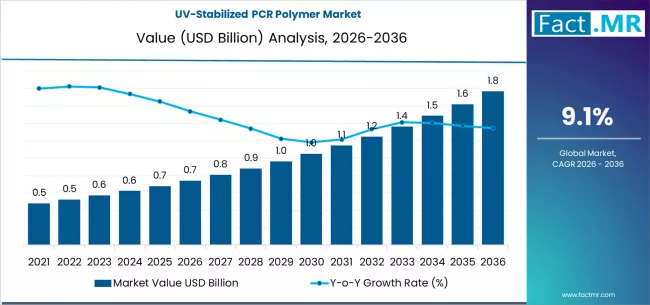
Market Outlook (2026–2036)
-
2026 Market Value: Estimated at USD 0.42 billion
-
2036 Market Value: Projected at USD 1.05 billion
-
Forecast CAGR (2026–2036): Approximately 9.4%
-
Leading Polymer Type: Hot-Start and High-Fidelity UV-Stabilized Polymerases
-
Dominant Application: Clinical Diagnostics and Research Applications
-
Primary End Users: Diagnostic Laboratories, Research Institutes, Biotech and Pharma Companies
The strong projected growth reflects an increasing focus on assay quality, contamination control, and amplification reliability — particularly in regulated environments where stringent performance criteria are required.
To access the complete data tables and in-depth insights, request a Discount On The Report here: https://www.factmr.com/connectus/sample?flag=S&rep_id=13481
Market Overview
PCR is a cornerstone technique in modern molecular biology, enabling exponential amplification of target DNA or RNA sequences. Applications span basic research, clinical diagnostics, forensic analysis, agricultural genetics, and biodefense. Standard PCR workflows can be vulnerable to contamination from environmental nucleic acids, leading to false results and compromised sensitivity. To mitigate this, many laboratories incorporate UV decontamination protocols that subject reagents and workspaces to concentrated UV light to degrade contaminating nucleic acids.
However, conventional polymerase enzymes can be sensitive to UV exposure, reducing activity and reliability. UV-stabilized PCR polymers are engineered with enhanced resistance to UV damage, enabling them to withstand decontamination steps or combined photochemical approaches without loss of function. These polymerases often retain high processivity and fidelity, making them suitable for demanding applications such as next-generation sequencing (NGS) library preparation, complex diagnostic panels, and high-throughput screening.
Key Market Drivers
1. Growth of Molecular Diagnostics and Clinical Testing
PCR is widely used for detecting infectious agents, genetic disorders, and biomarkers. Rising demand for accurate, rapid diagnostics in hospitals, reference labs, and public health settings is driving adoption of advanced reagent systems that improve confidence in results. UV-stabilized polymers support workflows that integrate contamination control, making them valuable in regulated clinical environments.
2. Expansion of Genomic and Biotechnological Research
Investment in genomics, functional biology, and synthetic biology continues to expand as academic institutions, biotechnology companies, and pharmaceutical firms explore new therapeutic targets and precision medicine approaches. Robust PCR reagents that tolerate stringent processing conditions are increasingly needed to support complex experimental designs.
3. Need for Contamination Control in PCR Workflows
Contamination remains a persistent challenge in PCR due to the technique’s sensitivity. Laboratories adopting UV decontamination or photochemical contamination control benefit from polymers that resist UV-induced degradation, enhancing assay reproducibility and reducing false positives.
4. Rising Adoption of High-Throughput and Multiplex Platforms
High-throughput PCR platforms, including plate-based and automated systems, often incorporate environmental control measures that include UV treatment. UV-stabilized PCR polymers enable consistent performance across large sample volumes and multiplex formats, supporting scalable testing capacities.
Market Segmentation Insights
By Polymer Type:
-
Hot-Start UV-Stabilized Polymerases: Offer enhanced specificity and reduced non-specific amplification by remaining inactive until thermal activation.
-
High-Fidelity UV-Stabilized Polymerases: Provide accurate replication with low error rates, suitable for sequencing and cloning workflows.
-
Multiplex-Compatible UV-Stabilized Polymerases: Engineered for simultaneous amplification of multiple targets with resilience to UV environments.
-
Standard UV-Resistant Polymerases: Economical options for general use in research and routine applications.
By Application Area:
-
Clinical Diagnostics: PCR testing for infectious diseases, oncology panels, genetic conditions, and transplant monitoring.
-
Research and Development: Molecular biology studies, gene expression analysis, and academic research.
-
Biopharmaceutical Development: PCR-based characterization, cell line validation, and quality control assays.
-
Environmental and Food Safety Testing: Detection of pathogens and contaminants in food, water, and environmental samples.
-
Forensic and Legal Testing: DNA profiling under challenging contamination control protocols.
By End User:
-
Diagnostic Laboratories: Public and private labs performing routine and specialized PCR testing.
-
Academic and Research Institutions: Basic and translational research requiring sensitive amplification.
-
Biotechnology and Pharmaceutical Companies: Applied research, assay development, and production workflows.
-
Contract Research Organizations (CROs): Outsourced testing and high-volume PCR services.
-
Government and Public Health Agencies: Surveillance and outbreak response testing.
Regional Demand Dynamics
North America is anticipated to lead the market, supported by strong life sciences research ecosystems, extensive clinical diagnostic infrastructure, and high adoption of advanced molecular techniques. The region’s robust biotechnology and pharmaceutical sectors further drive demand for specialized PCR reagents.
Europe represents a significant regional market with established regulatory frameworks, advanced public health networks, and strong investment in genomic research. Laboratories in the region increasingly adopt state-of-the-art PCR reagents to support precision diagnostics and high-quality research outputs.
Asia Pacific is projected to exhibit rapid growth due to expanding healthcare infrastructure, rising investment in biotechnology research, increasing adoption of molecular diagnostic technologies, and large populations requiring scalable testing solutions. Growth in emerging economies is supported by expanding research funding and public health initiatives.
Emerging uptake is also observed in Latin America and Middle East & Africa as molecular diagnostics expand into broader clinical and research applications and as infrastructure investments increase.
Competitive Landscape
The UV-stabilized PCR polymer market is moderately competitive, featuring participation from global life sciences reagent providers, specialty enzyme manufacturers, and molecular biology innovators. Companies are focusing on developing high-performance polymers with enhanced UV resistance, tailored formulation kits for specific applications, and integrated reagent systems that support automated workflows.
Strategic priorities among market players include expanding product portfolios, enhancing polymer stability and fidelity, and offering technical support that helps end users optimize protocols. Collaboration with academic institutions and biotechnology firms for co-development of next-generation reagents further strengthens competitive positioning.
Future Outlook
The UV-Stabilized PCR Polymer Market is expected to maintain strong momentum through 2036 as molecular testing and genomic research continue to expand globally. Increasing demand for contamination-resistant, reliable amplification systems will drive uptake across clinical diagnostics, high-throughput research, and biotechnological applications.
As laboratories adopt more rigorous environmental control measures and seek reagents capable of withstanding stringent processing conditions, UV-stabilized PCR polymers will play an increasingly critical role in supporting accurate, efficient, and reproducible molecular workflows worldwide.
Browse Full Report: https://www.factmr.com/report/uv-stabilized-pcr-polymer-market