The demand for spices in the United States is experiencing consistent growth, driven by evolving consumer taste preferences, rising interest in global cuisines, increasing health consciousness, and the expanding foodservice and packaged food industries. Spices are no longer limited to traditional culinary uses; they are increasingly valued for their functional benefits, clean-label appeal, and role in ethnic and gourmet cooking.
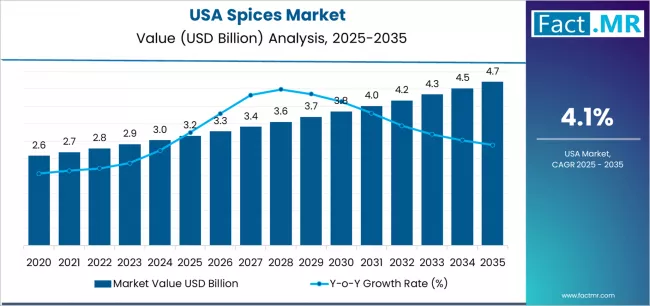
The United States’ demand for spices is expected to increase by USD 1.55 billion over the course of the forecast period, from USD 3.15 billion in 2025 to over USD 4.70 billion by 2035.
In the USA, spices form an essential part of household cooking, restaurant menus, and industrial food processing. The growing multicultural population, coupled with exposure to international flavors through travel, media, and food delivery platforms, has significantly expanded spice consumption across regions and demographics.
Quick Market Overview (2025–2035)
-
Market Growth Trend: Steady and long-term expansion
-
Key Product Categories: Whole spices, ground spices, spice blends
-
Major End Users: Households, foodservice providers, food manufacturers
-
Primary Distribution Channels: Retail stores, online platforms, foodservice suppliers
-
Key Growth Driver: Rising demand for flavorful, natural, and ethnic foods
To access the complete data tables and in-depth insights, request a Discount On The Report here: https://www.factmr.com/connectus/sample?flag=S&rep_id=12596
Market Overview
Spices include dried seeds, fruits, roots, barks, and other plant substances used primarily for flavoring, coloring, and preserving food. Commonly consumed spices in the USA include pepper, chili, paprika, cumin, turmeric, cinnamon, cloves, cardamom, garlic, and ginger, along with a wide range of blended seasonings.
The US spice market benefits from a mature food industry ecosystem and strong consumer willingness to experiment with flavors. In addition to traditional culinary use, spices are increasingly incorporated into functional foods, beverages, snacks, sauces, and ready-to-eat meals.
Key Market Drivers
1. Growing Popularity of Global and Ethnic Cuisines
American consumers are increasingly embracing international flavors.
-
Rising popularity of Mexican, Indian, Middle Eastern, Asian, and African cuisines
-
Increased consumption of spice blends tailored to specific cuisines
-
Restaurant menus influencing home cooking trends
This trend significantly boosts demand for both single-origin spices and customized blends.
2. Rising Health and Wellness Awareness
Spices are widely associated with health benefits.
-
Increased use of turmeric, ginger, garlic, and cinnamon for perceived wellness properties
-
Growing interest in anti-inflammatory, digestive, and immunity-supporting ingredients
-
Preference for natural flavor enhancers over artificial additives
Health-conscious consumers are driving demand for minimally processed and clean-label spices.
3. Expansion of Packaged and Convenience Foods
The growing packaged food industry plays a vital role in spice demand.
-
Increased production of ready meals, snacks, sauces, and marinades
-
Rising use of spice blends in processed foods for consistent flavor profiles
-
Demand for shelf-stable and standardized seasoning solutions
Food manufacturers rely heavily on spices to differentiate products and meet consumer expectations.
4. Growth of Foodservice and Hospitality Industry
Restaurants, cafes, and catering services contribute significantly to spice consumption.
-
Expansion of quick-service and casual dining restaurants
-
Increased demand for bold and customizable flavors
-
Growing use of proprietary spice blends by foodservice operators
The recovery and expansion of the foodservice sector continue to support market growth.
Market Segmentation Analysis
By Product Type
-
Whole Spices:
Preferred for freshness and premium culinary applications. -
Ground Spices:
Widely used due to convenience and ease of incorporation. -
Spice Blends and Seasonings:
Fastest-growing segment, driven by demand for ready-to-use flavor solutions.
By Application
-
Household Cooking:
Consistent demand supported by home cooking trends and recipe exploration. -
Food Processing Industry:
Major consumer of spices for packaged foods, snacks, sauces, and frozen meals. -
Foodservice Sector:
Uses spices for menu innovation and flavor differentiation.
By Distribution Channel
-
Supermarkets and Hypermarkets:
Primary sales channel offering wide product variety. -
Specialty and Ethnic Stores:
Strong demand for authentic and region-specific spices. -
Online Retail Platforms:
Rapidly growing channel offering premium, organic, and bulk spices. -
Foodservice Distributors:
Supply bulk spices to restaurants and institutional kitchens.
Regional Demand Trends in the USA
-
Urban Areas:
Higher demand driven by multicultural populations and dining diversity. -
West Coast and Northeast:
Strong preference for organic, premium, and globally inspired spices. -
Southern and Southwestern Regions:
High consumption of chili-based and bold spice profiles.
Challenges and Market Restraints
1. Price Volatility of Raw Materials
-
Dependence on imported spices
-
Fluctuating agricultural yields and supply chain disruptions
2. Quality and Adulteration Concerns
-
Need for stringent quality control
-
Increasing regulatory scrutiny on food safety
3. Shelf Life and Storage Issues
-
Sensitivity to moisture, light, and heat
-
Quality degradation impacting flavor potency
Emerging Opportunities and Trends
1. Rising Demand for Organic and Sustainable Spices
Consumers increasingly prefer ethically sourced and certified products.
2. Clean-Label and Non-GMO Offerings
Spices fit well with clean-label food trends.
3. Custom and Functional Spice Blends
Blends targeting specific cuisines, health benefits, or dietary needs.
4. Growth of Direct-to-Consumer and E-Commerce Brands
Online platforms enabling niche and premium spice offerings.
Future Outlook
The demand for spices in the USA is expected to grow steadily through 2035, supported by culinary innovation, health-driven consumption, and expansion of the foodservice and packaged food sectors. Spices will continue to play a vital role in enhancing flavor, nutrition, and product differentiation.
Manufacturers and suppliers focusing on quality assurance, sustainable sourcing, innovative blends, and consumer education will be well-positioned to capture future growth opportunities. As American consumers continue to explore global flavors and prioritize natural ingredients, the US spice market will remain dynamic, resilient, and growth-oriented.
Browse Full Report: https://www.factmr.com/report/united-states-spices-market