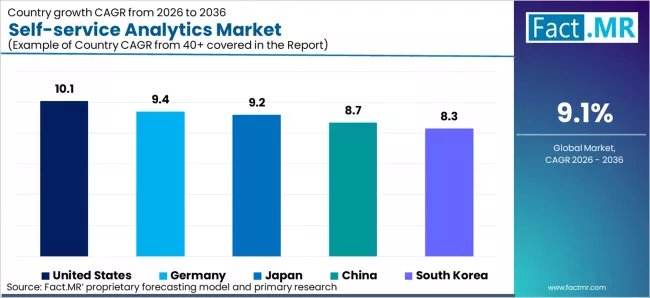
As organizations increasingly rely on data to shape their strategies, the demand for intuitive and accessible analytics tools is growing rapidly. The self-service analytics market is gaining strong momentum as businesses seek solutions that allow non-technical users to analyze data, generate insights, and make informed decisions without heavy dependence on IT teams. This shift reflects a broader move toward democratizing data and enabling real-time intelligence across all levels of an organization.
Market Overview:
Self-service analytics refers to business intelligence tools designed for ease of use, enabling employees across departments to access, visualize, and interpret data independently. These platforms typically offer user-friendly dashboards, drag-and-drop interfaces, and automated reporting features. By reducing reliance on specialized data analysts, organizations can accelerate decision-making processes and enhance operational efficiency.
The growing volume of data generated from digital platforms, IoT devices, and enterprise systems is a key factor driving the adoption of self-service analytics. Companies are recognizing the importance of empowering employees with tools that simplify complex data sets into actionable insights. This trend is especially relevant in competitive markets where timely decisions can significantly impact performance.
Regional Insights:
North America continues to dominate the self-service analytics market due to the early adoption of advanced technologies and the presence of leading analytics solution providers. Businesses in this region prioritize innovation and are quick to integrate new tools that enhance productivity and efficiency.
Europe follows closely, driven by strong regulatory frameworks and a growing emphasis on data transparency and governance. Organizations across the region are investing in analytics platforms that ensure compliance while enabling flexible data exploration.
The Asia-Pacific region is emerging as a key growth hub, supported by rapid digital transformation initiatives and increasing awareness of data-driven strategies. Countries in this region are witnessing a surge in adoption among small and medium-sized enterprises, which are leveraging self-service analytics to compete with larger players.
Key Trends & Forecast:
One of the most prominent trends in the self-service analytics market is the integration of artificial intelligence and machine learning capabilities. These technologies enhance the functionality of analytics platforms by enabling predictive insights, automated data preparation, and natural language querying.
Another significant trend is the shift toward cloud-based analytics solutions. Cloud deployment offers scalability, flexibility, and cost efficiency, making it an attractive option for organizations of all sizes. It also supports remote access, allowing teams to collaborate and analyze data from anywhere.
Data visualization continues to play a crucial role in the adoption of self-service analytics tools. Advanced visualization techniques help users understand complex data patterns quickly, improving the overall decision-making process.
Additionally, there is a growing focus on data security and governance. As more employees gain access to sensitive information, organizations are implementing robust security measures and governance frameworks to ensure data integrity and compliance.
Looking ahead, the market is expected to witness sustained growth as businesses continue to prioritize digital transformation and data literacy. The increasing availability of user-friendly analytics tools will further drive adoption across various industries.
Applications & End-Use Outlook:
Self-service analytics is widely used across multiple industries, including finance, healthcare, retail, manufacturing, and telecommunications. In the finance sector, it helps professionals analyze market trends, monitor risks, and optimize investment strategies. Healthcare organizations use these tools to improve patient outcomes, streamline operations, and enhance data-driven research.
In retail, self-service analytics enables businesses to understand customer behavior, optimize inventory management, and personalize marketing strategies. Manufacturing companies leverage analytics to improve supply chain efficiency, monitor production processes, and reduce operational costs.
The growing adoption among small and medium-sized enterprises is particularly noteworthy. These organizations benefit from the affordability and ease of use of self-service analytics tools, allowing them to compete effectively in data-driven markets.
Conclusion:
The self-service analytics market is transforming the way organizations interact with data. By empowering employees with accessible and intuitive tools, businesses can foster a culture of data-driven decision-making and innovation. As technology continues to evolve, self-service analytics will play an increasingly vital role in shaping the future of business intelligence.
Organizations that invest in these solutions and prioritize data literacy will be better positioned to navigate the complexities of the modern business environment. Comprehensive market insights and strategic implementation of self-service analytics tools can help companies unlock the full potential of their data and achieve sustainable growth.
Browse Full Report – https://www.factmr.com/report/self-service-analytics-market