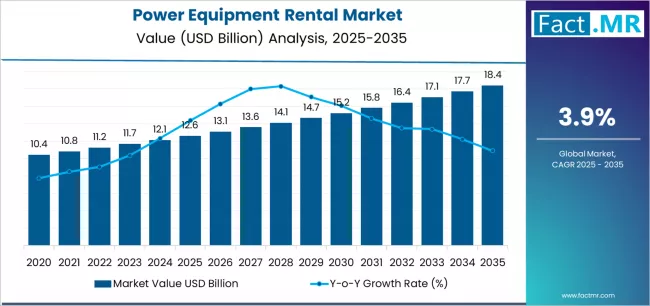
The global Power Equipment Rental Market is evolving rapidly as businesses and industries seek flexible, cost-effective alternatives to owning critical power assets. Fueled by expanding infrastructure projects, industrial modernization, and the growing need for reliable temporary power solutions, this market is projected to grow significantly in the coming decade. Power equipment rentals play a crucial role in providing on-demand energy for construction sites, industrial facilities, events, and emergency backup applications. Unlike permanent installations, rental solutions deliver operational flexibility while reducing upfront capital expenditure, making them attractive to businesses navigating project-based timelines and budget constraints.
What Is Power Equipment Rental?
Power equipment rental encompasses the lease or hire of portable and semi-stationary power generation equipment, such as generators, light towers, and compressors, for temporary power needs. Rental providers supply these assets on short-term or long-term contracts, allowing end users to access high-performance power solutions with minimal investment in ownership.
This market segment addresses diverse use cases—from supplying backup electricity during grid outages to powering remote construction or industrial locations where permanent infrastructure is not feasible.
Market Overview & Growth Dynamics
The global Power Equipment Rental Market is on a steady growth trajectory driven by several intersecting factors:
Rising Infrastructure Development:
Rapid expansion of infrastructure projects worldwide, particularly in emerging economies, is one of the key growth drivers. Construction firms increasingly favor rental power equipment to support project execution without heavy capital commitments. Investments in transportation, urban development, and industrial facilities are raising demand for temporary energy solutions that can be deployed quickly and scaled as needed.
Increasing Demand for Temporary & Backup Power:
As grid instability and energy reliability concerns grow—whether due to aging infrastructure or natural disasters—businesses seek reliable backup power. Rental generators and related equipment offer backup capabilities that ensure continuity across critical applications like data centers, healthcare facilities, and event venues.
Operational Flexibility:
Rental power systems allow companies to match power capacity with project requirements, avoiding the cost burden of owning under-utilized equipment. This model provides financial predictability and operational simplicity, especially for businesses facing fluctuating or seasonal energy demands.
Technological Advancements:
Modern rental fleets increasingly incorporate digital tools like remote monitoring, IoT-based management systems, and predictive maintenance technology. These innovations help optimize fuel use, improve uptime, and enhance overall fleet efficiency. As rental service providers adopt smart fleet solutions, customers benefit from better performance insights and reduced downtime.
Key Market Segments
Equipment Type
Within the power equipment rental portfolio, certain categories hold dominant positions:
- Generators: These remain the backbone of the market, accounting for a significant share of rental demand as they supply reliable electrical power for construction sites, industrial facilities, and backup applications.
- Light Towers & Compressors: While generators lead, light towers (for illumination) and compressors (for pneumatic power) also hold meaningful positions in the rental ecosystem, serving specialized project needs.
This diversified portfolio allows rental providers to cater to a broad range of operational requirements.
End-User Industries & Applications
The construction sector represents the largest end-user segment, driving a substantial portion of global demand for rented power equipment. Construction projects frequently require temporary power solutions to support remote builds, foundation work, and infrastructure upgrades where grid access is limited or nonexistent.
Beyond construction, industrial applications account for a significant share of market demand. Factories, manufacturing units, and large industrial complexes often rely on rented power systems to maintain operations during peak load periods or equipment servicing windows. Utility providers and event organizers also utilize rental power to satisfy temporary or specialized requirements without fixed installations.
Regional Insights
The Power Equipment Rental Market exhibits diverse regional dynamics:
- Asia-Pacific: Rapid urbanization, infrastructure growth, and industrial expansion position Asia-Pacific as a fast-growing market for rental power solutions. Countries such as India and China are driving demand due to expansive construction and manufacturing activities.
- North America & Europe: These regions remain mature markets with a strong base of rental infrastructure and consistent demand from sectors like oil & gas, events, and industrial services. North American construction activity and Europe’s focus on cleaner power solutions continue to support rental adoption.
Challenges Facing the Market
While growth prospects remain positive, the market does face hurdles:
High Maintenance & Operational Costs: Maintaining a large fleet of power equipment, especially high-capacity systems, requires significant investment in service infrastructure and logistics. Fuel price fluctuations further complicate operational cost management.
Technological Complexity: Advanced power systems necessitate specialized maintenance expertise, particularly as rental fleets adopt hybrid and low-emission technologies. Ensuring technical proficiency across rented assets can raise operational complexity.
Regulatory Shifts: As environmental regulations tighten, rental services may need to transition toward cleaner, low-emission power technologies. While this opens new opportunities, it also requires investment in upgraded equipment fleets.
Future Outlook
The Power Equipment Rental Market is poised for steady expansion over the next decade as industries increasingly embrace the rental model for its flexibility, cost efficiency, and operational adaptability. Growth will continue to be supported by construction and industrial demand, technological improvements in fleet management, and the rising importance of temporary and backup power solutions.
For businesses and investors, staying informed about regional trends and emerging technologies can help unlock opportunities in this dynamic market space. As the global economy continues to invest in infrastructure and industrial modernization, the power equipment rental market is set to play a key role in powering projects of all sizes and scopes—without the burden of long-term equipment ownership.
Read More: https://www.factmr.com/report/power-equipment-rental-market