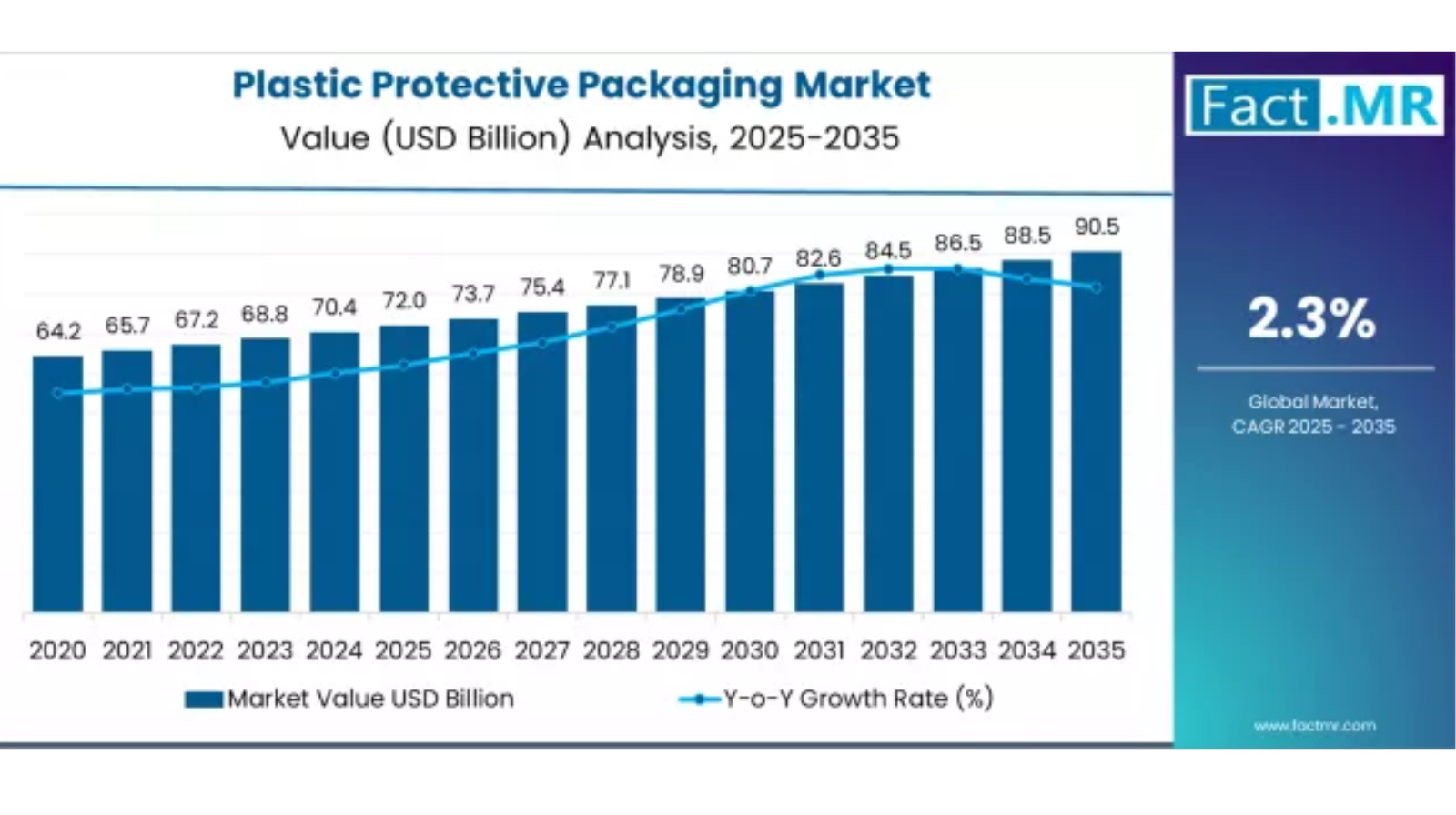
The global plastic protective packaging market is positioned for steady growth over the next decade, supported by expanding e-commerce activity, increasing industrial manufacturing, and rising demand for safe, damage-resistant packaging solutions. According to Fact.MR, the market is valued at USD 72.0 billion in 2025 and is projected to reach USD 90.5 billion by 2035, registering an absolute increase of USD 18.5 billion over the forecast period. This growth reflects a total expansion of 25.7%, with the market advancing at a CAGR of 2.3% from 2025 to 2035.
Plastic protective packaging continues to play a critical role in safeguarding goods across logistics, manufacturing, food & beverage, electronics, pharmaceuticals, and consumer goods industries.
Strategic Market Drivers
E-commerce and Logistics Expansion Fuel Demand
The rapid growth of global e-commerce and omnichannel retail has significantly increased the need for lightweight, durable, and cost-effective protective packaging. Plastic materials such as bubble wrap, air pillows, stretch films, and protective foams ensure product safety during transportation and last-mile delivery.
Rising cross-border trade and warehouse automation are further boosting demand for efficient protective packaging solutions.
Browse Full Report: https://www.factmr.com/report/3277/plastic-protective-packaging-market
Industrial Manufacturing and Export Growth
Manufacturers across automotive, electronics, machinery, and industrial equipment sectors rely heavily on plastic protective packaging to prevent damage, corrosion, and vibration during storage and shipment.
With global manufacturing output and exports continuing to expand, protective plastic packaging remains essential for supply chain reliability and cost control.
Food, Beverage, and Pharmaceutical Safety Requirements
Plastic protective packaging is widely used to maintain hygiene, extend shelf life, and prevent contamination in food and pharmaceutical supply chains. Flexible plastic packaging solutions provide moisture resistance, impact protection, and temperature stability, supporting regulatory compliance and product integrity.
Sustainability and Material Innovation
Although sustainability concerns are reshaping the packaging landscape, innovation in recyclable plastics, lightweight designs, mono-material solutions, and recycled content packaging is sustaining market growth. Manufacturers are increasingly investing in eco-friendly protective plastic packaging to meet regulatory requirements and brand sustainability goals.
Regional Growth Highlights
North America: Strong Logistics and Industrial Base
North America remains a significant market due to its mature e-commerce ecosystem, advanced logistics infrastructure, and high industrial output. Demand for protective plastic packaging is supported by strong manufacturing, pharmaceutical, and food processing industries.
Europe: Sustainability Regulations Shape Innovation
Europe’s strict environmental regulations are pushing manufacturers toward recyclable and reusable protective plastic packaging solutions. Germany, France, the U.K., and Italy are leading markets driven by industrial exports and sustainable packaging initiatives.
East Asia: Manufacturing and Export Hub
China, Japan, and South Korea dominate demand due to their strong manufacturing and export-oriented economies. High production of electronics, automotive components, and consumer goods is driving consistent usage of plastic protective packaging.
Emerging Markets: Infrastructure and Industrial Growth
Regions such as India, Southeast Asia, Latin America, and the Middle East are experiencing rising demand fueled by:
- Expanding manufacturing bases
- Growth in organized retail and e-commerce
- Increasing exports of consumer and industrial goods
Market Segmentation Insights
By Product Type
- Bubble Wrap & Air Cushion Packaging – Widely used for fragile goods protection
- Stretch & Shrink Films – Dominant in palletization and logistics
- Protective Foam Packaging – Growing use in electronics and industrial equipment
- Plastic Sheets & Covers – Used for surface protection during storage and transport
By End-Use Industry
- E-commerce & Logistics – Largest and fastest-growing segment
- Industrial & Manufacturing – Strong and consistent demand
- Food & Beverage – Focus on safety and hygiene
- Pharmaceuticals – Protection and regulatory compliance
- Consumer Electronics – High-value, damage-sensitive products
Challenges Impacting Market Growth
Environmental Concerns and Regulations
Rising scrutiny over plastic waste and stringent environmental regulations may limit growth of conventional plastic protective packaging, pushing companies to innovate sustainable alternatives.
Volatility in Raw Material Prices
Fluctuations in crude oil prices directly impact plastic resin costs, affecting profit margins for packaging manufacturers.
Competitive Landscape
The plastic protective packaging market is moderately fragmented, with players focusing on:
- Lightweight and recyclable materials
- Cost-effective protective designs
- Customized packaging solutions for diverse industries
Key Companies Profiled
- Sealed Air Corporation
- Smurfit Kappa Group
- Amcor Plc
- Berry Global Inc.
- Sonoco Products Company
- DS Smith Plc
- Mondi Group
- Pregis LLC
Recent Developments
- 2024: Increased adoption of recycled-content protective plastic packaging by global logistics providers
- 2023: Expansion of sustainable bubble wrap and air-cushion product lines
- 2022: Major e-commerce companies optimize protective packaging to reduce material usage and shipping costs
Future Outlook: Steady Growth with Sustainable Transformation
Over the next decade, the plastic protective packaging market will continue to evolve, driven by:
- Expanding global trade and e-commerce
- Ongoing industrial and manufacturing growth
- Innovation in recyclable and lightweight materials
- Rising focus on cost efficiency and product protection
As industries balance performance, protection, and sustainability, the global plastic protective packaging market is expected to maintain steady, long-term growth through 2035.