As global demand accelerates for advanced materials with unique functionalities, the Zinc Oxide Nanoparticle (ZnO NP) market is emerging as a standout growth segment in nanotechnology-enabled industries. Characterized by multifunctional properties such as UV filtration, antimicrobial activity, and semiconducting behavior, zinc oxide nanoparticles are increasingly embedded across cosmetics, healthcare, electronics, coatings, polymers, and sustainability-oriented applications. These trends are projected to drive robust growth through 2036, fundamentally reshaping innovation and investment strategies across the value chain.
Market Growth & Revenue Outlook
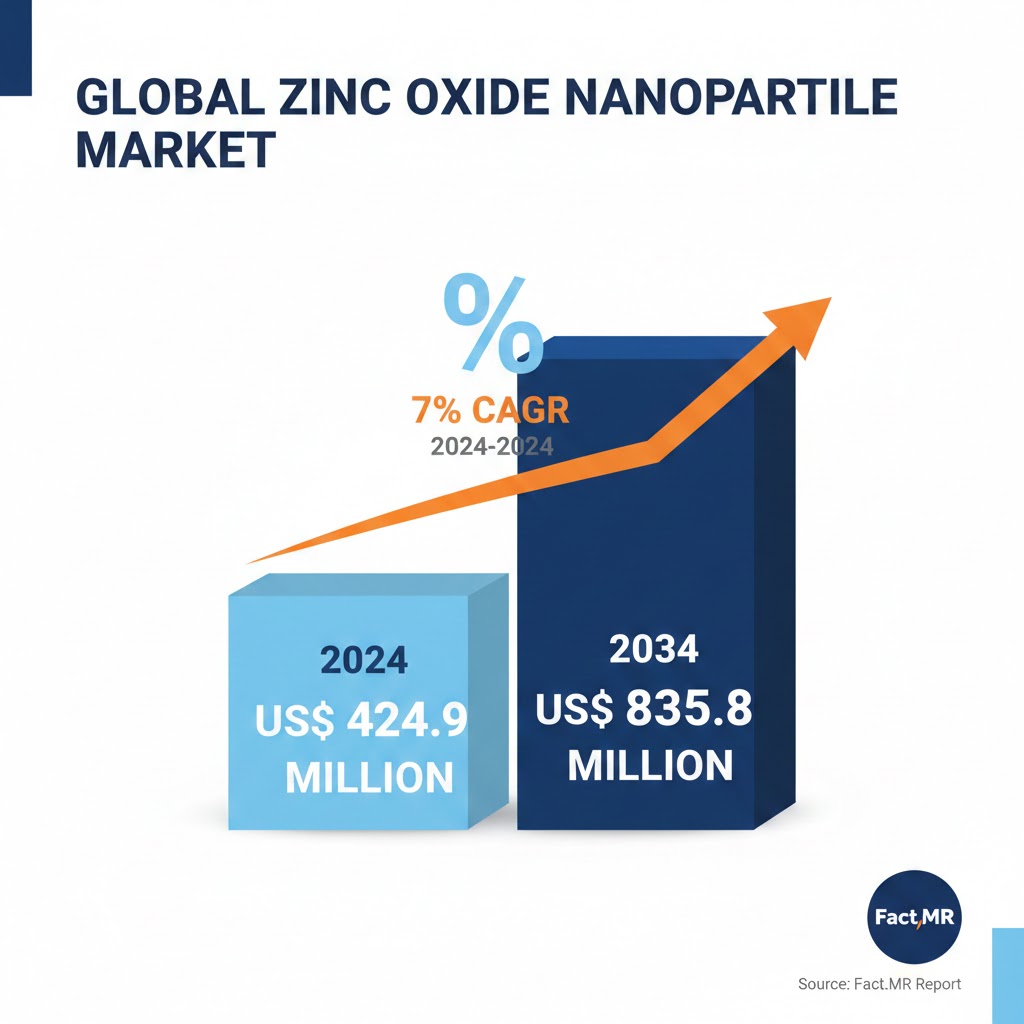
The global zinc oxide nanoparticle market is forecast to nearly double in value from an estimated USD 424.9 million in 2024 to approximately USD 835.8 million by 2034, reflecting a compound annual growth rate (CAGR) of around 7% over the decade. This surge reflects increasing industry recognition of ZnO nanoparticles’ versatility and performance advantages, driving adoption in both established and emerging segments. Ongoing trends suggest sustained momentum into the 2036 horizon, supported by technological advances and rising global demand for high-performance materials.
Innovation Catalysts Driving Market Expansion
1. Enhanced UV Protection & Personal Care Formulations
One of the most prominent drivers is zinc oxide nanoparticles’ role in broad-spectrum UV protection. Their ability to filter harmful UVA and UVB radiation without the opacity of larger particles has cemented their position in premium sunscreens and skincare products. Increasing consumer awareness of skin health and sun exposure risks continues to drive demand within cosmetics and personal care industries worldwide. Alongside UV protection, ZnO NPs provide antimicrobial properties, making them attractive for enhanced skincare formulations that combine protection with hygiene benefits—an especially compelling proposition in wellness markets.
2. Biomedical & Pharmaceutical Innovations
Beyond skincare, zinc oxide nanoparticles are gaining traction in healthcare applications, including antimicrobial coatings for medical devices, drug delivery research, and next-generation wound care products. Their high surface area and unique reactivity enable targeted functionality not available with larger counterparts. Such innovations are drawing increased R&D investment from both pharmaceutical and medical technology firms aiming to enhance therapeutic efficacy and safety profiles.
3. Electronics, Optoelectronics & Next-Gen Devices
Zinc oxide nanoparticles’ optical and electronic properties—including wide bandgap and high exciton binding energy—are encouraging adoption in transparent conductive films, sensors, and optoelectronic components. As the Internet of Things (IoT), flexible electronics, and advanced display technologies proliferate, ZnO NPs are becoming increasingly relevant in next-generation device architectures. The transition toward miniaturized and energy-efficient electronics underpins ZnO NP integration into semiconductors and photonic systems, expanding demand beyond traditional application footprints.
4. Sustainable & Green Synthesis Pathways
Innovation extends into manufacturing itself. There is a clear trend toward eco-friendly synthesis methods, such as plant-based and biological production processes that reduce hazardous byproducts and lower environmental impact. Green synthesis not only enhances corporate ESG performance but also unlocks value in markets where consumers prefer clean-label and environmentally safe materials, particularly in cosmetics and healthcare.
Regulatory Landscape & Its Market Impact
Safety, Standards & Compliance Complexity
While growth prospects are strong, regulatory frameworks governing nanomaterials continue to evolve, and this evolution presents both challenges and opportunities. In key regions such as North America and Europe, safety assessments and labeling requirements for nanomaterials are becoming more stringent. Regulatory bodies are increasingly focused on ensuring that nanoparticle usage adheres to established safety thresholds—a process that can extend time to market. These regulatory pressures are particularly acute in food contact materials and medical applications, where uncertainty around standardized guidelines can delay product approvals and increase compliance costs.
Standardization & Market Confidence
Efforts to develop harmonized global standards for nanomaterial safety testing and reporting are underway, and progress in this area is expected to improve market clarity. Standardized frameworks may reduce technical barriers and accelerate adoption, particularly in regulated industries like healthcare and cosmetics. Additionally, regulatory acknowledgment of safe uses builds market confidence and supports broader commercialization.
Regional Growth Dynamics
The zinc oxide nanoparticle market exhibits notable geographical variation in growth trajectories:
-
North America currently commands a significant share of the market, driven by high demand in cosmetics, healthcare, and electronics sectors.
-
East Asia is projected to hold a substantial portion of global demand by 2034, fueled by strong industrial bases and increasing R&D activity in nanotechnology.
-
Emerging markets, particularly in Asia Pacific, are rapidly expanding as industrial, consumer, and tech sectors mature.
These regional dynamics reflect broader macroeconomic trends including rising disposable incomes, urbanization, and growing innovation ecosystems that support material science advancements.
Competition & Strategic Positioning
The zinc oxide nanoparticle market remains highly competitive, with major global players intensifying efforts to boost production capacity, differentiate product portfolios, and penetrate high-growth segments. Strategic partnerships, capacity expansions, and investment in sustainable manufacturing are key strategic levers for companies seeking to maintain leadership in this evolving landscape.
Browse Full Report : https://www.factmr.com/report/4790/zinc-oxide-nanoparticles-market
Outlook Through 2036
Looking beyond the immediate forecast horizon, the zinc oxide nanoparticle market is poised for continued momentum through 2036, driven by:
-
Persistent innovations in application development
-
Regulatory clarity that enhances market confidence
-
Growth in sustainability-oriented end uses
-
Expanding demand across technology and healthcare segments
As industries increasingly adopt high-performance materials with multifunctional capabilities, ZnO nanoparticles are well-positioned to serve as a foundational component of next-generation solutions.
In conclusion, the zinc oxide nanoparticle market is on a robust growth trajectory, propelled by technological innovation, expanding applications, and evolving regulatory frameworks. From personal care to advanced electronics and biomedical applications, ZnO nanoparticles are increasingly integral to future-focused industries. With sustained investment and adaptive strategies, the market is expected to deliver significant commercial value through to 2036 and beyond.