The global green chemicals market is undergoing rapid expansion as industries shift away from conventional petrochemical-based materials toward environmentally friendly, renewable, and low-toxicity alternatives. Growing regulatory pressure, corporate sustainability goals, and rising consumer preference for eco-friendly products are creating a strong demand landscape for bio-based chemicals. From construction and packaging to automotive, agriculture, textiles, and personal care, green chemicals are becoming integral to modern manufacturing systems.
Quick Stats (2025–2035)
-
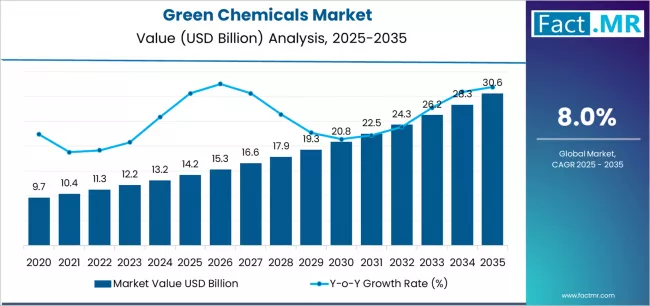
Market Size 2025: USD 14.2 billion
-
Forecast 2035: USD 30.6 billion
-
Absolute Growth: ~USD 16.4 billion
-
CAGR (2025–2035): ~8%
-
Largest Product Segment: Bio-alcohols
-
Top End-use Segment: Construction & building materials
-
Fastest-growing Region: Asia-Pacific
To access the complete data tables and in-depth insights, request a Discount On The Report here: https://www.factmr.com/connectus/sample?flag=S&rep_id=12198
Market Definition & Scope
Green chemicals—also called bio-based, sustainable, or eco-friendly chemicals—are manufactured using renewable feedstocks such as biomass, agricultural waste, plant-derived materials, or through low-impact production processes. They aim to reduce greenhouse gas emissions, minimize toxicity, lower carbon footprints, and support circular-economy practices.
These chemicals are used in:
-
Sustainable packaging
-
Eco-friendly coatings
-
Bio-polymers and bio-resins
-
Clean-label consumer products
-
Green solvents
-
Agricultural inputs
-
Textiles and detergents
-
Automotive lubricants and additives
Key Market Drivers
1. Rising Environmental Regulations
Governments across the world are implementing strict rules to lower carbon emissions, restrict hazardous chemical use, and promote biodegradable alternatives. Policies encouraging renewable feedstocks and banning certain petrochemical-based plastics are accelerating market adoption.
2. Corporate Sustainability & ESG Commitments
Companies are increasingly prioritizing ESG performance and circular-economy initiatives. This shift pushes manufacturers to integrate renewable, non-toxic, and recyclable materials into their products, directly boosting demand for green chemicals.
3. Growing Consumer Preference for Eco-Friendly Products
Consumers are more aware of environmental sustainability and prefer goods labeled as bio-based, natural, and clean. As a result, sectors such as personal care, household cleaning, packaging, and food & beverage are rapidly switching to green chemical inputs.
4. Technological Advancements in Bio-Based Manufacturing
Progress in enzymatic processes, biotechnology, microbial fermentation, and waste-to-chemical conversion has significantly improved cost efficiency and scalability. These advancements make green chemicals more competitive with conventional petrochemicals.
5. Expanding Applications Across Industries
Green chemicals have moved beyond niche applications and are now used in large-scale industries including automotive, packaging, construction, consumer goods, agriculture, and textiles. This diversification is creating strong long-term growth opportunities.
Market Segmentation Insights
By Product Type
Bio-Alcohols (Largest Segment)
Used widely as solvents, fuel additives, intermediates, and coatings. Their large-scale production infrastructure and versatility help maintain strong market dominance.
Biopolymers & Bio-Resins
Majorly used in packaging, textiles, automotive interiors, and eco-friendly building materials. Rising demand for biodegradable plastics is a major growth catalyst.
Bio-Organic Acids & Surfactants
Increasingly used in agriculture, personal care, detergents, pharmaceuticals, and cleaning products due to their low toxicity and sustainability profile.
By Application / End-Use Industry
Construction (Leading Segment)
Growing adoption of green coatings, adhesives, insulation materials, sealants, and composites.
Packaging (Fastest Growing)
Bioplastics and bio-resins are replacing petrochemical plastics due to sustainability regulations and consumer pressure.
Automotive & Transportation
Green lubricants, coatings, and lightweight bio-materials are used to improve efficiency and reduce environmental impact.
Agriculture, Consumer Goods & Personal Care
Demand for plant-based surfactants, natural preservatives, and bio-based formulations is rising significantly.
By Region
-
Asia-Pacific: Expected to lead growth due to expanding biorefineries, industrialization, and government incentives.
-
Europe: Strong regulatory backing and high sustainability standards make it a mature market.
-
North America: Significant biotech innovation, growing bioplastic usage, and increasing renewable chemical investments.
Challenges in the Market
-
Higher production costs compared to petrochemicals
-
Feedstock supply dependency on agriculture and seasonal variations
-
Need for performance parity with conventional chemicals
-
Limited awareness among traditional industries
-
Certification and compliance complexities
Despite these challenges, continuous innovation and economies of scale are expected to narrow the cost gap and drive wider adoption.
Opportunities Ahead (2025–2035)
-
Development of high-performance bio-based polymers
-
Expansion of waste-to-chemical technologies
-
Increased investments in biorefineries
-
Growth in circular-economy-based chemical production
-
Rising demand for green consumer products
Market Outlook
From 2025 to 2035, the green chemicals market is set to nearly double, supported by sustainability mandates, technological advancements, and rising preference for renewable materials. As industries transition toward low-carbon production models, green chemicals will evolve from a niche category to a mainstream industrial necessity. Companies investing early in bio-innovations, large-scale production, and material performance improvements are best positioned to lead the next decade of sustainable chemical transformation.
Browse Full Report: https://www.factmr.com/report/green-chemicals-market