The global push toward a low-carbon future is no longer a distant goal—it’s happening now. Industries, governments, and innovators are racing to integrate hydrogen into power generation, transportation, chemicals, and heavy industry. But as adoption grows, one challenge becomes clear: how do we store hydrogen safely, efficiently, and at scale?
Enter hydrogen storage molecular sieves. These advanced materials, including high-performance zeolites and adsorption-based compounds, are emerging as game-changers in the hydrogen economy. Between 2026 and 2036, this market is poised for remarkable growth, bridging the gap between hydrogen production and practical, everyday use.
Market Growth: Numbers Tell the Story
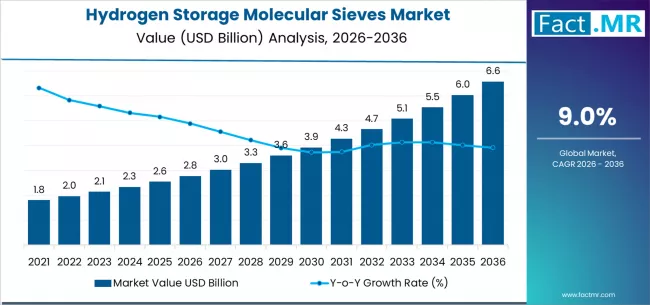
The hydrogen storage molecular sieves market is projected to grow from USD 2.8 billion in 2026 to roughly USD 6.6 billion by 2036, reflecting a CAGR of about 9%. What’s striking is that this growth outpaces the broader molecular sieves industry, highlighting how hydrogen applications are creating a premium demand segment.
Driving this expansion is the broader hydrogen storage ecosystem, which is scaling rapidly to support industrial, mobility, and renewable energy applications. Molecular sieves are becoming the go-to material for modular, solid-state hydrogen storage, offering both safety and performance advantages over traditional compressed or liquefied hydrogen systems.
Why Molecular Sieves Matter
Molecular sieves—particularly zeolite-based crystalline aluminosilicates—store hydrogen through physisorption, which allows hydrogen molecules to adhere to their highly porous surfaces. The benefits are clear:
-
Lower pressure requirements, making storage safer
-
High stability, even under repeated use
-
Efficiency at moderate temperatures, reducing energy costs
Among these, Zeolite 13X is the front-runner, offering optimal pore sizes for hydrogen adsorption and commanding a substantial share of global demand. Adsorption-based systems now account for a large portion of the hydrogen storage market, signaling a shift toward solid-state, modular solutions.
Innovation: The Engine of Growth
Several forces are driving innovation in hydrogen storage molecular sieves:
-
Global Hydrogen Expansion: Countries worldwide are investing heavily in hydrogen infrastructure. Large-scale projects in Europe, Asia, and the Middle East are creating a surge in demand for storage solutions that are both safe and efficient.
-
Material Science Breakthroughs: Researchers are improving hydrogen uptake through pore optimization, ultramicroporous structures, and hybrid adsorption materials. These innovations are enhancing storage density, durability, and commercial viability.
-
Industrial Decarbonization: Refineries, ammonia plants, and steel manufacturers are increasingly relying on hydrogen to cut emissions. Molecular sieves are crucial for on-site purification and buffer storage, enabling industries to operate cleanly and efficiently.
Regional Insights
-
Asia-Pacific is leading the charge, driven by industrial growth, government incentives, and large-scale hydrogen pilots. Countries like China, Japan, and South Korea are investing heavily in infrastructure, creating a strong demand pipeline.
-
Europe is following closely, leveraging climate policies and cross-border hydrogen transport projects. The region is increasingly relying on molecular sieves for safe, reliable hydrogen movement.
-
North America is emerging as a high-value market. Refinery upgrades and hydrogen-focused incentives are creating opportunities for molecular sieve adoption in industrial and mobility applications.
Competitive Landscape
This market is technology-driven, with performance and intellectual property shaping leadership positions. Companies are differentiating through:
-
Custom-engineered pore structures
-
Integration with modular hydrogen storage systems
-
Long-cycle durability for industrial applications
Collaborations between material manufacturers, hydrogen system integrators, and energy companies are helping bring advanced solutions to market faster and more efficiently.
Growth Opportunities (2026–2036)
Looking forward, the hydrogen storage molecular sieves market is set to capitalize on multiple high-impact opportunities:
-
Green Hydrogen Projects: Decentralized production will require storage systems that are safe, scalable, and efficient.
-
Hydrogen-Powered Mobility: From buses to trucks and rail, molecular sieves are critical for storage at transit hubs.
-
Grid-Scale Energy Storage: As renewable energy penetration grows, adsorption-based hydrogen storage can help balance supply and demand.
-
Export-Oriented Hydrogen Supply Chains: Molecular sieves reduce transport risks, making hydrogen exports more practical and economical.
With hydrogen generation capacity projected to expand significantly over the next decade, the demand for advanced storage materials is expected to grow in parallel.
Browse Full Report : https://www.factmr.com/report/hydrogen-storage-molecular-sieves-market
Conclusion
The next decade will define the hydrogen economy, and molecular sieves are at its core. From 2026 to 2036, they will transition from niche industrial materials to strategic enablers of clean energy, supporting both stationary and mobile applications. Companies that invest in innovation, scalable manufacturing, and regional partnerships will be best positioned to capture value as hydrogen moves from pilot projects to widespread commercial adoption.
The hydrogen revolution is no longer on the horizon—it’s here. Molecular sieves are helping ensure it’s safe, efficient, and ready to power a cleaner world.