Sustainability has become a defining priority across the global food packaging industry, driving demand for materials that balance safety, performance, and environmental responsibility. Food-grade post-consumer recycled (PCR) resin has emerged as a key solution, enabling manufacturers to reduce reliance on virgin plastics while maintaining compliance with strict food contact regulations. As brands, regulators, and consumers increasingly emphasize circular economy practices, the food-grade PCR resin market is gaining strong attention across packaging and food processing value chains.
Market Overview
Food-grade PCR resin refers to recycled plastic materials that have been processed and purified to meet regulatory standards for direct contact with food products. These resins are commonly derived from recycled packaging waste and undergo advanced sorting, cleaning, and decontamination processes to ensure safety and consistency. They are widely used in applications such as food containers, bottles, trays, films, and caps.
The market is shaped by growing regulatory support for recycled content in packaging and increasing commitments by food and beverage companies to improve sustainability credentials. Food-grade PCR resin allows brands to demonstrate environmental responsibility without compromising product integrity, shelf life, or consumer trust.
Key Market Drivers
One of the main drivers of the food-grade PCR resin market is rising consumer awareness around plastic waste and environmental impact. Shoppers increasingly prefer food products packaged in materials that support recycling and resource efficiency, encouraging brands to adopt recycled content.
Regulatory initiatives promoting circular economy practices also play a significant role. Governments and industry bodies are encouraging the use of recycled plastics in food packaging through guidelines, targets, and extended producer responsibility programs. In addition, major food and beverage companies are setting internal sustainability goals that prioritize the use of PCR materials across their packaging portfolios, further accelerating market growth.
Processing Technologies and Material Trends
Advancements in recycling and purification technologies are transforming the food-grade PCR resin landscape. Mechanical recycling remains widely used, supported by improved sorting systems and contamination control. At the same time, advanced recycling techniques are gaining attention for their ability to produce high-quality resins suitable for sensitive food contact applications.
Material innovation is another key trend. Food-grade PCR resins are being developed to match the performance characteristics of virgin plastics, including clarity, strength, and barrier properties. Blending recycled content with functional additives or virgin resin is also a common approach to ensure consistent quality while maximizing recycled material usage.
Regional Market Insights
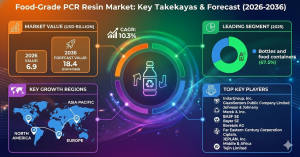
North America represents a prominent market for food-grade PCR resin, driven by strong sustainability commitments from food brands and increasing investment in recycling infrastructure. The region’s focus on compliance and traceability supports the adoption of certified food-grade recycled materials.
Europe is a leading region in terms of regulatory support and sustainability awareness. Strict packaging waste directives and circular economy policies have accelerated the use of recycled plastics in food packaging. Collaboration between recyclers, packaging producers, and food companies is particularly strong across European markets.
The Asia-Pacific region is emerging as an important growth area, supported by expanding food packaging demand, improving recycling capabilities, and growing awareness of sustainable packaging solutions. As regulatory frameworks evolve, the region is expected to see increasing adoption of food-grade PCR resins.
Applications and End-Use Outlook
Food-grade PCR resin is used across a wide range of food packaging applications, including rigid containers, beverage bottles, flexible packaging, and food service items. End users include food and beverage manufacturers, packaging converters, and brand owners seeking to enhance sustainability while ensuring food safety.
The demand for transparent labeling and traceability is influencing end-use adoption. Brands are increasingly communicating the use of recycled content on packaging to build consumer trust and strengthen sustainability messaging. This trend is expected to further support the integration of food-grade PCR resin across mainstream food packaging.
Competitive Landscape
The market features a mix of global resin producers, specialized recyclers, and packaging material suppliers. Competition is driven by factors such as resin purity, regulatory compliance, supply reliability, and sustainability credentials. Companies are investing in advanced recycling facilities and certification programs to meet the evolving needs of food packaging manufacturers.
Strategic partnerships across the value chain are becoming increasingly common. Collaboration between waste collection agencies, recyclers, resin producers, and food brands helps ensure consistent supply and quality while supporting circular economy objectives.
Future Outlook
The food-grade PCR resin market is expected to continue evolving as technology, regulation, and consumer expectations converge. Innovations in recycling processes and material formulation will play a crucial role in expanding the range of food contact applications suitable for PCR resins.
Insights from industry research platforms such as Fact.MR highlight the growing importance of food-grade recycled materials in achieving long-term sustainability goals. As supply chains become more integrated and transparent, food-grade PCR resin is likely to become a standard component of modern food packaging strategies.
Conclusion
Food-grade PCR resin represents a critical step toward more sustainable food packaging systems. By enabling the safe reuse of plastic materials in food contact applications, these resins support environmental responsibility without compromising quality or compliance. As the food industry continues its shift toward circular packaging solutions, the food-grade PCR resin market offers significant opportunities for innovation, collaboration, and long-term growth.
Browse Full Report – https://www.factmr.com/report/food-grade-pcr-resin-market