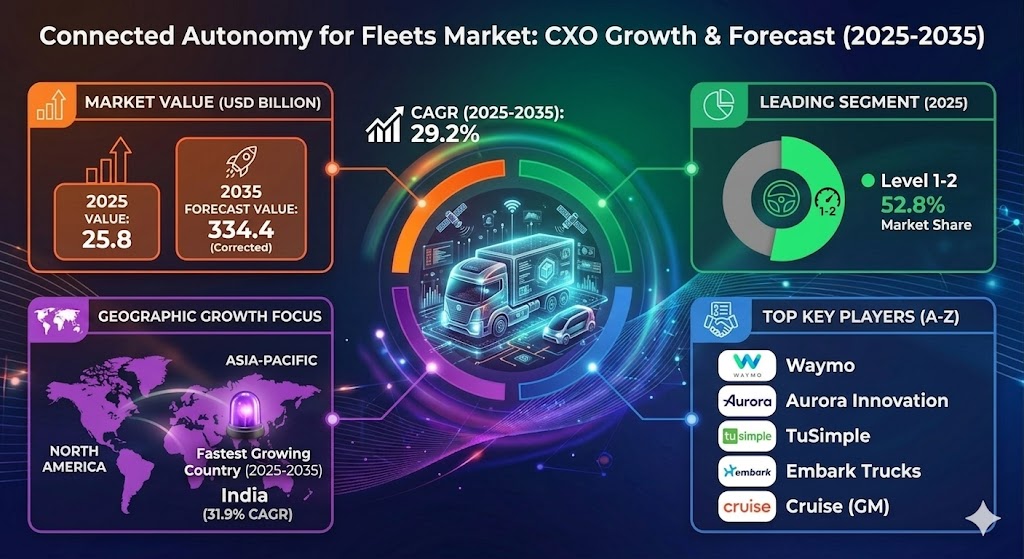
The transportation and logistics industry is undergoing a significant transformation with the rise of connected and autonomous technologies. Connected autonomy for fleets is emerging as a powerful solution that combines real-time connectivity with autonomous capabilities to enhance operational efficiency, safety, and decision-making. As businesses increasingly seek smarter mobility solutions, the adoption of connected autonomous fleet systems is gaining strong momentum across the globe.
Market Overview:
Connected autonomy for fleets refers to the integration of advanced connectivity, automation, and data analytics into fleet operations. These systems enable vehicles to communicate with each other, infrastructure, and centralized management platforms while leveraging autonomous driving features to optimize performance.
Unlike traditional fleet management, connected autonomous systems provide real-time insights into vehicle location, condition, and performance. They utilize technologies such as telematics, sensors, artificial intelligence, and cloud computing to deliver a seamless and intelligent transportation ecosystem. This allows fleet operators to automate routine tasks, improve route planning, and enhance overall operational efficiency.
The growing demand for cost optimization, reduced human intervention, and improved safety standards is driving the adoption of connected autonomy in fleet management. As industries continue to embrace digital transformation, these systems are becoming a critical component of modern logistics and transportation strategies.
Regional Insights:
North America leads the connected autonomy for fleets market, supported by strong technological infrastructure and early adoption of autonomous vehicle technologies. The presence of major automotive and technology companies, along with favorable regulatory frameworks, is accelerating market growth in the region.
Europe is also experiencing steady growth, driven by stringent safety regulations and increasing investments in smart mobility solutions. Governments and private organizations are collaborating to develop connected infrastructure that supports autonomous fleet operations.
Asia-Pacific is emerging as a high-growth region, fueled by rapid industrialization, expanding logistics networks, and rising demand for efficient transportation systems. Countries such as China, Japan, and India are investing heavily in smart city initiatives and connected vehicle technologies, creating new opportunities for market expansion.
Key Trends & Forecast:
One of the most significant trends in the connected autonomy for fleets market is the increasing integration of artificial intelligence and machine learning. These technologies enable predictive analytics, allowing fleet operators to anticipate maintenance needs, optimize routes, and improve decision-making processes.
Another key trend is the adoption of vehicle-to-everything (V2X) communication, which allows vehicles to interact with other vehicles, infrastructure, and network systems. This enhances situational awareness, reduces traffic congestion, and improves safety.
The rise of electric vehicles (EVs) is also influencing the market, as fleet operators look to combine electrification with autonomous and connected technologies. This integration supports sustainability goals while improving operational efficiency.
Partnerships and collaborations between automotive manufacturers, technology providers, and logistics companies are becoming increasingly common. These collaborations are driving innovation and accelerating the development of advanced fleet solutions.
Additionally, the growing emphasis on data security and privacy is shaping the market landscape. As connected systems generate vast amounts of data, ensuring secure data transmission and storage is becoming a top priority for industry stakeholders.
Applications & End-Use Outlook:
Connected autonomy for fleets is widely used in logistics and transportation, where efficiency and reliability are critical. Fleet operators leverage these systems to optimize delivery routes, reduce fuel consumption, and improve asset utilization.
In the ride-hailing and mobility services sector, connected autonomous fleets are enabling more efficient and scalable operations. These systems support real-time tracking, automated dispatching, and enhanced customer experiences.
The technology is also gaining traction in industries such as mining, construction, and agriculture, where autonomous fleets can operate in controlled environments to improve productivity and safety.
Public transportation systems are increasingly adopting connected autonomous solutions to enhance service efficiency and reduce operational costs. Smart buses and autonomous shuttles are becoming integral components of modern urban mobility.
Furthermore, last-mile delivery services are benefiting from connected autonomy, as companies seek faster and more efficient ways to meet growing consumer demand for quick deliveries.
Conclusion:
The connected autonomy for fleets market is poised for significant growth as industries continue to embrace intelligent transportation solutions. By combining connectivity, automation, and data-driven insights, these systems are transforming the way fleets are managed and operated.
As technological advancements continue and infrastructure improves, connected autonomous fleets will become more widespread across various industries. The focus on safety, efficiency, and sustainability will further drive adoption, making these systems an essential part of the future mobility landscape.
In the years ahead, connected autonomy will redefine fleet operations, enabling smarter, safer, and more efficient transportation networks. Organizations that invest in these advanced solutions will be well-positioned to gain a competitive edge in an increasingly dynamic and technology-driven market.
Browse Full Report – https://www.factmr.com/report/connected-autonomy-for-fleets-market