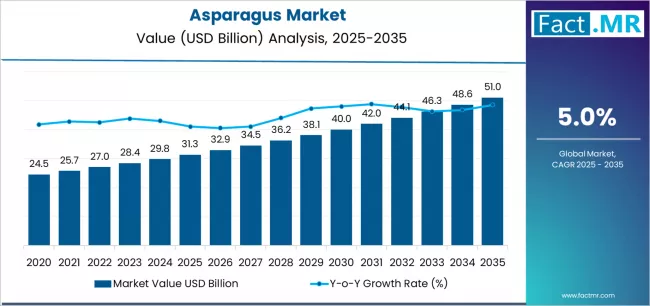
The global asparagus market is projected to grow from a valuation of roughly USD 31.3 billion in 2025 to approximately USD 51.0 billion by 2035 — an absolute increase of nearly USD 19.7 billion. This represents a robust compound annual growth rate (CAGR) of about 5.0%. Fresh asparagus leads the market, capturing around 65.6% of share among all asparagus product types, while the green asparagus variety accounts for the majority in the variety segment with roughly 63.2%.
As awareness of healthy, plant-based diets rises, and as demand for nutrient-dense fresh produce expands globally, asparagus is becoming a front-runner in both retail grocery produce aisles and gourmet culinary kitchens. Its nutritional profile — rich in vitamins, minerals, fiber, and antioxidants — drives its appeal among health-conscious consumers, fueling demand across diverse geographies and consumer segments.
Quick Stats for Asparagus Market
- Asparagus Market Value (2025): USD 31.3 billion
- Asparagus Market Forecast Value (2035): USD 51.0 billion
- Asparagus Market Forecast CAGR: 5.0%
- Leading Product in Asparagus Market: Fresh Asparagus (65.6%)
- Key Growth Regions in Asparagus Market: Asia Pacific, North America, and Europe
- Top Players in Asparagus Market: Altar Produce LLC, Walker Brothers, Inc., Limgroup B.V., Jersey Asparagus Farms Inc., Cutter Asparagus Seed, Thiermann Spargelhof, Danper, Golden Valley Seed., Transplants Inc., Südwestdeutsche Saatzucht GmbH & Co.KG
To access the complete data tables and in-depth insights, request a Discount On The Report here: https://www.factmr.com/connectus/sample?flag=S&rep_id=12271
Key Market Drivers
Growing Health & Nutrition Awareness
Asparagus is widely perceived as a “superfood” vegetable, offering high fiber, vitamins, antioxidants, and low-calorie nutrition. The global shift toward healthier dietary patterns and increased consumption of nutrient-dense foods is a primary catalyst for asparagus demand. Consumers embracing plant-based or balanced diets are turning to asparagus as a staple vegetable that delivers both nutritional value and culinary versatility.
Rising Demand for Fresh and Premium Produce
Fresh asparagus — rather than canned or frozen — remains the most sought-after segment, driven by preferences for freshness, texture, and taste. Fresh produce markets, supermarkets, and gourmet restaurants are increasingly sourcing high-quality asparagus. For many consumers, the value associated with fresh, minimally processed vegetables outweighs that of preserved alternatives, supporting the dominance of fresh asparagus in the global market.
Expansion of Organic & Sustainable Farming Practices
There is a growing trend toward organic cultivation of asparagus, particularly in regions where consumers are willing to pay a premium for pesticide-free and sustainably grown produce. Organic asparagus is gaining popularity thanks to rising environmental awareness, growing demand for clean-label foods, and increased consumer willingness to invest in produce perceived as healthier and safer.
Improved Supply Chains & Post-Harvest Handling
Advances in cold-chain logistics, modern storage, and transport infrastructure — especially in emerging regions — enable asparagus producers to distribute fresh produce across long distances while preserving quality and freshness. This logistical improvement expands market reach beyond traditional production zones, enabling broader availability even in regions previously constrained by perishability.
Culinary Versatility and Global Cuisine Adoption
Asparagus’s appeal is not limited to health — its culinary versatility and adaptability in cuisines worldwide also drive demand. From salads and stir-fries to gourmet dishes in restaurants, asparagus is gaining favour among chefs and home cooks alike. Increasing global adoption of western and fusion cuisines introduces asparagus to new consumer demographics and regional markets.
Market Segmentation & Key Insights
By Product Type
-
Fresh Asparagus: Dominates with ~65–66% share in 2025, thanks to high consumer demand for freshness and minimal processing.
-
Frozen / Processed Asparagus: Represents a smaller but growing segment, particularly in regions where fresh supply is seasonal or limited. Processed formats offer longer shelf life and convenience.
By Variety
-
Green Asparagus: Captures the majority share thanks to easier cultivation, lower cost, and broad familiarity among consumers.
-
White / Specialty Varieties: These hold niche demand in gourmet markets — often fetching premium prices due to perceived delicacy, unique taste, or regional culinary traditions.
By Consumer Segment & Use Case
-
Retail Consumers (Household): Major source of demand, particularly among health-conscious families, urban professionals, and older adults seeking nutritious diets.
-
Foodservice & Restaurants: A growing driver of demand — premium restaurants and gourmet kitchens increasingly include asparagus in menus, contributing to stable off-take.
-
Export & Global Trade: Countries producing asparagus are leveraging export markets to supply demand in regions with limited domestic production — fueling global trade flows.
By Production & Cultivation Geography
Traditionally strong asparagus-producing regions continue to lead, but growth is emerging in Asia-Pacific, Latin America, and other regions due to rising disposable incomes, changing dietary habits, and expanding agricultural investment. Improved agricultural practices, greenhouse cultivation, and sustainable farming methods are enabling expansion in these growth zones.
Market Challenges & Constraints
Perishability and Supply Volatility
Asparagus is perishable and requires efficient cold-chain logistics from harvest to consumption. In regions lacking adequate infrastructure, maintaining freshness and quality can be challenging — potentially limiting supply or raising costs. Seasonal fluctuations and weather impact yield and availability, which may lead to price volatility.
Labor-Intensive Cultivation & Harvesting
Asparagus cultivation and harvesting remain labor-intensive. Harvesting often needs to be done manually to maintain spear quality, which increases labor costs and can limit supply scalability — especially in regions facing labor shortages or rising wages.
Competition from Substitutes
Other vegetables and produce with similar nutritional or culinary profiles may compete with asparagus for shelf, menu, and consumption share. If substitutes present lower prices or easier availability, consumer demand may shift accordingly.
Cost & Price Sensitivity in Emerging Markets
In many developing or lower-income regions, premium pricing for fresh or organic asparagus may limit accessibility. Producers may struggle to expand consumption if prices remain high relative to local alternatives.
Future Outlook & Strategic Implications (2025-2035)
The asparagus market is expected to nearly 1.6× grow over the 2025–2035 period, reaching roughly USD 51.0 billion by 2035 at a 5.0% CAGR. Demand will be driven by increasing health consciousness, rising adoption of plant-based and balanced diets, expansion in organic produce demand, and growing global culinary acceptance of asparagus.
Producers and distributors who invest in sustainable farming, cold-chain logistics, organic certifications, and global supply networks will likely benefit most. Additionally, value-added products — such as pre-trimmed fresh asparagus packs, frozen asparagus spears, ready-to-cook asparagus kits — represent opportunity areas to reach convenience-oriented consumers.
Foodservice providers, gourmet restaurants, and premium retail chains will remain important consumption channels as consumers increasingly trade up for quality, freshness, and nutritional integrity.
Finally, emerging markets — particularly in fast-growing Asia-Pacific and Latin America — present significant upside potential as rising incomes, urbanization, and shifting diets increase readiness for premium vegetables such as asparagus. Strategic cultivation expansion, improved supply chains, and price stabilization efforts could unlock new consumer bases and contribute to long-term market growth.
Browse Full Report: https://www.factmr.com/report/asparagus-market