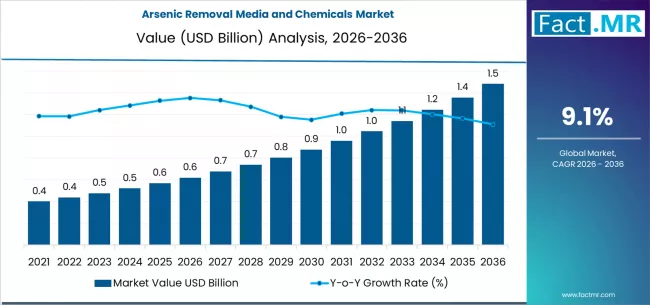
Access to safe and clean drinking water remains a critical global priority, particularly in regions affected by groundwater contamination. Among various water pollutants, arsenic poses one of the most severe health risks due to its toxicity and long-term impact on human health. The growing need to address arsenic contamination has brought increased attention to arsenic removal media and chemicals, which play a vital role in water treatment processes. As highlighted by Fact.MR, rising awareness of water quality issues and stricter regulatory standards are driving the adoption of advanced arsenic removal solutions across municipal, industrial, and residential sectors.
Market Overview
Arsenic removal media and chemicals are specialized materials designed to eliminate arsenic from water sources through adsorption, ion exchange, precipitation, or oxidation processes. These solutions are widely used in drinking water treatment plants, industrial wastewater treatment, and point-of-use filtration systems. Commonly used media include activated alumina, iron-based media, granular ferric oxide, and hybrid adsorption materials, while chemicals support oxidation and coagulation processes to enhance removal efficiency.
The market is evolving as water treatment stakeholders prioritize reliable, cost-effective, and environmentally sustainable technologies. Manufacturers are focusing on improving adsorption capacity, operational efficiency, and media lifespan to reduce maintenance requirements. According to Fact.MR, technological advancements and growing investment in water infrastructure are strengthening the long-term outlook for arsenic removal media and chemicals.
Public Health and Regulatory Landscape
Public health concerns remain a primary driver for the adoption of arsenic removal technologies. Prolonged exposure to arsenic-contaminated water has been linked to serious health conditions, prompting governments and regulatory bodies to enforce stringent drinking water quality standards. These regulations are encouraging utilities and industries to upgrade existing treatment systems or adopt new arsenic-specific removal solutions.
In many regions, regulatory frameworks emphasize continuous monitoring, compliance reporting, and the use of proven treatment technologies. Arsenic removal media and chemicals help water treatment operators meet compliance requirements while ensuring consistent water quality. Fact.MR notes that regulatory pressure is also fostering innovation, as solution providers develop more efficient and environmentally responsible treatment options.
Regional Insights
The demand for arsenic removal media and chemicals varies significantly across regions, depending on groundwater quality, industrial activity, and regulatory enforcement. Regions with naturally occurring arsenic in groundwater have witnessed higher adoption of treatment solutions, particularly in rural and semi-urban areas where centralized water treatment infrastructure may be limited.
Developed regions are focusing on system upgrades and advanced filtration technologies to enhance efficiency and reduce operational costs. Meanwhile, developing regions are investing in scalable and affordable arsenic removal systems to address widespread contamination challenges. Public-private partnerships and government-supported water safety initiatives are playing a crucial role in expanding market penetration.
Key Trends and Market Evolution
Several key trends are shaping the arsenic removal media and chemicals market. One notable trend is the increasing use of iron-based and hybrid media, which offer higher selectivity and longer service life compared to traditional materials. These innovations help improve treatment performance while lowering overall lifecycle costs.
Another important trend is the integration of arsenic removal solutions with multi-contaminant treatment systems. Water treatment facilities are increasingly adopting comprehensive filtration approaches that address arsenic alongside other pollutants such as fluoride, nitrates, and heavy metals. Digital monitoring and smart water management systems are also gaining traction, enabling real-time performance tracking and predictive maintenance.
Sustainability is emerging as a critical focus area, with manufacturers developing recyclable and low-waste media to minimize environmental impact. As highlighted by Fact.MR, research and development efforts are central to enhancing efficiency, scalability, and environmental compatibility.
Applications and End-Use Outlook
Arsenic removal media and chemicals are widely used across multiple end-use sectors. Municipal water treatment remains the largest application area, driven by the need to provide safe drinking water to growing populations. Industrial users, including mining, power generation, and chemical processing industries, rely on arsenic removal solutions to meet wastewater discharge regulations and protect downstream ecosystems.
Residential and point-of-use systems represent another growing application segment, particularly in regions lacking centralized water treatment infrastructure. These systems provide households with direct access to safe water, supporting public health outcomes. The versatility of arsenic removal media allows for customization across diverse treatment environments and capacity requirements.
Challenges and Opportunities
Despite strong demand, the market faces challenges such as operational complexity, disposal of spent media, and the need for skilled maintenance. Cost considerations can also impact adoption, especially in resource-constrained regions. However, ongoing innovation and increasing economies of scale are helping address these barriers.
Opportunities lie in the development of low-cost, high-efficiency media and chemicals suitable for decentralized treatment systems. Expanding awareness programs, government funding, and international collaborations are expected to further support market growth. Fact.MR highlights that emerging technologies and sustainable product designs will continue to open new avenues for market participants.
Conclusion
The arsenic removal media and chemicals market plays a crucial role in safeguarding water quality and public health worldwide. Driven by regulatory enforcement, rising awareness of water contamination risks, and technological innovation, the market is steadily advancing toward more efficient and sustainable treatment solutions. Insights from Fact.MR indicate that continued investment in research, infrastructure, and policy support will be essential to meeting global water safety goals. For stakeholders across the water treatment ecosystem, arsenic removal technologies represent a vital component of long-term environmental and public health strategies.
Browse Full Report – https://www.factmr.com/report/arsenic-removal-media-and-chemicals-market