The advanced oxidation chemicals for emerging contaminants market is gaining increasing attention as global concerns over water quality and environmental protection intensify. Emerging contaminants such as pharmaceuticals, personal care products, pesticides, endocrine-disrupting compounds, and industrial chemicals pose significant challenges to conventional water treatment systems. These contaminants are often resistant to traditional filtration and biological treatment methods, requiring advanced and effective chemical solutions.
Advanced oxidation chemicals play a crucial role in addressing these challenges by breaking down complex and persistent contaminants into harmless or easily removable compounds. Their growing adoption reflects the urgent need for innovative water treatment technologies that ensure safe drinking water, environmental sustainability, and regulatory compliance.
Market Overview
Advanced oxidation chemicals are integral to advanced oxidation processes (AOPs), which rely on highly reactive species such as hydroxyl radicals to degrade organic pollutants. These chemicals are widely used in water and wastewater treatment facilities to target contaminants that are difficult to remove using conventional treatment techniques.
The market is shaped by increasing detection of trace contaminants in water sources, growing investments in advanced treatment infrastructure, and heightened regulatory scrutiny. Municipalities, industrial operators, and environmental agencies are increasingly turning to advanced oxidation chemicals to enhance treatment efficiency and safeguard public health.
Key Market Drivers
Rising Awareness of Emerging Contaminants
Improved analytical technologies have enabled the detection of contaminants at very low concentrations, raising awareness of their potential risks. This has driven demand for advanced oxidation chemicals capable of effectively neutralizing these substances.
Stricter Environmental Regulations
Regulatory agencies across regions are strengthening water quality standards and discharge regulations. Compliance with these evolving requirements is a major driver for the adoption of advanced oxidation chemical solutions.
Growing Water Reuse and Recycling Initiatives
As water scarcity becomes a pressing concern, water reuse and recycling projects are expanding. Advanced oxidation chemicals are essential in ensuring that reclaimed water meets safety and quality standards.
Expansion of Industrial and Municipal Treatment Facilities
Urbanization and industrial growth are increasing pressure on water treatment infrastructure. Advanced oxidation chemicals provide scalable and effective solutions for both new installations and retrofitting existing systems.
Chemical Type Insights
Hydrogen Peroxide-Based Chemicals
Hydrogen peroxide is widely used in advanced oxidation processes due to its strong oxidative properties and compatibility with various treatment systems. It plays a central role in generating reactive radicals for contaminant degradation.
Ozone-Based Oxidants
Ozone-based chemicals are effective in breaking down complex organic molecules and eliminating pathogens. Their use is particularly prevalent in municipal water treatment applications.
Persulfates and Peroxymonosulfates
Persulfate-based oxidants are gaining attention for their ability to generate sulfate radicals, offering an alternative oxidation pathway for challenging contaminants.
Photocatalytic Oxidation Agents
Photocatalytic chemicals, often used in combination with ultraviolet systems, enhance oxidation efficiency and enable treatment of a broader range of contaminants.
Application Outlook
Drinking Water Treatment
Advanced oxidation chemicals are increasingly incorporated into drinking water treatment processes to remove trace contaminants and ensure compliance with water quality standards.
Wastewater Treatment
Municipal and industrial wastewater treatment facilities use advanced oxidation chemicals to degrade persistent pollutants before discharge or reuse.
Industrial Effluent Treatment
Industries such as pharmaceuticals, chemicals, and textiles generate complex effluents. Advanced oxidation chemicals help reduce toxicity and environmental impact.
Environmental Remediation
These chemicals are also applied in soil and groundwater remediation projects to eliminate contaminants and restore environmental quality.
End-Use Industry Analysis
Municipal Utilities
Municipal water and wastewater utilities are major end users, driven by the need to provide safe water and meet regulatory requirements.
Industrial Sector
Manufacturing, chemical processing, and energy industries rely on advanced oxidation chemicals to manage complex wastewater streams and reduce environmental risk.
Healthcare and Pharmaceutical Facilities
Healthcare-related effluents contain biologically active compounds that require advanced treatment. Oxidation chemicals play a key role in mitigating these contaminants.
Research and Environmental Agencies
Research institutions and environmental organizations use advanced oxidation chemicals in pilot projects and monitoring initiatives to evaluate treatment effectiveness.
Regional Insights
North America
North America leads in the adoption of advanced oxidation technologies due to stringent water quality regulations and significant investments in water infrastructure.
Europe
Europe emphasizes sustainable water management and environmental protection, supporting the widespread use of advanced oxidation chemicals.
Asia-Pacific
Rapid urbanization, industrial expansion, and growing water scarcity are driving market growth in the Asia-Pacific region. Governments are investing in advanced treatment solutions to address pollution challenges.
Latin America and Middle East & Africa
These regions are gradually adopting advanced oxidation technologies as awareness of emerging contaminants and environmental risks increases.
Technological Advancements
Ongoing innovation is enhancing the efficiency and applicability of advanced oxidation chemicals. Improved formulations, controlled dosing systems, and integration with digital monitoring technologies are optimizing treatment performance.
Research into hybrid oxidation processes and catalyst development is expanding the range of contaminants that can be effectively treated. These advancements support cost efficiency and environmental sustainability.
Competitive Landscape
The market comprises global chemical manufacturers, specialty water treatment companies, and regional suppliers. Competition is driven by product performance, technical expertise, and regulatory compliance.
Companies are focusing on developing tailored solutions for specific contaminants and applications. Strategic partnerships with utilities and industrial operators are common to address complex treatment challenges.
Challenges and Market Constraints
Despite their effectiveness, advanced oxidation chemicals can present challenges related to operational complexity, energy consumption, and chemical handling. Proper system design and expertise are required to maximize benefits and minimize costs.
Additionally, variability in contaminant profiles can require customized treatment approaches, increasing implementation complexity.
Future Outlook
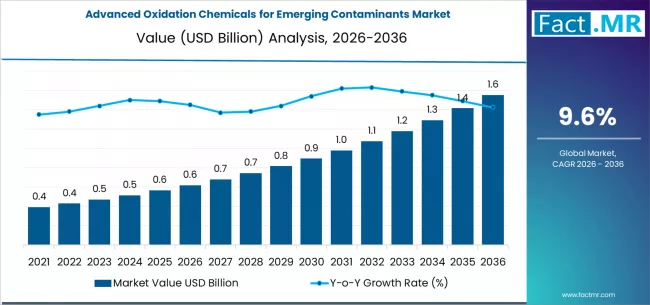
The advanced oxidation chemicals for emerging contaminants market is expected to continue expanding as water quality concerns intensify globally. Increasing focus on sustainability, water reuse, and environmental protection will drive long-term demand.
Opportunities exist in developing regions, infrastructure upgrades, and the integration of advanced oxidation with smart water management systems. Innovation and regulatory alignment will remain key success factors.
Conclusion
Advanced oxidation chemicals are playing a pivotal role in addressing the growing challenge of emerging contaminants in water and the environment. By enabling effective degradation of persistent pollutants, these solutions support public health, environmental sustainability, and regulatory compliance.
Access to comprehensive market insights and industry analysis can help stakeholders make informed decisions and implement effective treatment strategies. As water quality challenges evolve, advanced oxidation chemicals will remain essential to the future of safe and sustainable water management.
Browse Full Report – https://www.factmr.com/report/advanced-oxidation-chemicals-for-emerging-contaminants-market