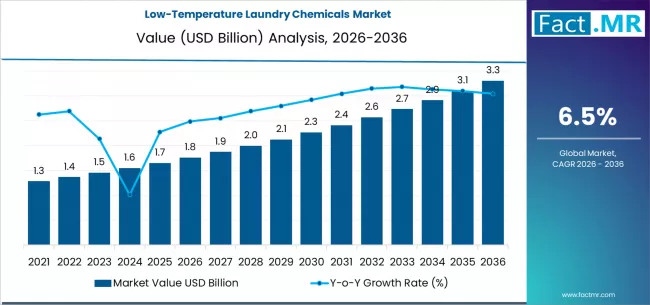
The global low-temperature laundry chemicals market is poised for steady expansion over the next decade, driven by rising demand for energy-efficient washing solutions, sustainability initiatives, and advancements in detergent formulations. According to a new analysis by Fact.MR, the market is projected to grow from USD 1.76 billion in 2026 to USD 3.30 billion by 2036, reflecting a compound annual growth rate (CAGR) of 6.5% during the forecast period.
The growing shift toward cold- and low-temperature washing—aimed at reducing energy consumption, fabric damage, and carbon emissions—is significantly accelerating adoption across residential, commercial, and industrial laundry applications.
Browse Full Report: https://www.factmr.com/report/low-temperature-laundry-chemicals-market
Strategic Market Drivers
Energy Conservation and Sustainability Initiatives Fuel Growth
Low-temperature laundry chemicals are gaining traction as consumers and businesses seek to reduce energy usage associated with hot-water washing. These formulations are specifically engineered to deliver high cleaning performance at temperatures below 40°C, enabling substantial electricity savings.
Government policies promoting energy efficiency and lower greenhouse gas emissions are encouraging detergent manufacturers and commercial laundries to adopt low-temperature solutions.
Rising Consumer Awareness and Eco-Friendly Preferences
Consumers are increasingly prioritizing environmentally responsible household products, driving demand for detergents that:
- Lower energy consumption
- Reduce water heating costs
- Minimize fabric wear
- Support sustainability goals
Low-temperature laundry chemicals align closely with the growing trend toward green cleaning products, particularly in developed markets.
Expansion of Commercial and Industrial Laundry Services
Hotels, hospitals, textile rental services, and institutional laundries are adopting low-temperature detergents to reduce operational costs while maintaining hygiene standards. These chemicals help:
- Extend textile lifespan
- Reduce utility expenses
- Improve throughput efficiency
The commercial laundry segment remains a key contributor to market expansion.
Technological Advancements in Detergent Formulations
Innovations in enzyme-based surfactants, bio-based ingredients, and advanced cleaning boosters are enhancing stain removal and hygiene performance at lower temperatures. These advancements are broadening application scope across healthcare, hospitality, and industrial textiles.
Regional Growth Highlights
Europe: Sustainability Regulations Lead Adoption
Europe dominates the market due to stringent energy-efficiency regulations, eco-labeling standards, and widespread consumer adoption of cold-water washing practices. Countries such as Germany, France, the U.K., and the Nordic region are key contributors.
North America: Shift Toward Energy-Efficient Household Products
In North America, rising electricity costs and increased awareness of carbon footprints are driving demand for low-temperature detergents in both residential and commercial sectors.
East Asia: Growing Urbanization and Appliance Innovation
Countries like Japan, South Korea, and China are witnessing rising adoption due to advanced washing machine technologies optimized for low-temperature cleaning and increasing urban household demand.
Emerging Markets: Expanding Middle-Class and Commercial Laundry Growth
Markets in India, Southeast Asia, Latin America, and the Middle East are experiencing growth supported by:
- Rising urbanization
- Expanding hospitality and healthcare sectors
- Increasing awareness of energy-efficient laundry solutions
Market Segmentation Insights
By Product Type
- Detergents – Largest segment due to widespread household and commercial use
- Fabric Conditioners – Growing adoption for textile care
- Bleaches & Additives – Used in institutional laundering
By Application
- Residential Laundry – Dominant segment driven by eco-conscious consumers
- Commercial Laundry – Hotels, hospitals, and laundromats
- Industrial Laundry – Textile rental and manufacturing units
By Form
- Liquid – High solubility and effectiveness at low temperatures
- Powder – Cost-effective for bulk usage
- Pods & Capsules – Rapid growth due to convenience
Challenges Impacting Market Growth
Higher Product Costs
Advanced formulations and eco-friendly ingredients make low-temperature laundry chemicals more expensive than conventional detergents, limiting adoption in price-sensitive markets.
Performance Perception Issues
Some consumers still perceive cold-water detergents as less effective, requiring continued education and product innovation to overcome misconceptions.
Competitive Landscape
The market is moderately fragmented, with manufacturers focusing on enzyme innovation, biodegradable formulations, and sustainability certifications to gain a competitive edge.
Key Companies Profiled
- Procter & Gamble
- Unilever
- Henkel AG & Co. KGaA
- Ecolab Inc.
- Church & Dwight Co.
- Clariant AG
- BASF SE
- Croda International
Recent Developments
- 2024: Launch of advanced enzyme-based detergents optimized for ultra-low temperatures
- 2023: Commercial laundry service providers expand cold-wash solutions to reduce operational costs
- 2022: Major detergent brands reformulate products to comply with global sustainability standards
Future Outlook: Sustainable Laundry Solutions Drive Long-Term Growth
The next decade will witness continued innovation and adoption of low-temperature laundry chemicals, driven by:
- Global focus on energy conservation
- Rising sustainability commitments
- Growth in commercial laundry services
- Advances in enzyme and bio-based chemistry
As consumers and industries prioritize cost efficiency, environmental responsibility, and fabric care, the global low-temperature laundry chemicals market is set for sustained growth through 2036.