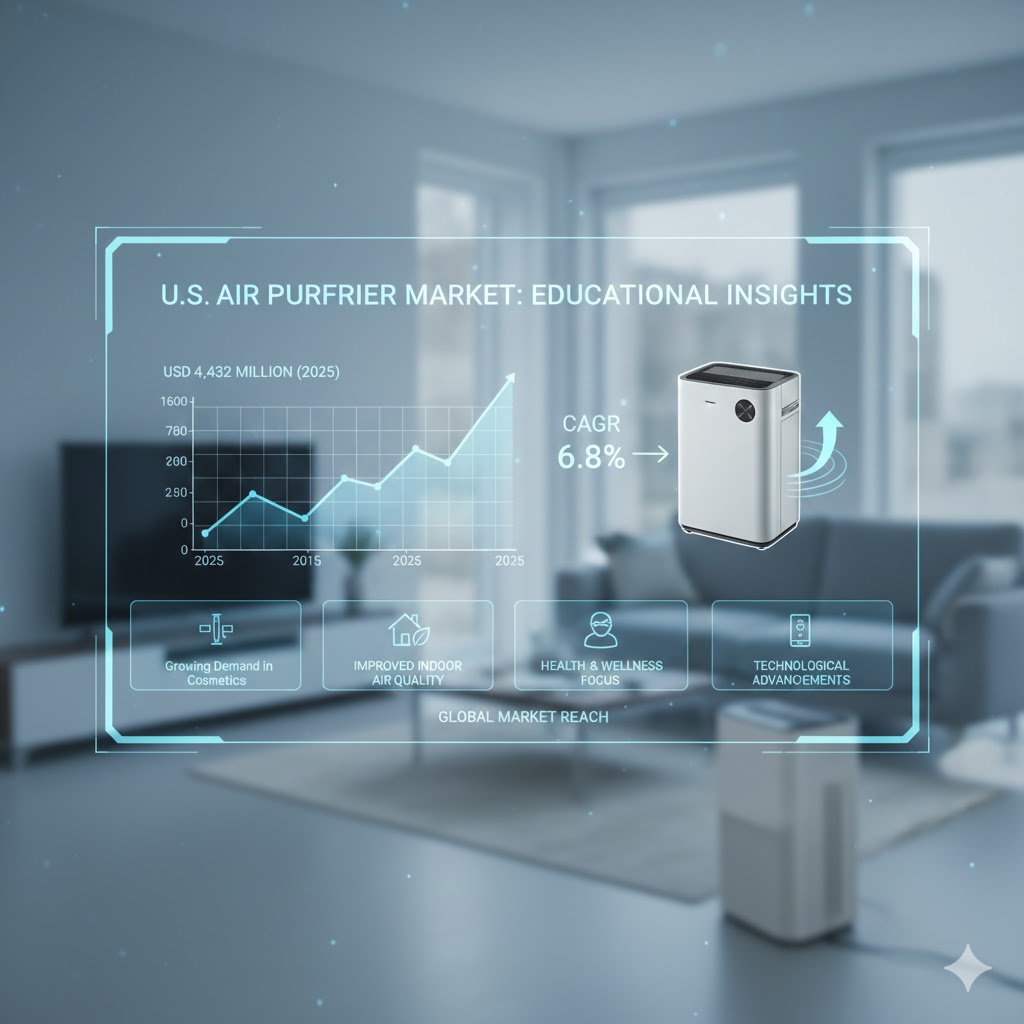
The U.S. air purifier market is poised for significant expansion through 2036, driven by rising health concerns, accelerating adoption of smart technologies, increasing environmental awareness, and evolving consumer preferences. The market — valued at around USD ~4.4 billion in 2025 — is projected to nearly double by 2035, reaching approximately USD 8.6 billion with a compound annual growth rate (CAGR) of ~6.8% (2025‑2035). Extending this horizon to 2036 suggests continued momentum as consumers and institutions prioritize indoor air quality in an era of persistent urban pollution, wildfire episodes, and heightened health awareness.
This analysis explores portfolio priorities, adoption trends, structural drivers, regional dynamics, and the future demand outlook, anchored in quantitative forecasts and qualitative insights.
1. Market Growth Drivers & Underlying Demand Dynamics
1.1 Escalating Health and Environmental Concerns
A primary catalyst for market expansion is the growing awareness of indoor air pollution and its adverse health outcomes — including asthma, chronic obstructive pulmonary disease (COPD), and allergic conditions — fueled by urbanization, industrial emissions, and residential exposure to particulates. These health dynamics have significantly elevated consumer demand for air purification technologies across residential and commercial segments.
Climate-related impacts — especially wildfire smoke and severe particulate matter (PM2.5) — are increasingly driving purchases in the Western and Southwestern U.S. Wildfire events disrupt air quality and prompt households and businesses to invest in high-efficiency air cleaners to safeguard indoor environments.
1.2 Technological Innovation & Smart Ecosystems
Technology advancements represent a second major growth lever. The proliferation of HEPA filters, activated carbon technologies, UV-C sterilization, and ionization systems has enhanced purification performance, extending appeal from basic particulate removal to comprehensive indoor air hygiene solutions.
Simultaneously, smart connectivity — enabled through Wi-Fi control, mobile apps, AI-driven monitoring, and automated air quality management — reinforces product differentiation and aligns with broader trends in connected homes and buildings.
2. Market Segmentation & Portfolio Priorities
Portfolio priorities hinge on targeted solutions that match diverse consumer needs across technology, coverage area, and application segments:
2.1 Technology Adoption Patterns
-
HEPA Filters remain the backbone of the market, widely recognized for capturing fine particulate matter.
-
Activated Carbon Systems are gaining traction for odor and VOC control.
-
Ultra-Violet (UV) Technology is becoming a strategic offering in premium and institutional product lines due to its ability to inactivate airborne pathogens, a priority for healthcare and education sectors.
Data indicates notable growth in UV technology segments, with expected CAGR above key conventional technologies, reflecting demand for chemical-free microbial air treatment.
2.2 Coverage Area & Use-Case Focus
Product portfolios are increasingly segmented by coverage area:
-
Medium-range units (501–800 sq. ft.) are emerging as high-growth categories, balancing power and cost for residential and small commercial settings.
-
Portable standalone units continue to serve segmented lifestyle preferences.
-
In-duct and whole-building systems are gaining traction among commercial real estate, healthcare facilities, and institutional end-users due to centralized air quality management.
2.3 Residential, Commercial & Niche End-Users
Residential adoption accounts for the bulk of market demand, driven by end-user concerns about household air quality. However, commercial and institutional markets — particularly hospitality, schools, and offices — are prioritizing air purification as part of facility health and wellness strategies.
3. Regional Adoption Trends Across the U.S.
Regional environmental variations shape demand intensity:
-
Western U.S.: Dominated by wildfire smoke events, accelerating adoption of robust purification technologies.
-
Southwestern U.S.: Growth propelled by allergens, dust storms, and climatic triggers.
-
Northeastern U.S.: High per-capita adoption due to urban density, aging infrastructure, and health literacy.
-
Midwest: Moderate but steady growth, amplified by industrial pollution and winter indoor air challenges.
-
Southeast: Rapid expansion fueled by humidity-related allergens and mold issues.
Understanding these regional vectors enables tailored product marketing, distribution planning, and localized pricing strategies.
4. Competitive Landscape & Strategic Positioning
The U.S. air purifier industry is highly diversified, with significant players competing across price tiers, technology emphasis, and sales channels.
Strategic priorities for market leadership include:
-
Innovation investment — in smart technologies and energy-efficient designs.
-
Sustainability efforts — such as eco-conscious materials and filter recycling initiatives.
-
Channel expansion — optimizing online retail, direct-to-consumer sales, and institutional procurement programs.
-
Brand differentiation — emphasizing verified performance metrics and data transparency on air quality impacts.
Competitive positioning will continue to revolve around value-added functionalities that justify premium placement while also defending mid-range segments.
5. Adoption Trends & Consumer Preferences
Key adoption trends shaping the market include:
-
Increased prioritization of real-time air quality insights and automation — enabling consumers to adjust purification based on live data.
-
Emphasis on low-noise, energy-efficient designs that align with sustainability and comfort expectations.
-
Integration with smart home platforms and digital ecosystems — contributing to lifestyle appeal and usage stickiness.
-
Greater institutional adoption — particularly in public buildings with air quality mandates or certification goals.
Consumer purchasing decisions are increasingly influenced by health narratives, cost-of-ownership analysis (including filter replacement costs), and product certifications.
6. Future Demand Outlook Through 2036
Looking ahead to 2036, the U.S. air purifier market is anticipated to maintain steady growth beyond 2035 projections, driven by ongoing health, environmental, and technological momentum.
Key future demand variables include:
-
Policy & regulation dynamics: tighter IAQ standards and building codes can prompt broader institutional adoption.
-
Continued wildfire risk: climate trends may further elevate air quality concerns in affected regions.
-
Smart building integration: demand for data-driven IAQ systems will scale with building automation investments.
-
Demographic shifts: aging populations with respiratory vulnerabilities will sustain residential demand.
Quantitatively, while specific 2036 forecasts are proprietary, the trajectory implied from 2025‑2035 growth (~6.8% CAGR) suggests continued market expansion into 2036, potentially surpassing the USD ~9 billion threshold, with incremental acceleration driven by broader technology and lifestyle integration.
Browse Full Report : https://www.factmr.com/report/us-air-purifier-market
Conclusion
The U.S. air purifier market is evolving from a commodity device segment into a complex, data-driven technology ecosystem aligned with health, climate resilience, and smart living trends. Strategic portfolio priorities should emphasize technology differentiation, regional demand alignment, smart connectivity, and sustainability — supported by robust performance validation.
This long-term outlook positions the air purifier industry as a vital component of indoor environmental quality strategies for households and institutions alike through 2036 and beyond.
“