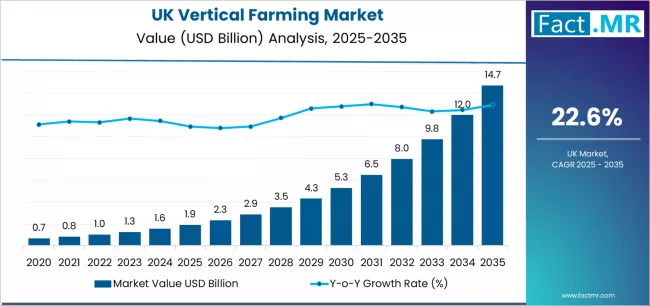
The United Kingdom’s agricultural sector is undergoing a significant transformation as the country responds to challenges such as climate variability, limited arable land, rising food imports, and growing consumer demand for fresh, locally produced food. Vertical farming has emerged as a promising solution to these challenges by enabling year-round crop production in controlled indoor environments. The demand for vertical farming in the UK is gaining strong momentum as policymakers, technology providers, and food producers seek innovative ways to strengthen food security and promote sustainable agriculture.
Market Overview
Vertical farming refers to the cultivation of crops in stacked layers within indoor facilities using advanced technologies such as hydroponics, aeroponics, and controlled-environment agriculture systems. These farms rely on artificial lighting, climate control, and precise nutrient delivery to optimize plant growth while minimizing water and land use.
In the UK, vertical farming is increasingly viewed as a strategic complement to traditional agriculture. Urbanization and limited farmland availability have heightened interest in space-efficient farming models that can operate close to consumers. Vertical farms are being developed in urban and peri-urban locations, reducing dependence on long supply chains and improving access to fresh produce.
Key Drivers Influencing Market Demand
One of the primary drivers behind the rising demand for vertical farming in the UK is the need for enhanced food security. Disruptions to global supply chains and increased reliance on imported produce have underscored the importance of domestic food production. Vertical farming enables consistent output regardless of weather conditions, making it an attractive solution for ensuring stable food supply.
Sustainability concerns are another major growth driver. Vertical farming systems use significantly less water than conventional agriculture and eliminate the need for chemical pesticides. These environmentally friendly practices align with the UK’s broader sustainability goals and resonate strongly with environmentally conscious consumers.
Technological advancements are also accelerating adoption. Improvements in LED lighting, automation, and data analytics have increased productivity and reduced operational complexity. As technology becomes more accessible, vertical farming is becoming a viable option for both startups and established agricultural players.
Regional Insights
Demand for vertical farming in the UK is particularly strong in metropolitan areas where access to fresh produce and space constraints are key considerations. Cities with high population density and strong food innovation ecosystems are witnessing increased investment in indoor farming facilities.
Additionally, regions with limited access to fresh vegetables or those aiming to reduce food miles are showing growing interest in vertical farming projects. Support from local authorities and collaboration with research institutions are further strengthening regional adoption and innovation.
Key Trends and Market Evolution
One of the most notable trends in the UK vertical farming market is the integration of automation and artificial intelligence. Automated monitoring systems allow growers to control lighting, humidity, and nutrient levels with high precision, leading to improved yields and consistent crop quality.
Another emerging trend is the focus on high-value crops such as leafy greens, herbs, and microgreens. These crops are well-suited to vertical farming due to their short growth cycles and strong demand in retail and foodservice sectors. Producers are increasingly targeting premium markets that value freshness, traceability, and sustainable sourcing.
Partnerships between vertical farming companies and retailers are also becoming more common. These collaborations help secure long-term supply agreements and improve market access, enabling vertical farms to scale operations and achieve commercial viability.
Applications and End-Use Outlook
Vertical farming in the UK serves a wide range of end-use segments, including retail chains, restaurants, and direct-to-consumer channels. Supermarkets are increasingly sourcing produce from vertical farms to meet consumer demand for locally grown food with minimal environmental impact.
The hospitality and foodservice sector is another key end-user, particularly in urban centers. Restaurants and hotels value the consistent quality and year-round availability offered by vertical farms, which helps them maintain menu consistency and reduce supply risks.
Educational institutions and research organizations are also adopting vertical farming systems for research, training, and innovation. These applications contribute to knowledge development and support the long-term growth of the sector.
Competitive Landscape
The UK vertical farming market features a mix of technology startups, agricultural innovators, and established food producers. Competition is focused on technological differentiation, operational efficiency, and scalability. Companies are investing in research and development to improve crop yields, reduce energy consumption, and enhance system reliability.
Strategic collaborations with technology providers, universities, and retailers are playing a key role in strengthening market presence. These partnerships help companies access funding, expertise, and market channels while accelerating innovation.
Conclusion
The growing demand for vertical farming in the UK reflects a broader shift toward sustainable, resilient, and locally focused food systems. As challenges related to climate change, land availability, and food security intensify, vertical farming offers a practical and forward-looking solution.
For stakeholders across agriculture, retail, and technology sectors, understanding the evolving dynamics of the vertical farming market is essential. Access to detailed market insights can support informed decision-making, help identify emerging opportunities, and contribute to the development of a more sustainable future for food production in the United Kingdom.
Browse Full Report – https://www.factmr.com/report/united-states-vehicles-intelligence-battery-sensor-market