The global maternal nutrition product market is poised for robust growth in the coming decade, driven by rising awareness of maternal health, increasing birth rates, and a growing preference for scientifically formulated nutritional supplements for women during preconception, pregnancy, and lactation phases. Revenue from maternal nutrition products is projected to grow from US$ 23.57 billion in 2024 to US$ 38.66 billion by 2034, registering a compound annual growth rate (CAGR) of 5.1% over the forecast period.
Market Overview & Growth Dynamics
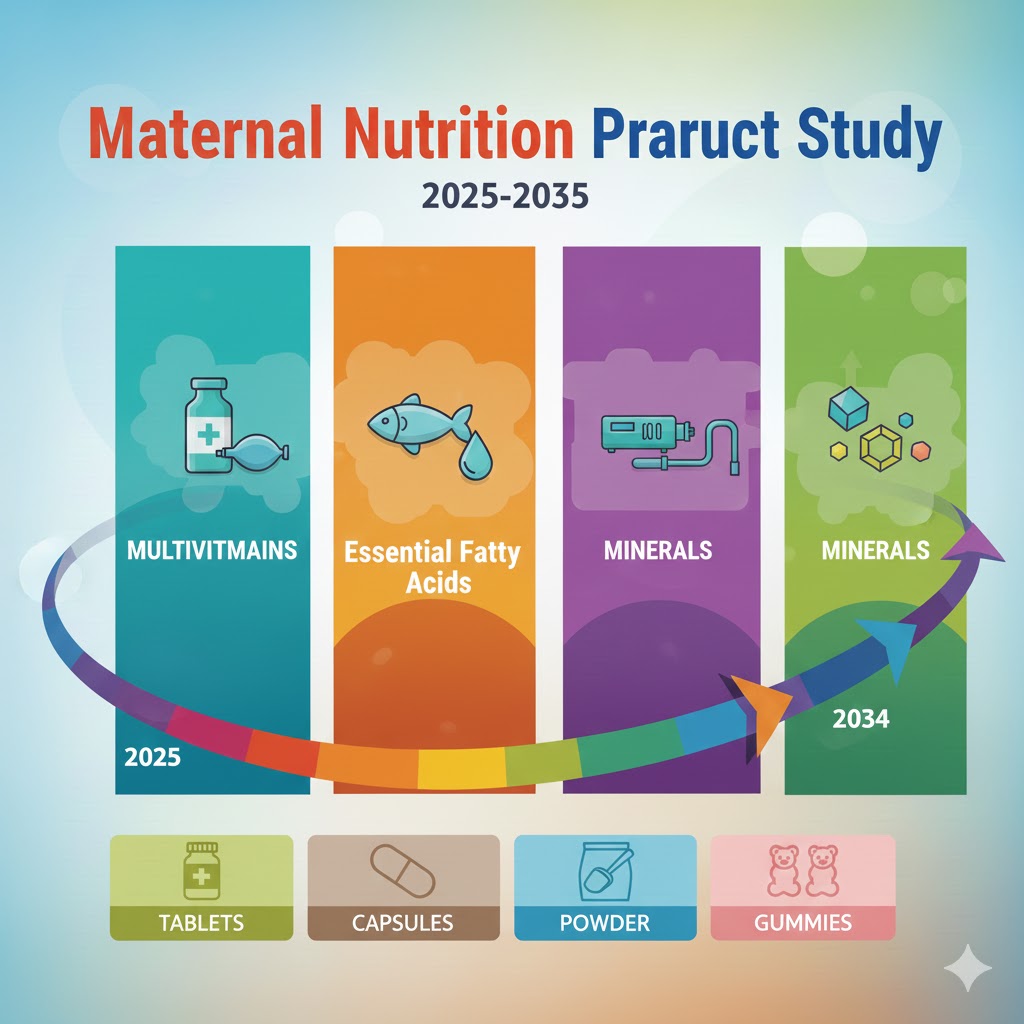
Maternal nutrition products are specialized dietary supplements designed to provide essential nutrients to women before conception, during pregnancy, and throughout lactation. These products typically include multivitamins, essential fatty acids, and minerals, which are critical in supporting maternal health and fetal development. The surge in market demand is largely attributed to heightened global awareness about nutritional deficiencies in pregnant and lactating women, along with health‑care professional recommendations encouraging supplementation to improve health outcomes.
The market’s projected growth to nearly US$ 39 billion by 2034 underscores its resilience and long‑term opportunity, as populations worldwide recognize the role of maternal nutrition in reducing birth complications and promoting child health.
High‑Growth Segments: Product Types & Distribution Channels
Multivitamins command a key share of the global maternal nutrition product market as the most widely consumed category. In 2024, multivitamins accounted for roughly 38.2% of total market value, and they are expected to continue leading owing to their broad spectrum nutritional coverage and general acceptance among consumers.
Among distribution channels, modern trade outlets (supermarkets and hypermarkets) have emerged as dominant sales platforms. With a market share exceeding 30.2% in 2024, modern trade channels are capitalizing on in‑store promotions, educational campaigns, and quality assurance programs that help build consumer confidence and influence purchasing decisions.
Additionally, the rapidly expanding online retail segment is gaining traction due to the convenience it offers, especially among tech‑savvy millennial mothers seeking quick access to product information and reviews. E‑commerce platforms are projected to witness some of the fastest growth rates in the forecast period, driven by subscription‑based models and a wider product assortment. This trend aligns with broader shifts in global consumer behavior toward online health and wellness solutions.
Regional Insights & Opportunity Mapping
The maternal nutrition product market exhibits strong regional dynamics, with East Asia and North America leading global market shares. In 2024, East Asia accounted for approximately 23.9% of global market value, while North America followed with 22.6%.
North America’s market growth is anchored by advanced healthcare infrastructure, extensive availability of maternal nutrition brands, and high per‑capita health spending. In the United States alone, the market is expected to expand at a 4.2% CAGR, potentially reaching nearly US$ 6 billion by 2034.
Meanwhile, East Asia’s rising birth rates, government support programs, and abundant raw material supplies for product manufacturing are fueling rapid expansion in the region. Japan, in particular, represents a lucrative sub‑segment, with its market projected to grow at a 6% CAGR and approach US$ 1.8 billion by 2034.
In Western Europe, increased use of dietary supplements and strong maternal health awareness are contributing to rising demand. Across all regions, emerging economies in Asia, Latin America, and Africa offer untapped potential, as increased disposable incomes and expanding healthcare access raise the prospects for market penetration.
Value Chain Insights
The maternal nutrition product market’s value chain encompasses raw material suppliers, formulation specialists, manufacturers, distributors, and retail partners. Traditional pharmaceutical and nutraceutical companies dominate production, leveraging research partnerships to develop high‑bioavailability formulations tailored to maternal health needs.
Recent innovations in delivery systems—such as time‑released capsules, chewables, and gummy forms—reflect consumer demand for convenience and improved tolerability, particularly among pregnant women. These advancements are enhancing product appeal and broadening usage beyond traditional tablet formats.
At the distribution level, the integration of digital health platforms and omnichannel retail strategies is reshaping how products reach consumers. Companies increasingly leverage data analytics and digital marketing to tailor offerings, nurture brand loyalty, and optimize supply chain efficiencies from production to point of sale.
Drivers of Market Growth
Several key drivers have emerged as catalysts for market expansion:
-
Rising Birth Rates and Maternal Health Awareness: As global birth rates climb and maternal wellness becomes a public health priority, demand for targeted nutritional support has intensified. Healthcare professionals increasingly recommend supplementation to mitigate risks such as anemia and neural tube defects.
-
Millennial Mothers & Scientific Confidence: The growing cohort of millennial mothers seeks products backed by clinical evidence and transparency, particularly those containing adequate levels of vitamins such as folic acid and minerals like iron and calcium.
-
Government & International Initiatives: Programs promoting nutrient‑rich diets and food fortification further support market penetration and awareness.
-
Evolving Retail Landscape: Expansion of modern trade and online sales platforms enhances accessibility, particularly in urban and suburban markets, creating pathways to scale for both established and emerging brands.
Challenges & Market Restraints
Despite strong growth prospects, the market faces certain constraints. Regulatory hurdles for supplement approval remain a significant barrier, as stringent safety and efficacy standards can delay product launches or limit geographic expansion.
Additionally, pricing pressures—as many maternal nutrition products are positioned as premium offerings—may limit accessibility among cost‑sensitive segments. Consumer concerns about side effects, such as gastrointestinal discomfort, could also impact adoption without proper educational outreach.
Competitive Landscape & Strategic Outlook
The competitive landscape is fragmented, with a blend of global and regional players enhancing product portfolios through innovation, strategic partnerships, and marketing initiatives. Notable companies include Danone, Church & Dwight Co. Inc., The Honest Company Inc., Nordic Naturals Inc., and Pharmavite LLC, among others.
Manufacturers are increasingly investing in R&D and personalized nutrition solutions to differentiate offerings and meet evolving consumer preferences. From trimester‑specific formulations to plant‑based alternatives, product diversification is expected to be a core strategy in upcoming years.
Browse Full Report : https://www.factmr.com/report/643/maternal-nutrition-products-market
Conclusion
The global maternal nutrition product market stands at a pivotal juncture, with steady growth, evolving product innovation, and expanding distribution channels driving future prospects. With an estimated market value nearing USD 39 billion by 2034, stakeholders across the value chain—from raw material suppliers to retail platforms—are poised to benefit from a market defined by health‑driven consumption, technological advancements, and stronger consumer engagement.