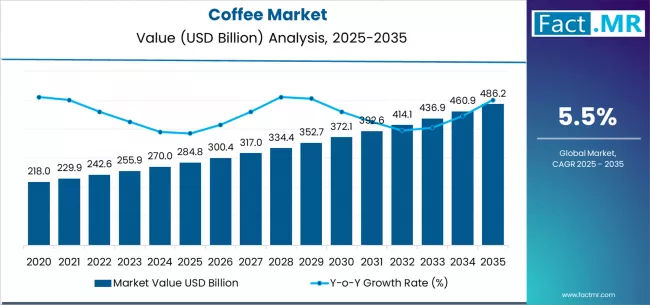
The coffee market continues to witness robust growth as consumer demand for premium coffee experiences and convenient consumption formats rises worldwide. Coffee has become a staple in daily lifestyles, not only as a beverage but also as a cultural and social experience. With the expansion of specialty coffee shops, home brewing trends, and ready-to-drink options, the global coffee industry is evolving to meet diverse consumer preferences across multiple channels.
Market Overview:
Coffee products are available in various formats, including roasted, instant, ready-to-drink (RTD), pods and capsules, and whole beans. Among these, roasted coffee dominates due to its flavor complexity, versatility, and premium positioning. Roasted coffee caters to a wide range of brewing methods, from traditional drip coffee makers to espresso machines, making it a preferred choice for consumers seeking authentic coffee experiences. Instant coffee and single-serve capsule systems address convenience-oriented consumption, while RTD coffee products are growing in popularity for on-the-go lifestyles.
The coffee market is heavily influenced by lifestyle trends, urbanization, and disposable income levels. Rising awareness of specialty coffee, single-origin beans, and artisanal roasting techniques is driving demand for premium products. Retailers, cafes, and e-commerce platforms are also enabling wider accessibility, while coffeehouse chains enhance consumer engagement through innovative offerings and loyalty programs.
Regional Insights:
Asia Pacific is emerging as a key growth region, driven by increasing urban populations, rising coffee culture, and growing retail and foodservice networks. China, Japan, and India are witnessing rapid adoption of both traditional roasted coffee and modern coffee formats. Europe continues to hold a significant share due to mature markets, well-established specialty coffee culture, and high per capita consumption. North America benefits from strong brand presence, innovative product launches, and expanding e-commerce coffee sales. Emerging markets in Latin America and the Middle East & Africa are gradually expanding, supported by growing retail infrastructure and coffeehouse penetration.
Key Market Trends:
- Premiumization:Consumers are gravitating toward specialty coffee, single-origin varieties, and artisanal roasting methods for enhanced flavor and experience.
- Convenience Formats:Single-serve capsules, instant coffee, and RTD beverages are increasing in demand due to busy lifestyles and home consumption trends.
- E-Commerce Growth:Online sales and subscription models are creating new distribution channels and customer engagement opportunities.
- Sustainability and Ethical Sourcing:Traceability, fair trade, and environmentally conscious production practices are gaining importance among consumers.
- Functional and Innovative Beverages:Plant-based alternatives, cold brew coffee, and fortified coffee beverages are emerging to cater to health-conscious and niche segments.
Applications & End-Use Outlook:
The coffee market caters to multiple end-use sectors:
- Retail Consumers:Supermarkets, specialty retailers, and online platforms are primary channels for household consumption.
- Foodservice & Hospitality:Cafes, restaurants, hotels, and coffeehouse chains drive high-volume sales and premium offerings.
- Office & Workplace:Workplace coffee solutions, including capsules and brewing machines, contribute to consistent daily consumption.
- Ready-to-Drink Formats:RTD beverages are increasingly popular for convenience, offering flavor variety and portability.
Challenges:
The coffee industry faces challenges related to climate change, price volatility, and supply chain sustainability. Coffee cultivation requires specific environmental conditions, making it vulnerable to disease, water scarcity, and extreme weather events. Price fluctuations in commodity markets can impact both producers and retailers, while small-scale growers may struggle with sustainable farming practices. Supply chain complexity for sourcing, roasting, and distribution also requires robust logistics and quality control measures, especially in emerging markets.
Future Outlook:
The coffee market is projected to grow steadily, driven by premiumization, lifestyle integration, and technological innovations in brewing and packaging. Specialty coffee, single-serve capsules, and RTD formats will continue to expand, supported by digital platforms and subscription-based models. Sustainability initiatives, including traceable sourcing, carbon-neutral production, and ethical trade practices, will influence market dynamics and brand loyalty. Additionally, innovation in functional beverages, cold brew, and plant-based coffee alternatives will cater to evolving consumer preferences, ensuring continued market expansion across diverse global regions.
Conclusion:
The coffee market is thriving as a global beverage industry that balances tradition with innovation. Consumers’ demand for premium, convenient, and sustainable coffee products is shaping market trends, while retailers and foodservice providers continue to expand offerings and delivery channels. With sustained interest in specialty coffee, innovative formats, and ethical sourcing, the coffee industry is poised for continued growth, offering opportunities for manufacturers, retailers, and entrepreneurs worldwide.
Browse Full Report – https://www.factmr.com/report/249/coffee-market