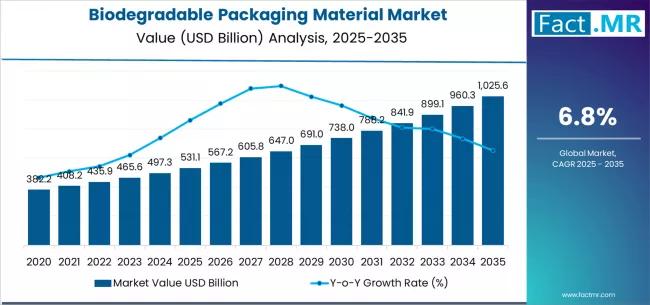
The biodegradable packaging material market is gaining significant traction as businesses, consumers, and governments seek environmentally responsible alternatives to conventional plastics. With growing awareness of plastic pollution, regulatory pressures, and sustainability goals, biodegradable packaging materials are emerging as a key solution for food, beverages, personal care, and e-commerce industries. These materials offer effective product protection while ensuring that packaging decomposes naturally, supporting circular economy initiatives.
Market Overview:
Biodegradable packaging materials are designed to break down into natural elements through biological processes, reducing landfill accumulation and environmental impact. Key materials include bio-plastics, paper and paperboard, and bagasse, each offering unique functional advantages for different applications. Bio-plastics, which dominate the market, provide excellent barrier protection, structural integrity, and compatibility with various product formats, from pouches and bags to boxes and trays. Paper-based materials leverage renewable resources and recyclability, while bagasse, derived from sugarcane residue, serves as a versatile, compostable option.
Modern biodegradable packaging solutions balance performance with sustainability. They maintain shelf-life protection comparable to conventional plastics and are increasingly designed to be recyclable or industrially compostable. Functional designs include multi-layer constructions, barrier coatings, and customizable forms for specific product needs, making them viable for food, personal care, and healthcare applications.
Regional Insights:
Asia Pacific is the leading region in the biodegradable packaging material market, driven by high population density, rising consumer awareness, and strict plastic reduction policies in countries like India and China. Europe also demonstrates strong adoption, propelled by robust regulatory frameworks such as the Single-Use Plastics Directive and well-established waste management systems. North America is witnessing gradual growth through corporate sustainability commitments, state-level regulations, and increasing demand for eco-friendly consumer goods. Emerging markets in Latin America and the Middle East & Africa are gradually embracing biodegradable packaging as e-commerce, retail, and food delivery sectors expand.
Key Market Trends:
- Dominance of Bio-Plastics:Bio-plastics account for a substantial share of the market due to their functional versatility and proven compostability, making them suitable across multiple product applications.
- Rise of Paper and Fiber-Based Solutions:Driven by circular economy principles and renewable resource mandates, paper and paperboard packaging is growing rapidly.
- Flexible Packaging Formats:Pouches and bags lead in format popularity, supporting lightweight, convenient, and retail-friendly designs.
- Food & Beverage Applications:These remain the dominant end-use sector, reflecting stringent safety and quality standards.
- Regulatory Influence:Government bans on single-use plastics and extended producer responsibility programs continue to drive adoption of biodegradable alternatives.
- Technological Advancements:Improvements in barrier coating, multi-layer construction, and compostable material formulations enhance performance and sustainability credentials.
Applications & End-Use Outlook:
Biodegradable packaging materials cater to diverse industries:
- Food and Beverages:Fresh produce, prepared meals, dairy, and beverages benefit from safe, sustainable packaging that maintains freshness.
- Personal Care & Cosmetics:Biodegradable packaging supports eco-conscious branding while protecting sensitive formulations.
- Pharmaceuticals:Packaging materials ensure safety and integrity while meeting regulatory and environmental standards.
- Homecare Products:Sustainable packaging is increasingly preferred for detergents, cleaners, and other household products, supporting green consumer choices.
Challenges:
While the market shows strong potential, adoption faces hurdles. High production costs of biodegradable materials compared to conventional plastics may limit uptake, especially in price-sensitive regions. Limited industrial composting infrastructure in some areas hampers effective disposal and end-of-life processing. Additionally, consumer awareness and acceptance are critical, as proper segregation and disposal practices are required to achieve environmental benefits.
Future Outlook:
The biodegradable packaging material market is expected to grow steadily in the coming decade, supported by rising environmental awareness, stringent regulations, and increasing corporate sustainability initiatives. Expansion in bio-plastic and fiber-based solutions, coupled with innovations in material science, will drive adoption across food, personal care, and e-commerce applications. Strategic partnerships between packaging manufacturers, retailers, and waste management providers will facilitate circular economy integration and improve composting infrastructure. Companies are also exploring smart packaging features, such as QR codes and traceability, to enhance consumer engagement while reinforcing sustainability credentials.
Conclusion:
Biodegradable packaging materials are transforming the packaging industry by offering environmentally responsible solutions that do not compromise on product protection or functionality. Their adoption is driven by regulatory pressures, corporate sustainability goals, and increasing consumer demand for eco-friendly packaging. With continued innovation in bio-plastics, paper-based materials, and compostable solutions, the biodegradable packaging material market is set to play a pivotal role in creating a sustainable, circular economy across industries worldwide.
Browse Full Report – https://www.factmr.com/report/2063/biodegradable-packaging-material-market