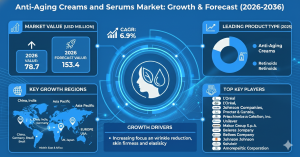
The anti-aging creams and serums market continues to evolve as consumers across age groups increasingly prioritize skin health, appearance, and long-term care. Rising awareness about premature aging caused by environmental stressors, lifestyle changes, and exposure to pollutants has significantly boosted demand for targeted skincare solutions. Anti-aging creams and serums are designed to address concerns such as fine lines, wrinkles, uneven skin tone, loss of elasticity, and dullness, making them essential components of modern skincare routines.
With growing emphasis on self-care, wellness, and appearance, the market is witnessing strong interest from both younger consumers seeking preventive care and older individuals looking for corrective treatments.
Market Overview
Anti-aging creams and serums include a wide range of topical skincare products formulated to slow visible signs of aging and improve overall skin texture and resilience. Creams typically focus on hydration, nourishment, and barrier repair, while serums deliver concentrated active ingredients designed for deeper skin penetration and faster results.
The market is characterized by continuous innovation in formulation, texture, and ingredient combinations. Products increasingly feature scientifically backed actives such as peptides, retinoids, antioxidants, hyaluronic acid, and botanical extracts. Manufacturers are also emphasizing dermatologically tested, non-comedogenic, and skin-friendly formulations to appeal to consumers with sensitive or aging skin.
Growing preference for personalized skincare and targeted treatment solutions has further expanded the scope of anti-aging creams and serums across diverse skin types and concerns.
Key Growth Drivers
One of the key drivers of the anti-aging creams and serums market is increasing consumer awareness regarding skincare education and early intervention. Preventive skincare has gained popularity, encouraging consumers to adopt anti-aging products at earlier stages rather than waiting for visible signs to appear.
Rising influence of social media, beauty influencers, and dermatologist-led content has also played a crucial role in shaping purchasing decisions. Consumers are more informed about ingredients, routines, and product efficacy, leading to higher demand for premium and clinically supported anti-aging solutions.
The growing popularity of clean beauty and natural formulations is another important growth factor. Consumers are increasingly seeking products free from harsh chemicals, parabens, and synthetic fragrances. This has encouraged brands to develop plant-based, cruelty-free, and sustainable anti-aging creams and serums.
Regional Insights
North America remains a prominent market for anti-aging creams and serums, supported by strong consumer awareness, high spending on personal care, and a well-established skincare industry. The region continues to see demand for advanced formulations and dermatologist-recommended products.
Europe follows closely, driven by a strong focus on skincare heritage, product quality, and regulatory standards. Consumers in this region show growing interest in premium, organic, and scientifically formulated anti-aging products.
The Asia-Pacific region is emerging as a high-growth market, fueled by expanding middle-class populations, rising beauty consciousness, and strong influence of skincare routines rooted in tradition and innovation. Countries in this region are witnessing increased demand for lightweight serums, multifunctional creams, and skin-brightening anti-aging solutions.
Key Trends and Market Dynamics
A major trend shaping the anti-aging creams and serums market is the shift toward multifunctional products. Consumers prefer solutions that offer hydration, wrinkle reduction, skin firming, and protection against environmental damage in a single formulation.
Another notable trend is the growing popularity of serums over traditional creams, particularly among younger consumers. Serums are perceived as fast-absorbing, lightweight, and highly effective due to their concentrated active ingredients.
Personalization and skin-specific formulations are gaining traction, with brands offering products tailored to different skin types, aging stages, and concerns. Advanced diagnostic tools and digital consultations are further supporting customized skincare solutions.
Sustainability and ethical branding are also influencing market dynamics. Recyclable packaging, refill systems, and responsibly sourced ingredients are becoming important differentiators for brands aiming to build long-term consumer trust.
Applications and End-Use Outlook
Anti-aging creams and serums are primarily used in daily skincare routines for facial, neck, and eye-area care. They are increasingly incorporated into both morning and nighttime regimens to support skin repair, hydration, and protection.
These products are widely used in homecare settings, with growing adoption among consumers seeking professional-grade results without clinical procedures. Dermatology clinics, beauty salons, and aesthetic centers also represent important end-use segments, often recommending or retailing premium anti-aging formulations.
Men’s grooming is emerging as an additional application area, as male consumers become more aware of skincare benefits and anti-aging solutions tailored to their needs.
Competitive Landscape
The anti-aging creams and serums market is highly competitive, featuring global skincare brands, dermatological companies, and niche clean beauty players. Innovation, brand credibility, and ingredient transparency are key competitive factors.
Manufacturers are investing heavily in research and development to enhance product efficacy, improve skin compatibility, and validate claims through clinical testing. Strategic collaborations with dermatologists, influencers, and research institutions are helping brands strengthen market presence and consumer confidence.
Future Outlook
The future of the anti-aging creams and serums market appears promising, driven by continuous innovation, rising skincare awareness, and growing demand for effective and sustainable beauty solutions. As consumers increasingly seek products that combine science, safety, and self-care, the market is expected to witness sustained expansion.
Advancements in formulation technology, personalized skincare, and clean beauty practices will continue to shape market evolution. Access to detailed market intelligence from trusted research platforms such as Fact.MR can support stakeholders in identifying emerging trends and developing strategies aligned with the evolving anti-aging skincare landscape.
Browse Full Report – https://www.factmr.com/report/anti-aging-creams-and-serums-market