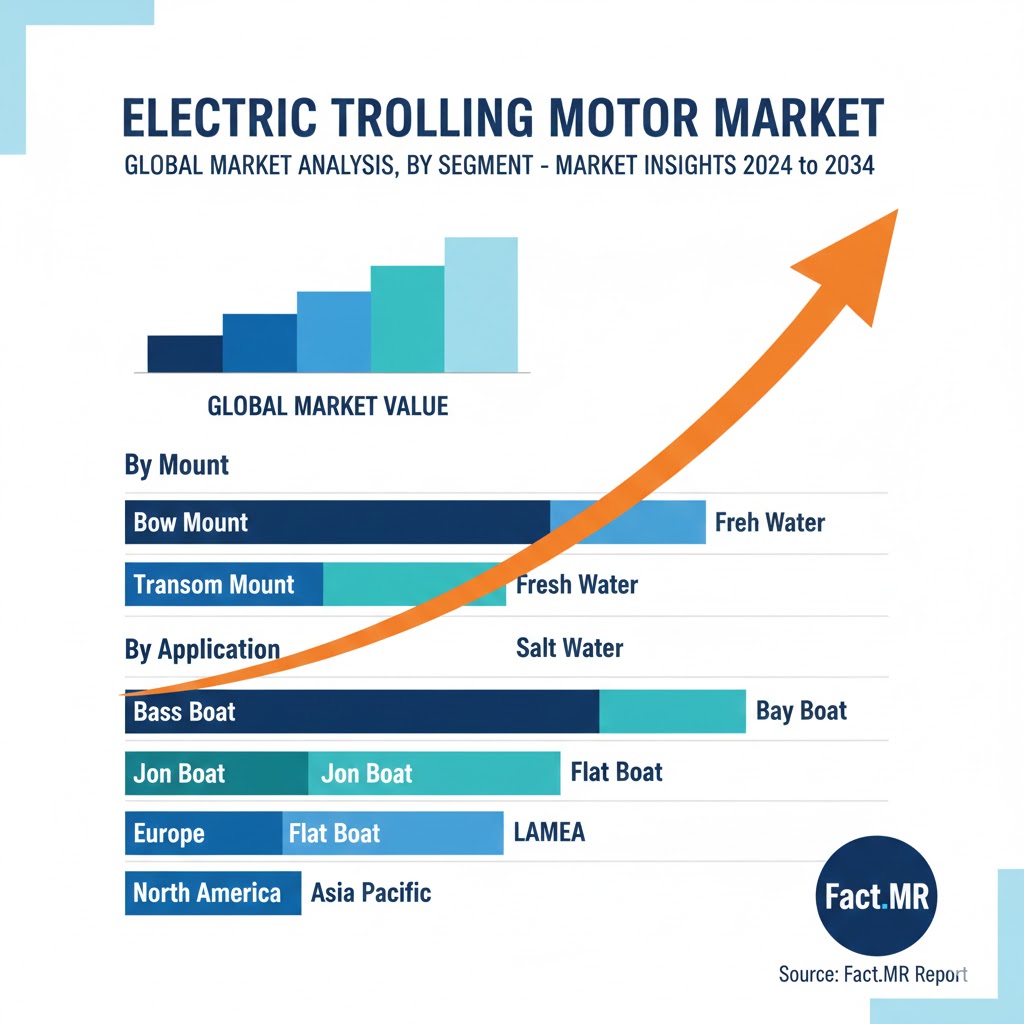
The Global Electric Trolling Motor Market is poised for steady growth over the next decade, driven by rising recreational boating trends, enhanced environmental awareness, and rapid adoption of advanced marine propulsion technologies. The global electric trolling motors market is expected to grow from an estimated US$ 597.4 million in 2024 to US$ 850.8 million by 2034, exhibiting a compound annual growth rate (CAGR) of 3.6% during the forecast period (2024–2034).
Market Summary & Growth Trajectory
The electric trolling motor market has seen steady historical growth, with a valuation of approximately US$ 583.0 million in 2023, advancing at a CAGR of 2.4% from 2019 to 2023. The forecast underscores expanding applications across recreational fishing, freshwater and saltwater boating, and growing consumer preferences for sustainable marine propulsion solutions.
Innovation in electric propulsion systems—often featuring GPS routing, remote control steering, and smart battery management— is transforming the way anglers and boaters operate, granting enhanced precision and convenience that fuel adoption worldwide.
Key Market Drivers
1. Recreational Boating & Fishing on the Rise
Electric trolling motors are increasingly replacing traditional fuel‑based systems due to their quiet operation, reduced emissions, and ease of handling. In 2023 alone, millions of individuals participated in recreational fishing, significantly boosting demand for electric motors that facilitate quiet, efficient navigation during angling.
Across Europe, the growth of commercial and recreational fishing activities has elevated demand for precision propulsion solutions like electric trolling motors.
2. Environmental Sustainability & Regulation
Governments and regulatory bodies are tightening environmental policies around marine pollution, incentivizing the adoption of eco‑friendly electric propulsion systems. Electric trolling motors significantly reduce carbon emissions and noise pollution compared with traditional outboard engines, aligning with global sustainability goals especially in developed markets.
Innovation continues to evolve with battery enhancements and integration of IoT‑based navigation technologies, which further support efficiency and lower lifecycle costs, creating compelling value propositions for end-users.
Segment Insights
Motor Type
Among different motor types, Bow‑Mount electric trolling motors hold the largest share of the market. Valued at US$ 359.6 million in 2024, this segment is expected to witness robust growth at a 3.9% CAGR, reaching US$ 529.6 million by 2034. These motors provide superior control for medium to large watercraft, making them highly desirable for serious anglers and boating enthusiasts.
Transom‑mount motors are also gaining traction, particularly among entry‑level recreational users who favor lower cost and easy installation, expanding the overall consumer base.
Boat Type
Jon Boats, known for their flat-bottom design and suitability for shallow waters, represent a fast-growing segment, accounting for US$ 156.0 million in market value (2024), with an impressive 26.1% CAGR expected through 2034. The rising popularity of outdoor recreational activities and sport fishing among varying age groups is a key driver for this segment’s rapid growth.
Other boat segments such as bass boats, pontoons, and flat boats are also contributing to market expansion, creating diversified demand across different water conditions and recreational needs.
Application
Electric trolling motors are widely used for freshwater fishing, which continues to dominate the application landscape. Notably, freshwater applications command a significant market share due to higher participation in recreational fishing activities, particularly in North America and Europe where boating culture is deeply entrenched.
Saltwater fishing applications are also gaining ground as technological improvements enhance corrosion resistance and system durability, making electric trolling motors viable in more challenging marine environments.
Regional Outlook
North America
North America remains the largest regional market, accounting for more than 26.9% of global market share in 2024, with a projected CAGR of 3.9% through 2034. The USA, in particular, is anticipated to grow from approximately US$ 113.0 million in 2024 to US$ 165.6 million by 2034, supported by robust boating culture and strong marine infrastructure.
Western Europe
In Western Europe, the market share stands at 22.4% in 2024, backed by strong recreational fishing communities and expanding commercial fishing operations that leverage electric trolling motors for their low environmental impact and operational efficiency.
Regions such as East Asia, South Asia & Pacific, and Latin America are showing emerging growth potential due to rising participation in recreational boating, increasing disposable incomes, and advancements in marine electronics.
Competitive Landscape
The global electric trolling motor market is moderately consolidated with several major players driving innovation and competitive differentiation. Key companies include:
-
Minn Kota (Johnson Outdoor Marine)
-
MotorGuide (Brunswick Corporation)
-
Garmin Ltd
-
Lowrance (Navico)
-
Torqeedo GmbH
-
Newport Vessels
-
Watersnake (Jarvis Walker Pty, Inc.)
-
Aquamot
These firms are investing in R&D to enhance product performance, extend battery life, and integrate smart features such as GPS tracking and IoT-enabled navigation. Strategic initiatives like product diversification, e-commerce expansion, and global distribution partnerships are set to strengthen their market positions.
Challenges & Opportunities
While the electric trolling motor market is positioned for growth, certain challenges remain. Factors such as economic downturns and constrained consumer spending power can influence short-term sales, particularly in cost-sensitive regions. Additionally, climate change impacts on fish migration patterns could indirectly influence recreational fishing demand in some geographies.
However, ongoing advancements in battery technology, the shift toward autonomous boating solutions, and expanding applications in marine research and conservation present compelling long-term opportunities for market players.
Browse Full Report : https://www.factmr.com/report/4860/electric-trolling-motors-market
Conclusion
The global electric trolling motor market is set to navigate strong growth waters over the next decade, propelled by sustainable propulsion trends, technological advancements, and expanding global boating culture. With a projected market value of US$ 850.8 million by 2034, the industry presents high-growth segments and strategic opportunities for manufacturers, distributors, and ecosystem partners worldwide.