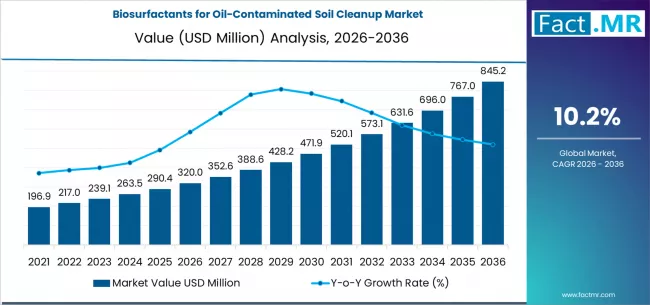
Soil contamination caused by oil spills and hydrocarbon leakage has become a major environmental challenge, particularly in regions with extensive industrial activity, energy exploration, and transportation infrastructure. Traditional remediation methods often rely on chemical surfactants and mechanical treatments that can cause secondary environmental damage. In response, biosurfactants have emerged as a sustainable and eco-friendly alternative for cleaning oil-contaminated soil. As outlined by Fact.MR, increasing environmental awareness and stricter remediation regulations are driving interest in biosurfactants in oil-contaminated soil cleanup solutions across industrial and public sectors.
Market Overview
Biosurfactants are naturally derived surface-active compounds produced by microorganisms such as bacteria, yeast, and fungi. In soil remediation, they enhance the mobilization and biodegradation of hydrocarbons by reducing surface and interfacial tension. This allows trapped oil residues to be released from soil particles, making them more accessible for microbial degradation or physical removal.
Compared to synthetic surfactants, biosurfactants offer advantages such as biodegradability, low toxicity, and effectiveness under extreme environmental conditions. These properties make them particularly suitable for long-term remediation projects and sensitive ecosystems. According to Fact.MR, advancements in biotechnology and fermentation processes are supporting the wider adoption of biosurfactants for oil-contaminated soil cleanup.
Environmental and Regulatory Landscape
Environmental protection policies and land restoration mandates play a critical role in shaping the biosurfactants market. Governments and environmental agencies worldwide are enforcing stricter standards for soil remediation, especially in industrial zones, refineries, pipelines, and transportation corridors. These regulations encourage the use of sustainable remediation technologies that minimize ecological impact.
Biosurfactants align well with green remediation principles, as they promote natural biodegradation rather than chemical dispersion. Regulatory bodies increasingly recognize the benefits of biologically based solutions, which has contributed to growing acceptance of biosurfactants in environmental cleanup programs. Fact.MR highlights that regulatory support is a key factor influencing market expansion, particularly in environmentally sensitive regions.
Regional Insights
Adoption of biosurfactants for oil-contaminated soil cleanup varies across regions based on industrial activity, environmental policies, and awareness of sustainable remediation methods. Regions with significant oil and gas operations and aging infrastructure face higher risks of soil contamination, leading to stronger demand for effective cleanup solutions.
Developed regions tend to adopt biosurfactants as part of integrated remediation strategies that combine biological, chemical, and mechanical methods. Emerging regions are gradually embracing biosurfactant-based solutions as environmental regulations strengthen and remediation projects increase. Collaborative efforts between governments, research institutions, and environmental service providers are helping expand market reach.
Key Trends and Market Outlook
One of the major trends shaping this market is the shift toward bio-based and nature-inspired remediation technologies. Biosurfactants are increasingly being incorporated into bioremediation programs that leverage indigenous microorganisms to break down hydrocarbons in soil.
Another notable trend is the development of high-performance biosurfactants capable of functioning in harsh conditions such as high salinity, extreme temperatures, and varying soil compositions. Manufacturers are also focusing on improving production efficiency to make biosurfactants more cost-competitive with synthetic alternatives.
Partnerships between biotechnology firms, environmental engineering companies, and research organizations are accelerating innovation and commercialization. Fact.MR notes that these collaborations are essential for scaling production and expanding application scope across diverse soil remediation projects.
Applications and End-Use Outlook
Biosurfactants are widely used in remediation projects involving oil-contaminated soil at drilling sites, refineries, storage terminals, and industrial facilities. They are also applied in cleanup operations following accidental oil spills affecting land ecosystems.
Environmental service providers and remediation contractors are key end users, utilizing biosurfactants as part of in-situ and ex-situ soil treatment methods. Government agencies and industrial operators increasingly prefer biosurfactant-based solutions to meet sustainability goals and reduce long-term environmental liabilities. The adaptability of biosurfactants allows them to be customized for specific contamination levels and soil types.
Challenges and Growth Opportunities
Despite their environmental benefits, biosurfactants face challenges related to production scalability, consistency, and cost optimization. Variability in raw material availability and fermentation processes can impact supply reliability. Additionally, limited awareness in certain regions may slow adoption.
However, ongoing research and technological advancements are addressing these challenges. Opportunities lie in developing cost-effective production methods, expanding applications beyond oil-contaminated soil, and increasing awareness of biosurfactant benefits among policymakers and industry stakeholders. Fact.MR emphasizes that innovation and education will be critical in unlocking the full potential of biosurfactants in environmental remediation.
Conclusion
The biosurfactants for oil-contaminated soil cleanup market represents a significant step toward sustainable and environmentally responsible remediation practices. Driven by regulatory pressure, environmental concerns, and advances in biotechnology, biosurfactants are gaining recognition as an effective alternative to conventional cleanup methods. Insights from Fact.MR suggest that continued investment in research, supportive policies, and cross-sector collaboration will shape the future of this market. For stakeholders involved in soil remediation and environmental management, biosurfactants offer a promising pathway toward long-term ecological restoration and sustainability.
Browse Full Report – https://www.factmr.com/report/biosurfactants-for-oil-contaminated-soil-cleanup-market