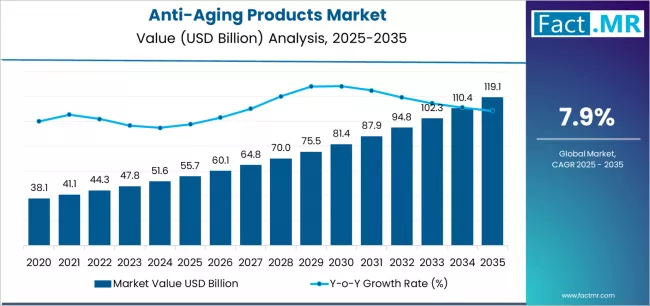
The anti-aging products market is rapidly evolving as consumers increasingly prioritize skin health, appearance, and preventive care. Anti-aging products, including moisturizers, creams, serums, eye care solutions, and sunscreens, are designed to reduce visible signs of aging such as wrinkles, fine lines, and loss of skin elasticity. With growing awareness about skincare, advanced dermatological research, and innovative formulations, the market is witnessing significant expansion across both developed and emerging regions.
Market Overview:
Anti-aging products combine cosmetic appeal with therapeutic benefits. Modern formulations incorporate active ingredients like peptides, antioxidants, retinoids, and growth factors to enhance collagen production, improve skin firmness, and promote a youthful complexion. These products are increasingly integrated into daily skincare routines, with consumers seeking solutions that provide visible results while maintaining skin health. Beyond individual use, dermatology clinics and professional beauty centers are adopting advanced anti-aging treatments, fueling market growth and product diversification.
Product Segmentation:
The market offers a broad range of products tailored for specific skin concerns. Moisturizers, creams, and lotions dominate the market, serving as essential daily skincare solutions that provide hydration, barrier repair, and anti-aging benefits. Facial serums, enriched with concentrated active ingredients, target specific concerns like wrinkles, age spots, and skin dullness. Eye care products focus on delicate areas, reducing puffiness, dark circles, and fine lines. Sunscreens and sun protection products remain crucial for preventing photoaging, while facial cleansers, exfoliators, masks, and peels provide complementary support to overall skincare regimens.
Regional Insights:
North America and Europe lead in anti-aging product adoption due to high consumer awareness, strong dermatology infrastructure, and robust retail channels. Asia-Pacific is emerging as a high-growth market, driven by increasing disposable incomes, expanding e-commerce platforms, and growing interest in premium skincare. Latin America and the Middle East & Africa are also experiencing gradual adoption, supported by rising beauty consciousness and expanding modern retail networks. These regional dynamics collectively contribute to the global proliferation of anti-aging products.
Key Trends & Drivers:
The market growth is driven by several notable trends. Consumers are gravitating towards products with scientifically validated ingredients, backed by clinical research demonstrating efficacy in wrinkle reduction, skin firming, and radiance enhancement. Personalized skincare and digital tools, such as skin analysis apps and tailored product recommendations, are transforming the purchasing experience. Holistic wellness and preventive beauty approaches are encouraging the integration of anti-aging routines from a younger age. Additionally, collaborations between cosmetic brands and dermatology clinics are facilitating product innovations and enhancing consumer trust.
Growing demand among middle-aged and senior consumers remains a primary driver, supported by the rising global focus on healthy aging. Advances in active ingredient technologies, combined with evidence-based formulations, reinforce consumer confidence and encourage adoption. E-commerce and omnichannel retail strategies further enhance accessibility, enabling consumers to explore a wider range of products and innovative solutions.
Challenges & Market Barriers:
Despite promising growth, the anti-aging products market faces challenges. Premium pricing and economic sensitivity in certain regions may limit accessibility. Regulatory compliance for cosmetic safety claims and ingredient restrictions requires rigorous testing and documentation. Consumer skepticism regarding product efficacy and competition from alternative aesthetic treatments, such as injectables and laser procedures, may also influence adoption rates. Companies must balance innovation, affordability, and safety to maintain credibility and market share.
Applications & End-Use Outlook:
Hospitals, dermatology clinics, beauty salons, and retail outlets are primary channels driving product adoption. Supermarkets and hypermarkets play a leading role in distribution, while specialty beauty stores, pharmacies, and e-commerce platforms offer diverse options to consumers. Professional skincare treatments increasingly incorporate advanced anti-aging products, extending their use beyond daily routines into clinical applications. Preventive care and youth preservation initiatives are expanding product applicability, attracting younger demographics and male consumers seeking high-performance formulations.
Future Outlook:
The anti-aging products market is poised for continued growth as technological advancements, consumer awareness, and retail expansion accelerate adoption. Future trends include personalized formulations based on individual skin profiles, incorporation of clean and sustainable ingredients, and integration with digital skincare platforms. Innovations in peptide technologies, retinoid complexes, and antioxidant-rich formulations will drive product differentiation, while collaborations between cosmetic companies and healthcare providers will enhance market credibility and consumer confidence.
As awareness of preventive skincare and holistic beauty increases, anti-aging products are expected to become integral to mainstream routines across diverse consumer demographics. Companies that invest in research-backed innovations, personalized solutions, and omnichannel accessibility will capitalize on the market’s potential and shape the future of skincare.
Conclusion:
The anti-aging products market represents a dynamic segment within the global skincare industry. By combining scientific innovation, dermatological expertise, and consumer-centric strategies, these products help individuals maintain youthful, healthy skin while addressing specific aging concerns. With strong demand, expanding distribution channels, and continuous innovation, the market is set to redefine modern skincare, offering solutions that balance efficacy, safety, and aesthetic appeal for consumers worldwide.
Browse Full Report – https://www.factmr.com/report/anti-aging-products-market