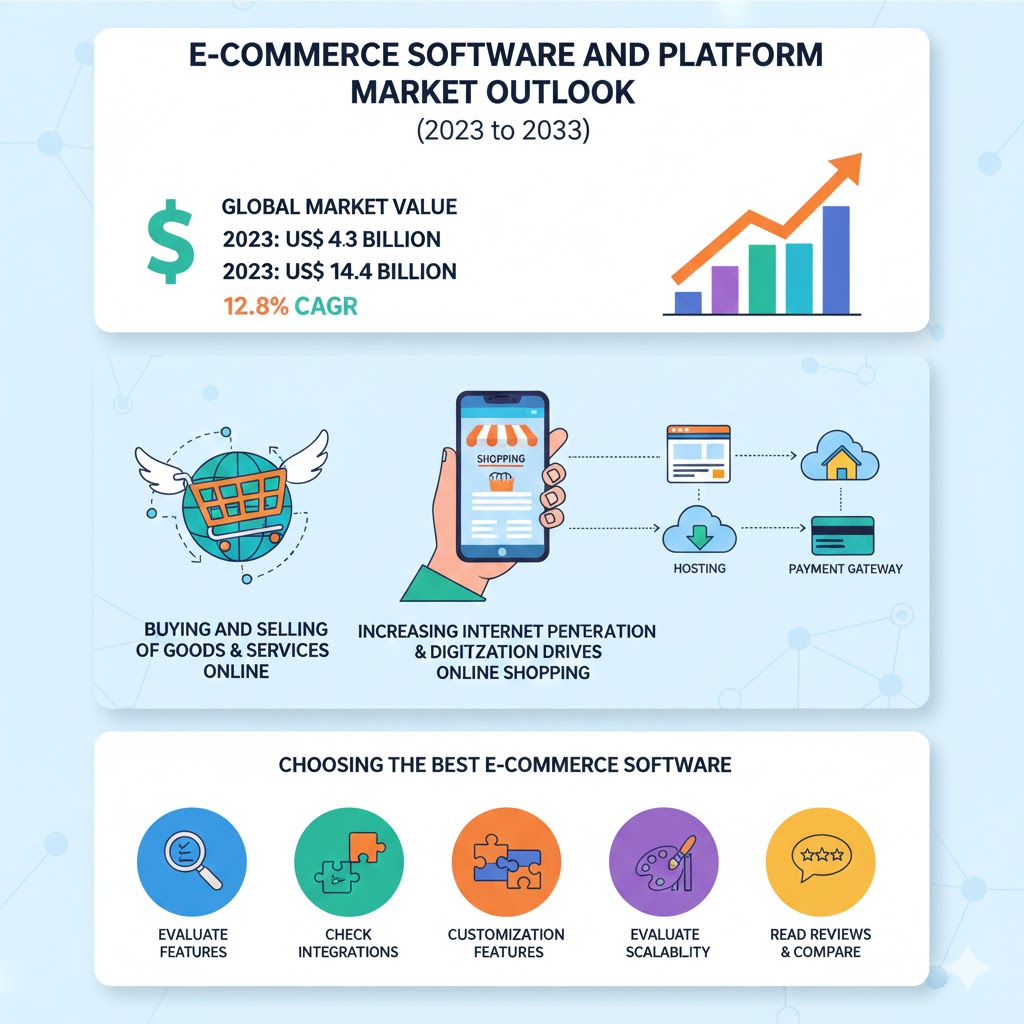
The global E‑Commerce Software and Platform Market is on track for transformative growth through 2036. From an estimated US$4.3 billion in 2023, the market is projected to reach US$18.6 billion by 2036, representing a compound annual growth rate (CAGR) of 12.9% over 13 years. This growth is fueled by the proliferation of AI-powered solutions, cloud-based SaaS adoption, rising digital commerce penetration in emerging markets, and an increased focus on sustainable e-commerce operations.
1. Market Outlook & Forecast Through 2036
The e‑commerce software and platform market is expected to maintain strong growth across regions and segments:
| Segment | 2023 Market Share | 2036 Projected Market Share | CAGR (2023‑2036) |
|---|---|---|---|
| SaaS Platforms | 80% | 87% | 13.5% |
| On-Premise Platforms | 20% | 13% | 9.2% |
| B2C Platforms | 40% | 38% | 11.5% |
| B2B Platforms | 60% | 62% | 13.8% |
Regional growth trends:
-
North America: Expected to retain ~35% of the global market share by 2036, driven by mature enterprise adoption.
-
Europe: Forecasted to grow from 25% to 28% of global share, led by digital SMEs and cross-border e-commerce.
-
Asia Pacific: Rapid expansion from 30% to 34% share due to rising smartphone penetration, urbanization, and government-led digitalization initiatives.
-
Rest of World: Slight increase from 15% to 16%, primarily in Latin America and the Middle East.
2. Innovation Trends Driving Market Growth
A. AI & Machine Learning
-
Personalization Engines: Expected to increase conversion rates by 25–35% by 2036.
-
Dynamic Pricing: Adoption projected to rise from 38% of platforms in 2023 to 72% by 2036.
-
AI-driven Analytics: Forecasted to influence 60–70% of merchandising decisions in mid- and large-sized platforms.
B. Omnichannel and Modular Architectures
-
Headless Commerce Adoption: Projected growth from 28% of platforms in 2023 to 65% by 2036, enabling flexible front-end design.
-
API-first Integration: Expected to be implemented in over 80% of enterprise solutions, supporting logistics, payment, and inventory connectivity.
C. Advanced Customer Interfaces
-
AR/VR Shopping: Forecasted adoption across top-tier platforms to reach 40% by 2036, up from 8% in 2023.
-
Voice Commerce: Estimated penetration of 35% among leading platforms by 2036, enabling hands-free purchase experiences.
3. Sustainability Drivers & ESG Integration
Sustainability is becoming a core market differentiator:
| Feature | 2023 Adoption | 2036 Projection | Impact on Customer Preference |
|---|---|---|---|
| Carbon Footprint Tracking | 10% | 55% | 40% more likely to purchase eco-labeled products |
| ESG Reporting Modules | 12% | 60% | 35% increase in enterprise adoption for compliance |
| Recommerce & Circular Economy Features | 5% | 42% | 25% increase in loyalty for sustainable brands |
Consumer surveys indicate 72% of online shoppers prefer brands with visible sustainability practices, influencing platform priorities.
4. Competitive Positioning & Strategic Imperatives
The market remains competitive with both established platforms and emerging innovators:
| Vendor | 2023 Market Share | 2036 Projection | Key Strengths |
|---|---|---|---|
| Shopify | 18% | 16% | Scalability, third-party integrations |
| Magento/Adobe | 15% | 14% | Enterprise customization, analytics |
| Salesforce Commerce Cloud | 12% | 13% | AI integration, omnichannel capabilities |
| SAP Commerce | 10% | 11% | B2B platform strength |
| WooCommerce/BigCommerce/Wix | 20% | 18% | SME-focused, ease of use |
| Emerging Platforms | 25% | 28% | Niche innovations, social commerce, sustainability features |
Key strategies include:
-
Mergers & acquisitions to acquire AI and AR/VR startups.
-
Partnerships with logistics and fintech providers to enhance supply chain and payments.
-
Investment in cybersecurity, targeting a 40% reduction in data breaches by 2036.
5. Market Challenges & Risk Factors
-
Cybersecurity Threats: With 32% of platforms experiencing breaches in 2023, continuous investment is expected to reduce incidents by ~40% by 2036.
-
Scalability Constraints: Expected to challenge 18% of mid-market platforms; mitigated via cloud-native architectures.
-
Skills Gap: By 2036, 60% of firms anticipate shortages in AI, data analytics, and omnichannel management talent.
Browse Full Report : https://www.factmr.com/report/1598/e-commerce-software-and-platform-market
6. Conclusion
The E‑Commerce Software and Platform Market is entering a period of high-growth transformation through 2036. Data-driven innovation, sustainability integration, and agile competitive strategies are the key drivers of market expansion. With SaaS adoption projected at 87%, AI and omnichannel solutions reaching 65–70% penetration, and ESG-focused features embraced by over 60% of platforms, the market is poised for robust, sustainable growth.
Success in 2036 will require platforms to balance technological sophistication with ethical commerce practices, positioning themselves as leaders in both profitability and responsible digital commerce.