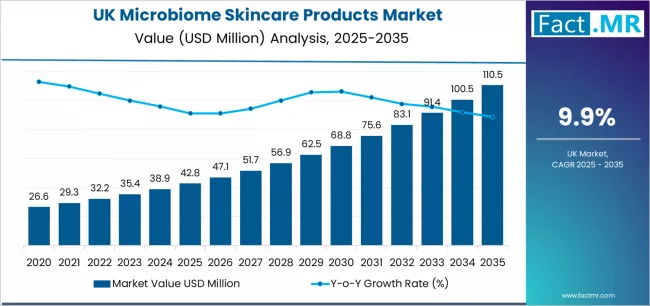
The demand for microbiome skincare products in the United Kingdom has been growing rapidly as consumers become more informed about skin health, natural formulations, and science-backed beauty innovations. Microbiome skincare focuses on maintaining or restoring the skin’s natural microbial ecosystem so that the skin barrier functions optimally, inflammation is reduced, and overall skin appearance improves. These products often include prebiotics, probiotics, postbiotics, and symbiotics, designed to support beneficial microbes on the skin’s surface.
This trend reflects a broader shift toward personalized, wellness-oriented beauty regimens and a move away from harsh, aggressive ingredients. The UK — with its well-developed cosmetics industry, high consumer awareness, and strong retail and digital distribution infrastructure — is well positioned to be a leading market for microbiome skincare products over the next decade.
Quick Stats (2025–2035)
-
Estimated Market Value 2025: ~USD 420 million
-
Projected Market Value 2035: ~USD 1.3 billion
-
Forecast CAGR (2025–2035): ~12.0%
-
Largest Category (2025): Probiotic-infused creams & serums
-
Fastest-Growing Channel: Online & D2C (direct-to-consumer)
-
Primary Driver: Rising awareness of skin microbiome science
To access the complete data tables and in-depth insights, request a Discount On The Report here: https://www.factmr.com/connectus/sample?flag=S&rep_id=12469
Why Microbiome Skincare Is Gaining Traction in the UK
1. Rising Consumer Awareness of Skin Health Science
UK consumers are increasingly aware of the relationship between the skin microbiome and conditions such as dryness, sensitivity, acne, and premature aging. Scientific education, dermatologist recommendations, and social media content have elevated interest in formulations that support beneficial microbial balance rather than disrupt it.
2. Shift from Traditional to Preventive & Gentle Formulations
Many conventional skincare products rely on strong chemical actives that can strip the skin of natural oils and beneficial microbes. In contrast, microbiome products use gentler technology — including prebiotics and postbiotics — that support endurance of healthy flora, aligning with demand for balanced everyday skincare.
3. Growth in Natural, Clean-Label & Wellness-Driven Beauty Trends
Natural and clean beauty trends have expanded to include functional ingredients that deliver benefits without harsh side effects. Microbiome skincare fits this narrative as consumers seek products perceived as safer, gentler, and scientifically beneficial.
4. Digital Influence and Direct-to-Consumer Engagement
Online communities, skincare influencers, and personalized digital campaigns have accelerated interest in niche categories like microbiome products. D2C brands have leveraged content marketing, personalized diagnostics, and subscription models to build loyal tribes of informed consumers.
5. Dermatologist & Professional Acceptance
Dermatologists, aestheticians, and clinical practitioners in the UK are increasingly recommending microbiome-friendly products for patients with rosacea, eczema, and sensitive skin conditions, driving both clinical and everyday consumer adoption.
Market Segmentation & Insights
By Product Type
-
Probiotic-Infused Skincare: Products containing live or stabilized probiotic extracts designed to balance microbial populations.
-
Prebiotic Skincare: Products that provide nourishment to beneficial skin microbes, helping them thrive.
-
Postbiotic & Symbiotic Formulations: Incorporate beneficial bacterial metabolites or combinations of prebiotics and probiotics for enhanced results.
-
Barrier-Repair and Microbiome-Support Supplements: Often paired with topical products for holistic skin health.
By Application / Concern
-
Sensitive & Reactive Skin: One of the largest demand segments due to the gentle nature of microbiome products.
-
Acne & Blemish-Prone Skin: Use of microbiome science to reduce inflammation and support natural balance.
-
Anti-Aging & Skin Repair: Products that enhance barrier function and reduce oxidative stress.
-
Dry & Dehydrated Skin: Barrier support and moisture retention are key selling points.
-
General Daily Skin Health: Everyday cleansers, toners, and moisturizers with microbiome benefit claims.
By Distribution Channel
-
Online & E-Commerce Platforms: Driving fastest growth due to personalized recommendations, subscription services, and digital education.
-
Specialty Beauty & Skincare Stores: Selective assortments and trained staff support product discovery.
-
Pharmacies & Clinical Retail Outlets: Professional endorsements and skin-analysis services bolster consumer confidence.
-
Mass Retail & Supermarkets: Increasing presence of entry- and mid-tier microbiome products for mainstream consumers.
Consumer Insights & Behaviour Trends
-
Education & Transparency: UK consumers demand transparency about how ingredients interact with skin biology, leading to higher trust in microbiome claims backed by science.
-
Personalization: Customizable regimens based on skin type, microbiome diagnostics, or professional advice are gaining traction.
-
Multi-Step Regimens: Microbiome products are often marketed as parts of layered regimens (cleanser, serum, moisturizer) designed to synergize.
-
Premiumization: Consumers are willing to pay a premium for perceived efficacy, scientific backing, and clean claims.
Challenges & Market Constraints
1. Consumer Skepticism & Education Gap
Microbiome science is complex, and not all consumers clearly understand terms like probiotics, prebiotics, and postbiotics. Misleading claims can reduce confidence.
2. Regulatory & Claims Compliance
Formulations must meet cosmetic regulations and avoid unsubstantiated therapeutic claims, limiting how brands position microbiome products.
3. Product Efficacy Variability
Live probiotics and biological ingredients pose formulation challenges (stability, shelf life), making consistent performance across products a hurdle.
4. Price Sensitivity
Premium microbiome products often carry higher price points, which may limit adoption among cost-conscious buyers unless clear value is demonstrated.
Opportunities & Strategic Directions
1. Science-Backed Product Development
Investing in clinical research, microbiome testing, and biomarker-based efficacy studies will help differentiate products and build trust among consumers and professionals.
2. Personalized & Diagnostic-Driven Solutions
Skin microbiome diagnostic tools, AI-powered skincare assessments, and personalized formulation services can elevate consumer engagement and long-term loyalty.
3. Collaborative Positioning with Dermatologists
Partnerships with skin experts and clinics can support product adoption among consumers with sensitive or reactive skin, reinforcing credibility.
4. Sustainability & Clean Beauty Integration
Eco-friendly packaging, biodegradable formulations, and transparent sourcing resonate well with UK consumer values and complement microbiome branding.
5. Expansion into Adjacent Categories
Products such as microbiome-friendly body care, scalp care, and baby skincare can open new revenue streams while reinforcing brand authority.
Outlook (2025–2035)
The UK demand for microbiome skincare products is expected to grow robustly from an estimated USD 420 million in 2025 to nearly USD 1.3 billion by 2035, with a strong CAGR of approximately 12.0% over the decade. Consumer awareness, clean-label preferences, digital engagement, and clinical interest all support this expansion.
Architecting product portfolios around efficacy, transparency, personalization, and sustainability will determine success. Brands that educate consumers with clear science, offer tailored solutions, and align with wellness and clean beauty values will shape the next wave of skincare innovation in the UK.
Browse Full Report: https://www.factmr.com/report/united-kingdom-microbiome-skincare-products-market