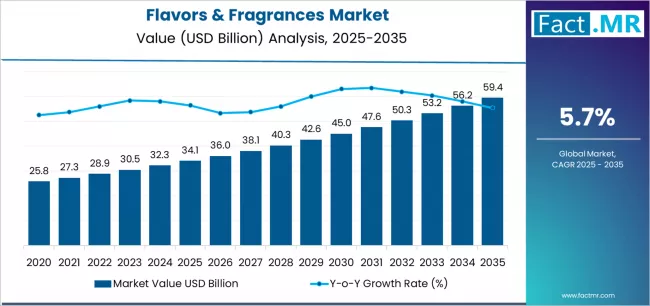
The U.S. flavors and fragrances market continues to be a key segment of the global industry, showing strong momentum and promising growth prospects over the next decade. In 2024, the market was valued at approximately USD 6.01 billion and is projected to expand at a compound annual growth rate (CAGR) of around 3.5–3.6% through the forecast period. By 2030, the market is expected to reach approximately USD 7.43 billion, with consistent expansion continuing through 2035.
This trend underscores the U.S. market’s continued position as one of the leading global hubs for flavors and fragrances.
Key Drivers of Market Growth
Shift Toward Natural and Sustainable Ingredients
A significant growth driver is the increasing consumer preference for natural, plant-based, and clean-label products. Consumers are placing greater emphasis on sustainability and wellness, which is pushing demand for natural flavors and fragrances across food, beverage, personal care, and home care products. Manufacturers are responding by incorporating botanical extracts, essential oils, and bio-based aroma chemicals, positioning natural and sustainable ingredients as a primary market driver.
Expanding Applications Across Multiple Industries
The flavors and fragrances industry benefits from its wide range of applications. Flavors are used extensively in processed foods, beverages, dairy, bakery, and even animal feed for palatability enhancement. Fragrances continue to dominate in personal care, skincare, toiletries, and home care products. Lifestyle changes and increased focus on sensory experiences in everyday products are further boosting consumption in both segments.
Premiumization and the “Green Premium”
Consumers are increasingly willing to pay a premium for products that are natural, sustainable, and aligned with wellness trends. This “green premium” supports higher-margin products and encourages investment in research and development, particularly in the natural and sustainable ingredients segment.
Innovation in Product Development and Ingredient Technologies
Technological advancements in biotechnology, extraction, and formulation are driving innovation in flavors and fragrances. New developments, including microencapsulation, fermentation-derived natural flavors, and enzymatically modified botanical extracts, are enhancing product stability, shelf life, and sensory performance. These innovations are critical for both food and beverage products as well as personal care items.
Consumer Trends Toward Diversity, Personalization, and Wellness
Modern consumers, particularly younger demographics, are seeking diverse, exotic, and unconventional flavor profiles. There is also growing demand for personalized fragrance and flavor experiences, allowing brands to tailor products to individual lifestyles. Additionally, wellness-oriented consumption, such as aromatherapy and natural cosmetics, continues to drive fragrance demand.
Market Segmentation Insights
Natural vs. Synthetic Ingredients
The natural segment currently contributes the largest share of U.S. market revenue. Demand for sustainable, clean-label products continues to grow, while synthetic aroma chemicals remain important but are experiencing slower growth relative to natural alternatives.
Flavors vs. Fragrances
While both applications are expanding, fragrances currently account for a slightly larger share of market revenue. However, flavored foods and beverages, dietary supplements, and functional foods are driving significant growth in the flavors segment. As wellness and natural lifestyle trends strengthen, flavor innovations are expected to continue accelerating.
Market Forecast 2025–2035
The U.S. flavors and fragrances market is projected to maintain steady growth over the next decade:
-
From ~USD 6.01 billion in 2024, the market is expected to grow at a CAGR of 3.5–4%.
-
By 2030, the market is projected to reach approximately USD 7.4–7.5 billion.
-
Beyond 2030, continued consumer demand, innovation, and premiumization could drive the market toward USD 8.5–9.5 billion by 2035.
-
The natural flavors and fragrances segment is expected to outpace synthetic alternatives, capturing an increasing market share.
-
Fragrance applications, particularly in personal care, home care, and wellness, are likely to grow slightly faster than flavor applications due to lifestyle and disposable income trends.
Overall, the U.S. flavors and fragrances market is poised for long-term, stable growth with a strong structural foundation rooted in sustainability, wellness, and evolving consumer preferences.
Challenges and Market Risks
Despite positive trends, several challenges could impact market growth:
-
Raw Material Supply and Cost Pressures: Increasing demand for natural ingredients may result in sourcing challenges and cost volatility due to agricultural and sustainability constraints.
-
Regulatory Compliance: Stricter regulations on labeling, clean-label claims, and environmental sustainability may complicate formulation and marketing strategies.
-
Economic Sensitivity: Premium products rely on consumer willingness to pay, which may fluctuate with economic cycles.
-
Competition and Commoditization: As natural flavors and fragrances become mainstream, increased competition may lead to price pressures and margin compression.
Strategic Implications for Industry Players
To capitalize on market opportunities, companies should:
-
Invest in R&D and Sustainable Sourcing: Focus on botanical extracts, bio-based technologies, and other sustainable platforms to meet consumer and regulatory demand.
-
Diversify Applications: Explore growth in personal care, wellness, home care, pet care, and functional foods.
-
Develop Premium and Personalized Offerings: Leverage consumer willingness to pay for natural, clean-label, and wellness-oriented products with bespoke and small-batch offerings.
-
Strengthen Supply Chain Resilience: Build robust supply chains to manage cost volatility and sustainability compliance.
Browse Full Report : https://www.factmr.com/report/flavors-fragrances-market
Conclusion
The U.S. flavors and fragrances market is set for steady, long-term growth from 2025 to 2035. Driven by rising consumer demand for natural, sustainable, and wellness-oriented products, along with lifestyle and personalization trends, the market is evolving in ways that favor innovation and premiumization.
While challenges such as raw material volatility, regulatory complexities, and economic sensitivity remain, companies that prioritize R&D, sustainability, supply-chain resilience, and premium offerings are likely to thrive. The U.S. market is not just expanding — it is shaping global trends in flavors and fragrances and setting the stage for continued innovation and consumer engagement in the decade ahead.