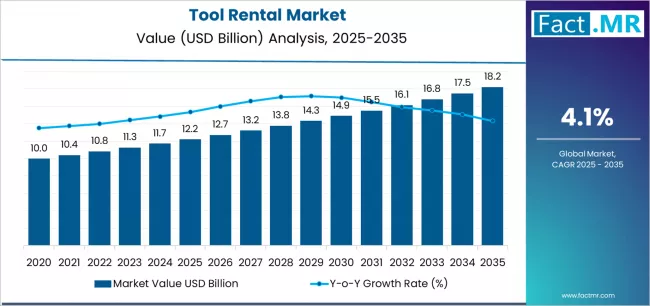
In today’s dynamic project environments—whether in construction, landscaping, home improvement, or industrial maintenance—the Tool Rental Market is emerging as a pivotal industry that supports operational flexibility and cost-effective access to essential equipment. Instead of investing heavily in purchasing, storing, and maintaining tools that might be used sporadically, businesses and individual users increasingly prefer rental solutions that offer the right tools at the right time. This shift toward renting over owning is redefining how projects are executed across sectors worldwide.
Market Overview
The Tool Rental Market consists of services that allow customers to rent various types of tools and equipment—including power tools, hand tools, and garden tools—on a short-term or long-term basis. This model supports a wide range of users, from professional contractors on large construction sites to homeowners tackling do-it-yourself (DIY) projects. As rental companies expand their fleets and offer more options, customers can access high-performance tools without the burden of long-term ownership.
The market is characterized by diverse equipment offerings, flexible rental terms, and increasingly tech-enabled rental platforms that simplify reservation and delivery. These services are gaining prominence as cost pressures mount and project timelines become more fluid and short-lived.
Key Market Drivers
Cost Efficiency & Capital Preservation
One of the principal drivers of the tool rental market is the cost advantage it provides. Purchasing specialized and professional-grade tools can require significant upfront investment, particularly for construction firms and industrial users. By choosing rental solutions, organizations preserve capital, reduce maintenance costs, and avoid depreciation on assets that are not used regularly. This cost-effective approach enhances project budgeting and financial flexibility.
Rising Construction & Infrastructure Development
The tool rental market is strongly supported by construction and infrastructure growth globally. As investments in residential, commercial, and public projects increase, the demand for reliable tools—ranging from drills and saws to more advanced power tools—grows accordingly. Rental solutions help contractors scale their tool inventories based on project requirements, enabling better resource management on variable job sites.
Growing DIY Culture
DIY projects are gaining popularity among homeowners who wish to upgrade or maintain their properties. Instead of owning a broad range of tools that may rarely be used, these consumers are turning to rental services to access quality equipment for specific short-term tasks. This trend not only boosts demand for tool rentals but also aligns with changing consumer lifestyles focused on convenience and cost savings.
Technological Advancements
Rental companies are leveraging technology to improve customer experience and operational efficiency. Digital booking platforms, mobile apps, and equipment tracking systems make it easier for users to find, reserve, and manage tool rentals. These technologies also enable rental firms to optimize inventory, offer predictive maintenance, and provide real-time support—enhancing reliability and user satisfaction.
Market Segmentation
By Tool Type
Tool rental offerings generally fall into three broad categories:
- Power Tools: This category typically holds the largest share due to high demand for electrified and mechanized tools that support heavy-duty tasks.
- Hand Tools: Manual tools are essential for precision work and smaller tasks, making them a staple of rental inventories.
- Garden Tools: These include outdoor maintenance tools such as lawn aerators, hedge trimmers, and soil cultivators—especially popular among homeowners and landscapers.
Each tool type serves distinct purposes, and rental companies often curate their inventory to meet diverse user needs—from simple repairs to professional construction workflows.
By End User
The tool rental market serves several key segments:
- Construction: Contractors, builders, and project teams rely on tool rentals for robust, high-performance equipment that supports infrastructure and building tasks.
- DIY/Home Improvement: Homeowners engaging in renovation or maintenance projects prefer rentals for short-term access to specialized tools without ownership overhead.
- Industrial: Manufacturing facilities and industrial maintenance teams use rented tools for scheduled repairs and operations, especially when specialized equipment is required temporarily.
These segments illustrate the versatile role of tool rentals across professional, commercial, and consumer spheres.
Regional Insights
The tool rental market has a broad global footprint:
- North America: Supported by mature rental infrastructures, strong construction activity, and a significant DIY culture, this region leads in both demand and service availability.
- Europe: Well-established rental networks and high emphasis on urban development projects sustain steady tool rental growth.
- Asia-Pacific: Rapid urbanization, infrastructure expansion, and rising construction investments are propelling market growth in countries such as India and China. Emerging economies in Southeast Asia are also contributing to increased adoption of rental solutions.
Across these regions, tool rental services are becoming integral to project planning and execution, particularly in markets where equipment ownership costs are prohibitive.
Challenges Facing the Market
Despite its growth trajectory, the tool rental market faces a few notable challenges:
Seasonal Demand Fluctuations: Demand spikes during peak construction seasons and slow periods at other times, making inventory management difficult. Rental firms must balance equipment availability with fluctuating customer needs.
Maintenance and Operational Costs: Ensuring that tools are in top working condition requires ongoing maintenance, testing, and servicing—efforts that add to operational overhead for rental businesses.
Equipment Logistics: Efficient delivery, setup, and pickup services are essential to customer satisfaction, but logistics management can be complex, particularly in remote or highly dispersed project locations.
Future Outlook
The Tool Rental Market is projected to continue its steady expansion as businesses and individuals shift toward flexible, cost-effective rental models that align with project-based work and financial prudence. As digital platforms, IoT connectivity, and predictive analytics become more integrated with rental services, users can expect streamlined experiences that enhance convenience and operational transparency.
For rental companies, investing in diverse tool fleets, advanced service networks, and customer-centric digital solutions will be key to capturing growth opportunities in the evolving global landscape. With construction, DIY, and industrial demand all contributing to rising adoption, the tool rental market is set to remain a cornerstone of modern project execution strategies for years to come.