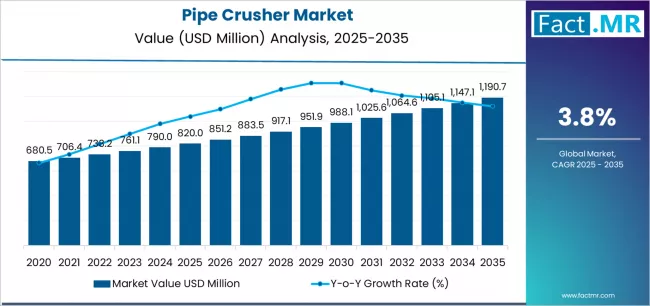
As industries worldwide prioritize sustainability and efficient waste handling, the pipe crusher market is gaining significant attention. Pipe crushers are specialized machines designed to reduce large pipes and plastic materials into manageable sizes, making recycling and disposal more efficient. With growing environmental concerns and stricter waste management regulations, businesses are increasingly adopting pipe crushing solutions to streamline operations and minimize their environmental footprint.
Market Overview
Pipe crushers are widely used across industries that generate plastic and metal pipe waste, including construction, manufacturing, utilities, and recycling facilities. These machines are engineered to handle bulky materials that are otherwise difficult to transport or process. By breaking down pipes into smaller fragments, crushers help optimize storage space, reduce transportation costs, and support recycling initiatives.
Modern pipe crushers incorporate advanced features such as automated feeding systems, high-torque motors, and durable cutting mechanisms. Many models are designed for continuous operation, ensuring productivity even in high-volume environments. Additionally, manufacturers are focusing on improving machine safety, energy efficiency, and ease of maintenance to meet evolving industrial demands.
The increasing emphasis on circular economy practices has further accelerated the adoption of pipe crushers. Organizations are seeking equipment that allows them to recover valuable materials while reducing landfill dependency, positioning pipe crushers as an essential component of sustainable waste management strategies.
Market Dynamics
One of the primary drivers of the pipe crusher market is the rising demand for recycling and waste reduction. Industries are under pressure to manage plastic waste responsibly, particularly as awareness of environmental impacts continues to grow. Pipe crushers enable companies to process scrap materials efficiently, making recycling more feasible and cost-effective.
Another key factor supporting market growth is the expansion of the construction and infrastructure sectors. Large-scale projects often generate substantial pipe waste from materials such as PVC, HDPE, and other polymers. Crushing equipment helps contractors manage this waste onsite, improving operational efficiency and reducing disposal challenges.
Technological advancements are also shaping the market. Modern crushers are increasingly equipped with smart controls and automation capabilities that enhance performance while minimizing manual intervention. These innovations not only improve productivity but also contribute to safer working environments.
Despite strong growth prospects, the market faces certain challenges. High initial investment costs may deter smaller businesses from adopting advanced crushing equipment. Additionally, improper equipment selection or inadequate maintenance can affect operational performance. However, as technology becomes more accessible and awareness grows, these barriers are expected to diminish over time.
Regional Insights
The pipe crusher market demonstrates diverse growth patterns across global regions.
Asia-Pacific is emerging as a prominent market due to rapid industrialization, urban expansion, and increasing construction activities. The region’s growing manufacturing base and rising focus on recycling infrastructure are driving demand for efficient crushing equipment.
North America continues to witness steady adoption, supported by well-established recycling systems and strong environmental regulations. Companies in this region are investing in modern machinery to enhance waste processing capabilities and meet sustainability goals.
Europe remains a key contributor, with industries emphasizing resource efficiency and responsible waste management. Regulatory frameworks encouraging recycling and reduced landfill use are prompting businesses to adopt advanced pipe crushing technologies.
Meanwhile, Latin America and the Middle East & Africa are gradually expanding their industrial and construction sectors. As these regions strengthen their waste management practices, the demand for pipe crushers is expected to rise, creating new opportunities for manufacturers.
Key Trends & Forecast
Growing Focus on Sustainability
Environmental responsibility has become a central priority for many organizations. Pipe crushers support sustainability initiatives by enabling the reuse of materials and reducing overall waste generation.
Automation and Smart Machinery
Manufacturers are introducing automated crushers that offer improved precision, operational efficiency, and reduced labor requirements. Smart monitoring systems allow operators to track performance and detect issues early.
Heavy-Duty and High-Capacity Equipment
Industries handling large-diameter pipes require robust machinery capable of processing tough materials. As industrial workloads increase, demand for high-capacity crushers continues to grow.
Integration into Recycling Facilities
Pipe crushers are increasingly being incorporated into comprehensive recycling lines. When combined with shredders, granulators, and sorting technologies, they help create streamlined material recovery processes.
Applications & End-Use Outlook
Pipe crushers serve a wide range of applications across multiple industries. In the recycling sector, they play a vital role in preparing discarded pipes for further processing, ensuring materials can be efficiently reused in new products.
The construction industry relies on crushers to manage leftover materials generated during installation and demolition activities. By reducing waste onsite, contractors can maintain cleaner workspaces and improve project efficiency.
In manufacturing, pipe crushers help handle production scrap, allowing companies to reprocess materials and reduce raw material consumption. Utilities and infrastructure operators also benefit from these machines when replacing aging pipeline systems.
Additionally, waste management companies use pipe crushers to enhance sorting and disposal workflows, reinforcing their importance in modern waste handling ecosystems.
Competitive Landscape
The pipe crusher market features a mix of global equipment manufacturers and regional players striving to deliver reliable and innovative machinery. Companies are focusing on product development to improve durability, throughput capacity, and energy efficiency.
Strategic initiatives such as partnerships, technological upgrades, and expanded distribution networks are helping manufacturers strengthen their market presence. Many are also offering customizable solutions tailored to specific industrial requirements, ensuring flexibility for diverse applications.
As competition intensifies, businesses that prioritize innovation, after-sales support, and operational reliability are likely to maintain a competitive edge.
Conclusion
The pipe crusher market is becoming increasingly vital in a world that demands smarter waste management and sustainable industrial practices. By transforming bulky pipe waste into recyclable material, these machines help organizations enhance efficiency while supporting environmental goals.
With continued advancements in automation, durability, and energy performance, pipe crushers are set to play an even greater role in recycling and resource optimization. Companies that invest in modern crushing technologies will be better positioned to manage waste responsibly, improve operational workflows, and contribute to a more sustainable future.
Browse Full Report – https://www.factmr.com/report/pipe-crusher-market