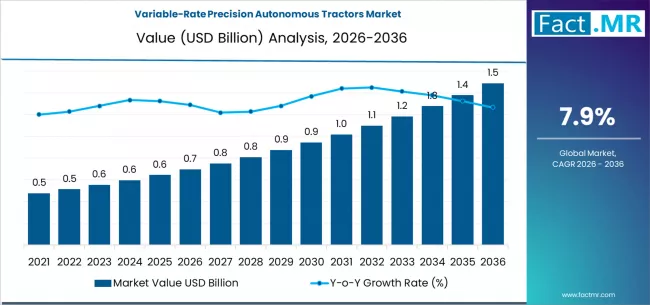
Agriculture is undergoing a technological revolution as farmers increasingly adopt automation, data-driven decision-making, and precision farming techniques. Among the most impactful innovations reshaping modern farming is the rise of variable-rate precision autonomous tractors. These advanced machines integrate autonomous navigation, artificial intelligence, and variable-rate technology to optimize field operations, improve productivity, and reduce input waste. As sustainability, efficiency, and labor optimization become central to agricultural strategies, the variable-rate precision autonomous tractors market is emerging as a key pillar of next-generation farming systems.
Market Overview
Variable-rate precision autonomous tractors are designed to perform agricultural tasks with minimal human intervention while dynamically adjusting input application based on real-time field conditions. These tractors leverage GPS guidance, sensors, machine learning algorithms, and farm management software to apply seeds, fertilizers, pesticides, and water at variable rates across different zones of a field. By aligning resource use with soil variability and crop requirements, farmers can achieve higher yields, lower operational costs, and improved environmental outcomes.
The market encompasses fully autonomous tractors as well as semi-autonomous platforms equipped with variable-rate control systems. Adoption is driven by the growing need to maximize farm efficiency, address labor shortages, and comply with evolving sustainability standards. As digital agriculture ecosystems mature, these tractors are increasingly integrated with drones, satellite imagery, and IoT-enabled farm equipment.
Key Market Drivers
One of the primary drivers of the variable-rate precision autonomous tractors market is the increasing focus on precision agriculture. Farmers are seeking technologies that enable data-backed decisions rather than uniform field treatment, which often leads to overuse of inputs. Variable-rate technology directly addresses this challenge by enabling site-specific farming practices.
Labor scarcity in the agricultural sector is another significant factor accelerating adoption. Autonomous tractors reduce dependence on skilled operators and allow farms to maintain productivity despite workforce constraints. Additionally, rising fuel and input costs are pushing farmers toward solutions that enhance operational efficiency and minimize waste.
Government initiatives promoting smart farming and sustainable agriculture further support market growth. Incentives for adopting precision farming tools, combined with investments in digital infrastructure, are creating a favorable environment for autonomous tractor deployment.
Technology Trends Shaping the Market
Rapid advancements in artificial intelligence and sensor technology are transforming the capabilities of autonomous tractors. Machine vision systems now enable accurate crop recognition, obstacle detection, and real-time field assessment. AI-powered analytics allow tractors to adapt operations based on soil health, crop growth stages, and weather conditions.
Connectivity is another major trend influencing the market. Cloud-based platforms enable seamless data exchange between tractors, farm management systems, and agronomic advisory tools. This integration enhances decision-making and allows farmers to monitor operations remotely.
Manufacturers are also focusing on modular designs, allowing farmers to upgrade tractors with variable-rate controllers and autonomous features without replacing existing equipment. This approach lowers adoption barriers and broadens market penetration.
Regional Insights
North America remains a prominent market for variable-rate precision autonomous tractors due to early adoption of precision agriculture technologies and strong presence of agri-tech innovators. Large-scale farms in the region are increasingly investing in autonomous solutions to improve efficiency and manage expansive agricultural land.
Europe follows closely, driven by stringent environmental regulations and a strong emphasis on sustainable farming practices. Precision input management aligns well with regional goals of reducing chemical usage and improving soil health.
The Asia-Pacific region is emerging as a high-potential market as governments and agribusinesses invest in modernizing agricultural practices. Growing awareness of precision farming benefits and increasing mechanization in developing economies are contributing to rising demand.
Applications and End-Use Outlook
Variable-rate precision autonomous tractors are widely used across crop farming applications, including cereals, oilseeds, fruits, and vegetables. These tractors are particularly valuable in large-scale farming operations where field variability is significant and manual optimization is challenging.
Beyond crop production, the technology is gaining traction in research farms and agronomic trials, where precise input control and data collection are critical. Contract farming services are also adopting autonomous tractors to deliver efficient, scalable solutions to multiple farm operators.
Competitive Landscape
The market is characterized by continuous innovation and strategic collaborations among agricultural machinery manufacturers, software providers, and technology startups. Companies are investing heavily in research and development to enhance autonomy levels, improve safety, and refine variable-rate algorithms. Partnerships with agritech platforms and sensor manufacturers are helping expand functionality and interoperability across farming ecosystems.
Future Outlook
The variable-rate precision autonomous tractors market is poised for steady expansion as digital agriculture becomes mainstream. Ongoing advancements in AI, robotics, and connectivity will further improve tractor intelligence and reliability. As farmers increasingly recognize the long-term economic and environmental benefits, adoption is expected to broaden across farm sizes and regions.
Conclusion
Variable-rate precision autonomous tractors represent a transformative shift in agricultural operations, enabling smarter resource utilization, improved productivity, and sustainable farming practices. As agriculture moves toward automation and data-driven management, these advanced tractors will play a central role in shaping the future of global food production. Access to detailed market intelligence and technology insights can help stakeholders navigate opportunities and challenges in this rapidly evolving landscape.
Browse Full Report – https://www.factmr.com/report/variable-rate-precision-autonomous-tractors-market