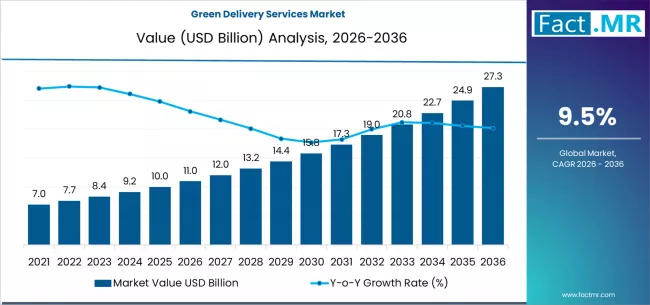
The global Green Delivery Services Market is set to experience strong growth over the coming decade, supported by the rapid expansion of e-commerce, rising environmental awareness, and increasing pressure on logistics providers to reduce carbon emissions. Green delivery services focus on minimizing environmental impact through the use of electric vehicles, low-emission transport modes, optimized delivery routes, and sustainable last-mile logistics solutions.
As urban congestion and emissions intensify, governments, retailers, and logistics providers are actively adopting greener delivery models to align with sustainability targets while maintaining fast and reliable service. Green delivery services are increasingly viewed as a strategic necessity rather than a niche offering.
Market Outlook (2026–2036)
-
Market Size in 2026: Approximately USD 11.0 Billion
-
Projected Market Size in 2036: Exceeding USD 25.0 Billion
-
Forecast CAGR (2026–2036): Around 9.5%
-
Leading Delivery Mode: Electric Vehicle-Based Delivery
-
Key Service Segment: Parcel and Small Package Delivery
-
Primary End Users: E-commerce Platforms, Retailers, Logistics Providers
The sustained growth outlook reflects rising investments in sustainable transportation infrastructure and the increasing integration of green delivery options into mainstream logistics networks.
To access the complete data tables and in-depth insights, request a Discount On The Report here: https://www.factmr.com/connectus/sample?flag=S&rep_id=13415
Market Overview
Green delivery services encompass environmentally responsible logistics practices aimed at reducing greenhouse gas emissions, fuel consumption, and urban pollution. These services typically rely on electric and hybrid vehicles, cargo bikes, micro-fulfillment hubs, and route-optimization technologies that reduce delivery distances and idle time.
Last-mile delivery represents a significant share of logistics-related emissions, particularly in densely populated urban areas. Green delivery models address this challenge by enabling cleaner, quieter, and more efficient movement of goods, making them especially suitable for cities implementing low-emission or zero-emission zones.
Key Market Drivers
1. Rapid Growth of E-Commerce and Urban Deliveries
The surge in online shopping has dramatically increased the volume of parcel deliveries. Green delivery services help mitigate the environmental impact of this growth while supporting fast, reliable order fulfillment.
2. Regulatory and Policy Pressure to Reduce Emissions
Governments across major economies are implementing stricter emissions standards and incentivizing the adoption of electric vehicles and low-carbon logistics solutions. These measures are accelerating the shift toward green delivery models.
3. Rising Consumer Demand for Sustainable Practices
Consumers increasingly favor brands that demonstrate environmental responsibility. Offering green delivery options enhances brand reputation and customer loyalty, encouraging retailers to partner with eco-friendly logistics providers.
4. Advances in Electric Vehicles and Routing Technologies
Improvements in battery performance, charging infrastructure, and intelligent route-planning software are improving the efficiency and scalability of green delivery services, reducing operational barriers to adoption.
Market Segmentation Insights
By Delivery Approach:
-
Electric Vehicle Delivery Fleets
-
Cargo Bike and Micro-Mobility Delivery
-
Low-Emission Hybrid Delivery Models
-
Optimized and Consolidated Routing Solutions
By Service Type:
-
Parcel and Small Package Delivery
-
Grocery and Quick-Commerce Delivery
-
Business-to-Business Urban Distribution
-
Specialty and On-Demand Logistics Services
By End User:
-
E-commerce Platforms
-
Retail and Consumer Goods Companies
-
Third-Party Logistics Providers
-
Urban Distribution Networks
Regional Demand Dynamics
North America remains a leading market due to strong e-commerce penetration, corporate sustainability initiatives, and expanding electric vehicle fleets within logistics operations.
Europe represents a highly mature market, supported by stringent emissions regulations, low-emission urban zones, and widespread adoption of electric delivery vehicles and cargo bikes.
Asia Pacific is expected to witness the fastest growth, driven by rapid urbanization, rising online retail activity, and increasing investments in green logistics infrastructure across major cities.
Emerging regions such as Latin America and Middle East & Africa are gradually adopting green delivery solutions as sustainability awareness grows and urban logistics networks evolve.
Competitive Landscape
The green delivery services market is characterized by competition between established logistics providers and specialized sustainable delivery startups. Companies are focusing on fleet electrification, micro-hub development, digital route optimization, and carbon-tracking capabilities to strengthen their market positions.
Strategic partnerships with retailers, technology providers, and urban authorities are playing a key role in expanding service coverage and improving operational efficiency.
Future Outlook
The Green Delivery Services Market is expected to maintain strong momentum through 2036 as sustainability becomes embedded within global supply chains. Continued advancements in clean transportation technologies, supportive regulatory frameworks, and growing consumer preference for eco-friendly delivery options will further drive market adoption.
As cities prioritize emission reduction and efficient urban mobility, green delivery services will play a critical role in shaping the future of last-mile logistics worldwide.
Browse Full Report: https://www.factmr.com/report/green-delivery-services-market