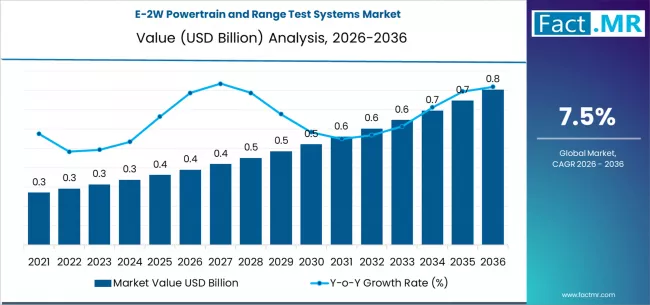
The rapid transition toward electric mobility is reshaping the global two-wheeler industry. Electric two-wheelers (E-2Ws) are gaining strong momentum due to their low emissions, reduced operating costs, and suitability for urban transportation. As manufacturers race to improve vehicle efficiency, reliability, and range, the role of E-2W powertrain and range test systems has become increasingly critical.
These test systems help manufacturers validate performance, durability, and energy efficiency, ensuring electric two-wheelers meet regulatory standards and consumer expectations. As innovation accelerates, testing technologies are emerging as a backbone of quality assurance in the E-2W ecosystem.
Market Overview
E-2W powertrain and range test systems are specialized solutions designed to evaluate the performance of key electric drivetrain components, including motors, controllers, batteries, and transmission systems. These systems simulate real-world riding conditions to measure efficiency, power output, thermal behavior, and range performance.
The market is driven by the growing need for accurate and repeatable testing during vehicle development and production. Unlike conventional two-wheelers, electric models rely heavily on software-controlled powertrains, making advanced testing essential. Manufacturers, R&D centers, and testing laboratories increasingly depend on these systems to reduce development cycles and enhance product reliability.
Key Growth Drivers
Several factors are fueling the adoption of E-2W powertrain and range test systems:
- Rapid expansion of electric two-wheeler production: Rising demand for E-2Ws is increasing the need for standardized testing solutions.
- Focus on vehicle range optimization: Range remains a key purchasing criterion, pushing manufacturers to validate and improve energy efficiency.
- Stringent regulatory and safety requirements: Compliance with evolving standards requires accurate performance and endurance testing.
- Technological complexity of electric powertrains: Advanced motors, controllers, and battery systems demand precise testing methodologies.
These drivers highlight the growing importance of testing systems in ensuring competitive and compliant E-2W offerings.
Regional Insights
Adoption of E-2W powertrain and range test systems varies across regions depending on electric mobility penetration and manufacturing intensity. Regions with strong electric two-wheeler manufacturing bases are leading in the deployment of advanced testing infrastructure.
Markets with supportive government policies for electric mobility are also witnessing increased investment in R&D and testing capabilities. Emerging economies, where electric two-wheelers are viewed as practical mobility solutions, are gradually expanding their testing ecosystems as local manufacturing grows.
Overall, regional demand is closely tied to electric vehicle adoption rates, regulatory frameworks, and investments in innovation.
Key Trends & Market Outlook
The market is evolving in line with broader trends in electric mobility and automotive testing:
- Integration of hardware and software testing: Modern test systems combine physical testing with digital simulation and data analytics.
- Emphasis on real-world condition simulation: Test benches increasingly replicate diverse riding conditions, terrain, and load scenarios.
- Automation and data-driven testing: Automated test cycles and advanced diagnostics are improving efficiency and accuracy.
- Modular and scalable test solutions: Manufacturers prefer flexible systems that can adapt to different E-2W models and powertrain configurations.
These trends reflect a shift toward smarter, faster, and more reliable testing environments.
Applications & End-Use Outlook
E-2W powertrain and range test systems are widely used across various stages of product development and manufacturing. Original equipment manufacturers (OEMs) rely on these systems during design validation, prototype testing, and quality control processes.
Component suppliers also use testing systems to validate motors, controllers, and battery packs before integration. Additionally, independent testing laboratories and research institutions utilize these solutions for certification, benchmarking, and innovation studies.
As electric two-wheelers diversify in terms of design, power output, and usage scenarios, the demand for adaptable testing systems is expected to expand across end-user segments.
Competitive Landscape
The competitive landscape consists of global testing equipment providers and specialized solution developers. Market participants focus on delivering high-precision systems with advanced software integration and user-friendly interfaces.
Strategic collaborations with E-2W manufacturers, technology providers, and research organizations are common. Companies are also investing in continuous innovation to support next-generation powertrains, fast-charging systems, and connected vehicle technologies.
After-sales support, customization capabilities, and compliance with international testing standards play a key role in competitive differentiation.
Challenges and Opportunities
Despite strong growth potential, the market faces challenges such as high initial investment costs and the need for skilled technical expertise. Smaller manufacturers may initially rely on third-party testing services due to limited in-house capabilities.
However, these challenges present opportunities for modular systems, cost-effective testing solutions, and service-based models. As electric two-wheeler platforms become more standardized, scalable test systems are expected to gain wider adoption.
Conclusion
The E-2W powertrain and range test systems market is a vital enabler of quality, performance, and reliability in the electric two-wheeler industry. By supporting accurate evaluation of powertrain efficiency and vehicle range, these systems help manufacturers deliver products that meet both regulatory requirements and consumer expectations.
As electric mobility continues to evolve, robust testing infrastructure will remain essential for innovation and market success. E-2W powertrain and range test systems are set to play a central role in shaping the future of efficient and dependable electric two-wheelers.
Browse Full Report – https://www.factmr.com/report/e-2w-powertrain-and-range-test-systems-market