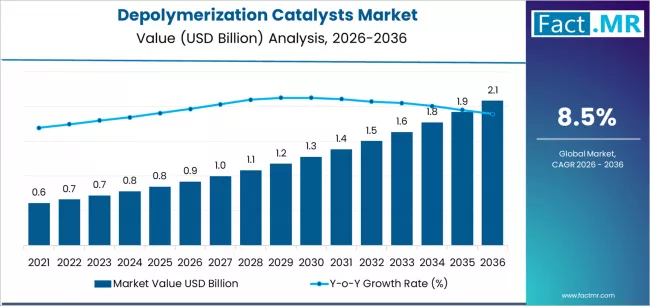
The depolymerization catalysts market is gaining significant attention as industries worldwide focus on sustainable chemical processes and circular economy solutions. Depolymerization catalysts play a crucial role in breaking down polymers into their monomeric or reusable components, enabling the recycling and repurposing of plastic and other polymer-based materials. With growing environmental concerns and regulatory pressure to reduce plastic waste, these catalysts are emerging as essential tools in chemical recycling, waste management, and sustainable manufacturing practices.
Market Overview
Depolymerization catalysts are chemical agents that facilitate the cleavage of polymer chains, allowing polymers such as PET, polyamides, and polycarbonates to be converted back into their basic building blocks. These catalysts are increasingly used in industrial-scale chemical recycling, where mechanical recycling alone may not be sufficient to maintain material quality.
The market is characterized by continuous innovation in catalyst composition, efficiency, and selectivity. Researchers and manufacturers are developing catalysts capable of accelerating reactions under milder conditions, reducing energy consumption, and improving overall process efficiency. Such advancements are helping industries optimize recycling processes while ensuring high-quality recovered materials.
Regional Insights
The demand for depolymerization catalysts is strong across regions with developed chemical and polymer manufacturing sectors. North America and Europe lead in the adoption of chemical recycling technologies due to stringent environmental regulations, sustainability initiatives, and investments in advanced waste management infrastructure. Asia-Pacific is emerging as a key market, driven by rapid industrialization, growing polymer consumption, and government initiatives promoting sustainable production practices.
Urban and industrial regions are witnessing higher demand as large-scale chemical recycling facilities increasingly implement catalyst-based depolymerization processes to convert post-consumer and post-industrial plastics into reusable feedstock.
Key Trends Shaping the Market
Sustainable Chemical Recycling:
The shift from mechanical to chemical recycling has created new opportunities for depolymerization catalysts. Chemical recycling ensures higher material recovery rates and produces monomers that can be reused to manufacture virgin-grade polymers.
Catalyst Innovation:
Manufacturers are focusing on enhancing catalyst efficiency, selectivity, and thermal stability. Catalysts capable of breaking down multiple polymer types simultaneously are gaining popularity, as they enable more versatile and cost-effective recycling processes.
Regulatory and Environmental Pressure:
Governments and regulatory bodies are emphasizing reduction in plastic waste and promoting circular economy principles. Compliance with environmental standards is driving the adoption of depolymerization catalysts in industrial recycling processes.
Collaboration and Strategic Partnerships:
Collaborations between chemical companies, catalyst manufacturers, and research institutions are accelerating innovation. Joint initiatives focus on developing next-generation catalysts and optimizing depolymerization processes for industrial applications.
Applications and End-Use Outlook
Depolymerization catalysts are applied across a wide range of industries, including plastics and polymer manufacturing, automotive, packaging, electronics, and textiles. In the plastics industry, they are primarily used for chemical recycling of PET, polycarbonate, and other thermoplastics, helping reduce reliance on virgin raw materials.
The packaging sector increasingly relies on recycled polymers produced through catalyst-assisted depolymerization to meet sustainability goals and reduce environmental impact. Similarly, automotive and electronics industries utilize chemically recycled polymers for components, ensuring compliance with regulatory requirements while promoting eco-friendly production.
Chemical and industrial research laboratories also employ depolymerization catalysts to study polymer degradation and recycling pathways, contributing to further innovation in sustainable materials.
Distribution Channels
Depolymerization catalysts are distributed through chemical suppliers, industrial distributors, and direct partnerships with end-use manufacturers. Major chemical companies often integrate catalyst solutions into their recycling processes, while smaller-scale operations source catalysts from specialized suppliers.
The rise of e-commerce and B2B marketplaces has also facilitated easier procurement of specialized catalysts, especially for research and pilot-scale applications. Technical support, formulation expertise, and after-sales service play an important role in adoption, as precise application is critical for process efficiency and product quality.
Competitive Landscape
The depolymerization catalysts market is competitive, featuring global chemical manufacturers, specialty catalyst producers, and emerging technology providers. Companies differentiate themselves based on catalyst efficiency, versatility, selectivity, and support for industrial-scale recycling processes.
Investment in research and development, partnerships with recycling companies, and pilot project collaborations are key strategies for market players. Innovation in environmentally friendly and energy-efficient catalyst solutions is becoming a core differentiator, enabling manufacturers to cater to growing sustainability-focused demand.
Conclusion
The depolymerization catalysts market is poised for sustained growth as industries embrace sustainable polymer recycling and circular economy principles. With advancements in catalyst technology, regulatory support for plastic waste reduction, and increasing awareness of environmental impact, depolymerization catalysts are becoming essential in chemical recycling processes. Businesses that prioritize innovation, process efficiency, and environmental sustainability are well-positioned to leverage opportunities in this evolving market. As demand for eco-friendly solutions grows, depolymerization catalysts will continue to play a pivotal role in transforming the polymer recycling industry and supporting sustainable manufacturing practices worldwide.
Browse Full Report – https://www.factmr.com/report/depolymerization-catalysts-market