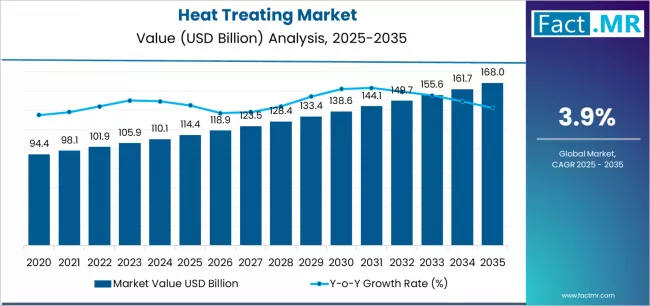
Heat treating is a critical metallurgical process that enhances the physical and mechanical properties of metals to meet the growing demands of modern industrial applications. From automotive components to aerospace parts, heat treating ensures durability, strength, and reliability, making it an essential step in high-quality manufacturing workflows. With industries increasingly prioritizing material performance, the heat treating market is witnessing robust growth, driven by technological advancements, precision treatment protocols, and a rising emphasis on operational excellence.
Market Overview:
The heat treating market encompasses a variety of processes, including case hardening, annealing, tempering, and surface hardening, each designed to optimize specific material properties. Steel remains the dominant material segment due to its widespread industrial use, with processes tailored to enhance hardness, wear resistance, and load-bearing capabilities. Modern heat treating services leverage advanced furnace technologies and automated systems to achieve precise temperature control and consistent metallurgical outcomes, ensuring adherence to stringent quality standards across industries.
The growing adoption of precision heat treating is largely influenced by manufacturers’ need to optimize product longevity and performance while reducing failure rates. Furthermore, the integration of Industry 4.0 technologies, such as real-time process monitoring and automation, has significantly improved process accuracy, making heat treating not only more efficient but also more reliable for high-value applications.
Regional Insights:
North America and Europe have been at the forefront of heat treating adoption, largely driven by mature industrial infrastructure, strict quality standards, and a focus on advanced manufacturing protocols. Asia-Pacific is emerging as a key growth region, with countries like India and China investing heavily in automotive production, aerospace components, and industrial metallurgical capabilities. These regions are seeing rapid expansion in heat treating facilities and advanced furnace technology deployment, catering to both local manufacturing requirements and global export demands.
Key Trends & Forecast:
- Technological Advancements:The market is seeing innovations in furnace systems, including electrically heated furnaces and automated temperature control solutions, which enhance process precision and repeatability.
- Process Optimization:Case hardening, annealing, and tempering are being increasingly optimized to balance surface enhancement with core material properties, catering to specific industrial needs.
- Automation & Industry 4.0 Integration:Real-time monitoring and automated control systems enable manufacturers to maintain strict quality standards while improving efficiency.
- Focus on Material Performance:There is rising emphasis on processes that improve wear resistance, strength, and durability, particularly in high-performance applications like automotive and aerospace manufacturing.
- Sustainability & Energy Efficiency:Manufacturers are exploring eco-friendly heat treating solutions that reduce energy consumption while maintaining treatment effectiveness.
Applications & End-Use Outlook:
The automotive sector represents the largest application segment, requiring high-precision heat treating for engine components, gears, and structural parts. Aerospace manufacturing also relies heavily on heat treatment for critical components to ensure structural integrity under extreme conditions. Other industrial applications include tooling, machinery, and heavy equipment production, where enhanced material properties directly influence product performance and operational longevity.
Industrial operators increasingly recognize heat treating as a strategic process rather than a standard production step. By incorporating advanced treatment protocols, manufacturers can achieve superior material performance, reduce failure rates, and comply with stringent safety and quality regulations. The rising demand for customized metallurgical solutions across industries is creating opportunities for service providers to offer tailored heat treating services that meet specific operational requirements.
Conclusion:
The heat treating market is poised for continued growth as industries prioritize high-quality material performance, reliability, and precision manufacturing. With advancements in furnace technology, automation, and process monitoring, heat treating is becoming a cornerstone of modern manufacturing strategies, enabling manufacturers to meet evolving industrial standards and customer expectations. Companies investing in advanced heat treating capabilities are well-positioned to capitalize on market growth, drive operational efficiency, and deliver superior products across automotive, aerospace, and industrial applications.
As global industrial activity expands, the heat treating market will continue to evolve, emphasizing innovation, precision, and sustainability. Organizations leveraging comprehensive heat treating services can achieve enhanced material properties, improved product performance, and long-term competitive advantages, solidifying the role of heat treating as a critical enabler in modern manufacturing ecosystems.
Browse Full Report – https://www.factmr.com/report/heat-treating-market