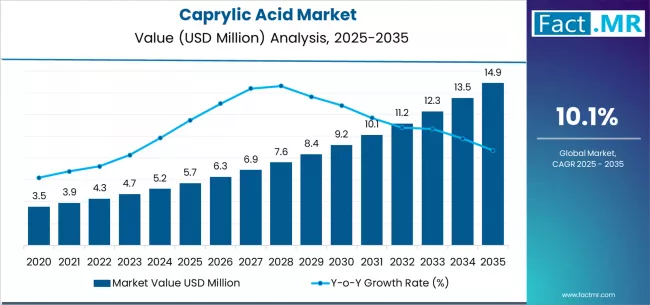
The global caprylic acid market is poised for significant growth over the coming years, driven by increasing applications in pharmaceuticals, functional foods, dietary supplements, and personal care products. The market is projected to reach USD 450 million by 2030, registering a CAGR of 5.6% from 2025 to 2030.
Caprylic acid, also known as octanoic acid, is a medium-chain fatty acid widely valued for its antimicrobial, anti-inflammatory, and preservative properties. The compound is increasingly utilized in the production of MCT oils, infant formulas, cosmetic formulations, and nutraceuticals, reflecting its growing versatility across industries.
Rising Pharmaceutical and Nutraceutical Applications Driving Market Expansion
The pharmaceutical segment is currently the largest end-user of caprylic acid, accounting for approximately 38% of global consumption in 2024. Its antimicrobial and antifungal properties have made it a critical ingredient in the development of antibiotics, antifungal treatments, and dietary supplements.
In the nutraceutical sector, the rising adoption of keto-friendly diets and MCT-based products is fueling demand for caprylic acid. The nutraceutical segment is expected to witness a CAGR of 6.2% from 2025 to 2030, the fastest among all applications. With consumers increasingly seeking functional foods that support gut health and energy metabolism, caprylic acid-enriched products are gaining traction in North America and Europe.
Food and Beverage Sector Emerges as a Key Growth Driver
Caprylic acid’s use as a food additive and preservative is expanding rapidly, particularly in dairy products, bakery items, and plant-based beverages. The food and beverage segment held 29% of the market share in 2024, driven by growing awareness of clean-label ingredients and natural preservatives.
In Asia-Pacific, rising urbanization, increasing disposable incomes, and shifting dietary patterns are expected to drive substantial demand. Countries like India, China, and Japan are experiencing a surge in functional food consumption, positioning the region as a high-growth market.
Personal Care and Cosmetics Sector Boosts Demand
The personal care industry represents another key avenue for caprylic acid utilization. Its emollient and antimicrobial properties make it ideal for skincare creams, haircare products, and deodorants. The personal care segment is expected to grow at a CAGR of 5.9%, fueled by rising consumer preference for natural and bio-based ingredients.
Regional Market Insights
-
North America dominates the global caprylic acid market, contributing approximately 40% of revenue in 2024, supported by well-established pharmaceutical and nutraceutical industries.
-
Europe follows closely, driven by the food and personal care sectors, with Germany, France, and the UK being key contributors.
-
Asia-Pacific is projected to record the fastest CAGR of 6.4% over the forecast period, with China and India leading market expansion due to rapid industrialization and increased health-conscious consumer behavior.
-
Latin America and Middle East & Africa together account for nearly 15% of the global market, with demand primarily fueled by pharmaceutical applications and dietary supplements.
Competitive Landscape and Key Market Players
The global caprylic acid market is moderately consolidated, with leading players such as Stepan Company, Wilmar International, BASF SE, Kao Corporation, and Emery Oleochemicals actively investing in capacity expansion and product innovation. Companies are increasingly focusing on sustainable production methods, leveraging coconut oil and palm kernel oil as primary feedstocks to meet rising demand while maintaining eco-friendly operations.
Emerging Trends and Market Opportunities
-
Sustainable and Bio-Based Production: With growing consumer emphasis on sustainability, manufacturers are adopting plant-derived feedstocks and green chemistry processes to produce caprylic acid.
-
Functional Foods and MCT Oil Expansion: The keto and low-carb diet trends are driving the incorporation of caprylic acid in functional foods, energy bars, and nutritional beverages.
-
Personal Care Innovations: Rising demand for natural cosmetic formulations presents opportunities for caprylic acid-infused skincare and haircare products.
-
Emerging Markets Growth: Increased healthcare awareness in Asia-Pacific and Latin America offers new avenues for market penetration and expansion.
Browse Full Report : https://www.factmr.com/report/caprylic-acid-market
Market Challenges
Despite strong growth prospects, the market faces challenges including volatile raw material prices, primarily due to dependency on coconut and palm kernel oils. Additionally, regulatory frameworks in certain regions regarding food additives and pharmaceutical ingredients may impact market dynamics.
Conclusion
The caprylic acid market is on a trajectory of steady growth, driven by diversified applications across pharmaceuticals, nutraceuticals, food & beverages, and personal care industries. With an emphasis on sustainability, product innovation, and expansion into emerging markets, industry stakeholders are well-positioned to capitalize on evolving consumer preferences and global health trends.