Global Immersion Cooling Cabinets Market Poised to Surpass $497 Million in 2026 Amid Explosive AI Infrastructure Demand
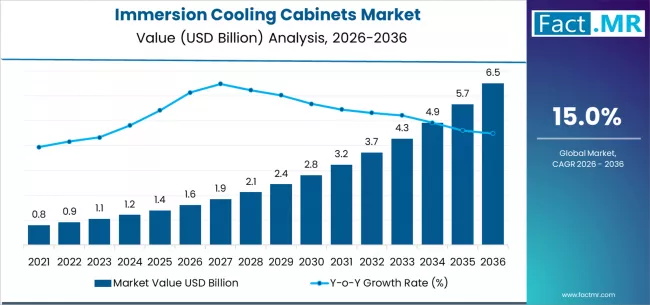
The global immersion cooling cabinets market is undergoing a fundamental shift as data center operators move beyond traditional air-cooling limitations. Driven by the unprecedented thermal demands of Artificial Intelligence (AI), machine learning, and high-performance computing (HPC), the market for specialized immersion cabinets is projected to reach $497.20 million in 2026, growing at a steady compound annual growth rate (CAGR) as enterprises prioritize energy density and sustainability.
The Infrastructure Pivot: Why Immersion, Why Now?
As chip power densities exceed the physical capabilities of conventional air-cooling systems—with some AI-focused GPUs now surpassing 350W to 700W per chip—the industry is turning to liquid immersion. This method involves submerging IT hardware in non-conductive dielectric fluids, which are up to 1,200 times more efficient at heat transfer than air.
By eliminating the need for server fans and massive precision air conditioning (CRAC) units, immersion cooling cabinets allow for:
-
Drastic Energy Reduction: Cutting cooling-related power consumption by up to 95%.
-
Unmatched Density: Enabling rack densities to climb from a standard 15–20 kW to over 100 kW per rack.
-
Enhanced Reliability: Protecting sensitive components from dust, vibrations, and thermal hotspots that shorten hardware lifespans.
Market Segmentation and Key Drivers
The 2026 market landscape is defined by a clear transition from experimental hobbyist setups to industrial-grade, standardized cabinet deployments.
1. Dominance of Single-Phase Systems
Single-phase immersion continues to lead the market with over 70% share. Its popularity stems from operational simplicity, lower upfront costs, and ease of maintenance compared to two-phase (boiling) systems. However, two-phase architectures are gaining traction in specialized HPC environments due to their superior heat rejection capabilities.
2. The AI and Edge Computing Catalyst
Artificial Intelligence is the primary engine of growth. As hyperscalers like Google and Meta expand their GPU clusters, the physical footprint of data centers has become a premium. Immersion cabinets allow these operators to shrink their infrastructure, packing more compute power into smaller, more efficient modules—a trend also vital for Edge Computing, where space and noise restrictions are paramount.
3. Sustainability and Regulatory Pressure
With global data center electricity consumption expected to hit 1,000 TWh by 2026, regulators in North America and Europe are tightening Power Usage Effectiveness (PUE) requirements. Immersion cooling offers a direct path to achieving a PUE of 1.03 or lower, satisfying both ESG mandates and bottom-line operational efficiency.
Regional Insights and Competitive Landscape
-
North America: Remains the largest market (approx. 40% share), fueled by massive investments from cloud service providers and a robust ecosystem of cooling innovators.
-
Asia-Pacific: Forecasted as the fastest-growing region, driven by rapid digitalization in India and China and land constraints in urban hubs like Singapore.
-
Key Industry Players: Market leaders include Vertiv, Schneider Electric, Rittal GmbH, GRC (Green Revolution Cooling), Submer, and Asperitas. These companies are increasingly forming strategic alliances with chipmakers like NVIDIA and Intel to certify immersion-ready hardware.
The shift to immersion cooling is no longer a matter of ‘if’ but ‘when’ for any facility handling modern AI workloads, says a leading industry analyst. The capital expenditure (CAPEX) hurdles are being rapidly outweighed by the massive operational savings and the sheer necessity of managing next-generation thermal loads.
Browse Full Report : https://www.factmr.com/report/immersion-cooling-cabinets-market
About the Industry
The immersion cooling cabinet industry provides the specialized enclosures and fluid management systems required to support liquid-submerged IT infrastructure. As the backbone of the Green Data Center movement, these solutions are essential for the future of sustainable, high-density computing.