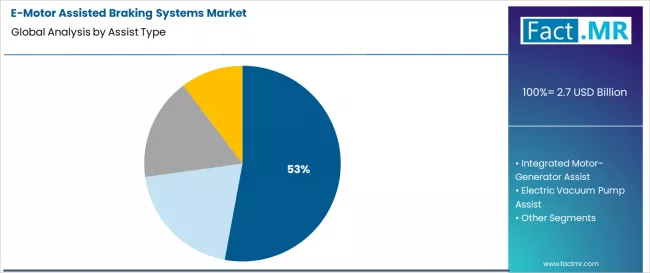
The global E-Motor Assisted Braking Systems Market is poised for significant expansion through 2036 as electrification of passenger cars, commercial vehicles, and two-wheelers accelerates. E-motor assisted braking systems — which integrate electric drive motors with regenerative braking and traditional friction brakes — enhance energy recovery, improve braking efficiency, and contribute to overall vehicle safety and performance. As electric and hybrid vehicles become mainstream in markets worldwide, the demand for advanced braking technologies that optimize energy use, reduce wear, and support driver assistance systems is rising rapidly.
These systems complement electric powertrains by harnessing the drive motor during deceleration to recover kinetic energy, reduce reliance on friction brakes, and feed energy back into the battery. This results in extended driving range, improved brake longevity, and smoother performance. In addition, e-motor assisted braking is an enabler for advanced driver-assistance systems (ADAS) and autonomous driving features, further strengthening its adoption across vehicle segments.
Market Outlook (2026–2036)
-
Market Value in 2026: Estimated at USD 9.3 Billion
-
Market Value in 2036: Projected to Exceed USD 24.6 Billion
-
Forecast CAGR (2026–2036): Approximately 10.5%
-
Leading Technology: Integrated Regenerative and Friction Braking Systems
-
Primary Vehicle Segments: Electric Passenger Cars, Hybrid Vehicles, Commercial EVs
-
Key Growth Drivers: EV adoption, emissions standards, energy efficiency initiatives
The market’s projected growth reflects the rapid uptake of electrified vehicles, progress in brake-by-wire and regenerative technologies, and increasing regulatory focus on vehicle efficiency and safety.
To access the complete data tables and in-depth insights, request a Discount On The Report here: https://www.factmr.com/connectus/sample?flag=S&rep_id=13508
Market Overview
E-motor assisted braking systems combine electric motor functionality with traditional braking architectures to capture braking energy and support deceleration. During braking or coasting, the electric motor operates as a generator, converting kinetic energy into electrical charge that is stored in the vehicle’s battery. This recovered energy can then be reused for propulsion, accessory loads, or climate control, improving overall efficiency and reducing net energy consumption.
In addition to regenerative braking, these systems work in tandem with friction brakes to ensure consistent stopping power, braking stability, and compliance with safety standards. Advanced electronic control units (ECUs) coordinate brake blending — the seamless transfer between regenerative and friction braking — to optimize performance and driver feel.
E-motor assisted braking systems are increasingly integrated with ADAS functions such as collision mitigation, adaptive cruise control, and automated emergency braking, making them key enablers of next-generation vehicle safety and autonomy.
Key Market Drivers
1. Electrification of Transportation
Rapid growth in electric vehicle registrations — including battery electric vehicles (BEVs), plug-in hybrids (PHEVs), and hybrid electric vehicles (HEVs) — is a primary driver of e-motor assisted braking system adoption. Regenerative braking is a core component of electric powertrains, enhancing range and vehicle efficiency.
2. Emissions and Fuel Economy Standards
Stringent emissions regulations and fuel economy targets worldwide are compelling automakers to adopt technologies that reduce energy waste and enhance efficiency. E-motor assisted braking contributes to these goals by recovering energy that would otherwise be lost as heat.
3. Integration with Advanced Safety Features
E-motor assisted braking systems work synergistically with ADAS technologies, enabling smoother brake control, improved responsiveness in emergency scenarios, and coordination with automated driving functions. This convergence is accelerating adoption across new vehicle platforms.
4. Consumer Preference for Efficient and High-Performance Vehicles
As consumers prioritize driving range, performance, and sustainable mobility, features that improve efficiency and ride quality — such as regenerative braking — are becoming differentiators in vehicle purchase decisions.
Market Segmentation Insights
By System Architecture:
-
Integrated Regenerative & Friction Braking Systems: Seamlessly blend electric and mechanical braking for optimal performance.
-
Brake-By-Wire E-Motor Systems: Provide electronic control of braking without mechanical linkage, supporting automation.
-
Modular Regenerative Braking Units: Retrofittable or modular solutions for specific vehicle platforms.
By Vehicle Type:
-
Electric Passenger Cars: Primary segment driven by BEV growth.
-
Hybrid and Plug-In Hybrid Vehicles: High adoption in markets with transitional electrification.
-
Commercial Electric Vehicles: Delivery vans, buses, and trucks benefiting from energy recovery.
-
Two-Wheel Electric Vehicles: Growing in urban mobility segments.
By Component:
-
Electric Motor/Generator Units
-
Regenerative Brake Controllers and ECUs
-
Brake Blending Modules
-
Sensors and Feedback Systems
By End User:
-
OEM Vehicle Manufacturers
-
Tier-1 Automotive Suppliers
-
Retrofit and Aftermarket Solutions
-
Fleet and Mobility Service Operators
Regional Demand Dynamics
North America is expected to hold a significant share of the market due to strong electric vehicle adoption, advanced automotive technology ecosystems, and supportive policy frameworks encouraging zero-emission transport.
Europe remains a major regional market propelled by aggressive emissions reduction targets, growing electrified fleet mandates, and high consumer demand for advanced vehicle technologies. Strong regulatory frameworks and incentives accelerate adoption of regenerative braking capabilities.
Asia Pacific is projected to exhibit the fastest growth, driven by expanding electric vehicle markets in China, Japan, South Korea, and Southeast Asia. Government incentives, large scale vehicle production, and rising consumer demand for electric mobility support significant market opportunities.
Emerging increases in Latin America and Middle East & Africa reflect growing interest in electrified mobility, infrastructure investments, and adoption of efficient braking technologies as part of broader vehicle electrification strategies.
Competitive Landscape
The e-motor assisted braking systems market is moderately competitive, featuring global automotive component manufacturers, electric powertrain specialists, and brake system integrators. Leading companies focus on enhancing system integration, improving regenerative efficiency, and expanding product portfolios to support diverse vehicle platforms.
Key strategies include collaboration with OEMs on next-generation EV architectures, investments in brake-by-wire technologies, and development of advanced control algorithms that improve braking performance and driver experience. Partnerships with sensor and software developers further strengthen offerings and facilitate integration with broader vehicle electronic systems.
Future Outlook
The E-Motor Assisted Braking Systems Market is expected to maintain strong momentum through 2036 as electrification broadens across transportation segments and demand for energy-efficient, performance-enhancing braking solutions rises. Continued advancements in regenerative technologies, brake-by-wire control systems, and integrated safety features will further boost adoption.
As automakers strive to enhance range, efficiency, and safety in electric and hybrid vehicles, e-motor assisted braking systems will play an increasingly critical role in shaping the future of sustainable mobility and intelligent vehicle systems around the world.
Browse Full Report: https://www.factmr.com/report/e-motor-assisted-braking-systems-market