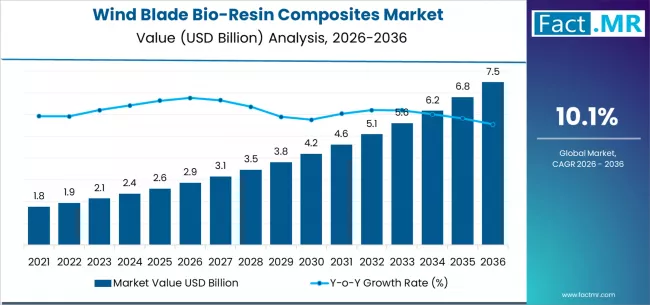
The wind blade bio-resin composites market is evolving as a key driver of sustainability within the renewable energy sector. These composites, which combine bio-based resins with reinforcing fibers, are used in the construction of wind turbine blades, providing a low-carbon alternative to traditional petrochemical-based materials. With the wind energy industry striving to decarbonize not only operations but also the manufacturing lifecycle of turbines, bio-resin composites are emerging as a crucial technology for reducing the environmental footprint of wind energy infrastructure.
Market Overview
Wind blade bio-resin composites integrate renewable resins—such as bio-epoxy, bio-polyester, and bio-vinyl ester—with reinforcement fibers like glass, carbon, or natural fibers. Bio-epoxy resins dominate the market due to their mechanical performance, adhesion, and fatigue resistance, closely replicating the properties of conventional epoxies while significantly lowering carbon emissions. Glass fiber remains the most widely used reinforcement, offering a balance between cost, performance, and scalability, particularly for onshore turbine blades.
The market is primarily driven by the global push toward net-zero emissions. By replacing conventional resins with bio-based alternatives, turbine manufacturers can reduce embodied carbon, enhance recyclability, and meet stringent environmental regulations. Onshore wind turbine blades account for the majority of the market demand due to high production volumes and slightly less severe environmental operating conditions compared to offshore installations.
Technological Insights
Innovations in bio-resin formulation focus on improving toughness, fatigue resistance, and processability. High-performance bio-epoxy resins are developed from renewable feedstocks such as plant oils and waste glycerin, offering sustainable alternatives without compromising structural integrity. R&D also targets enhancing resin compatibility with recycled fibers and developing bio-based hardeners and catalysts to maximize renewable content.
Advanced processing techniques such as vacuum infusion, resin transfer molding, and digital twin-assisted curing optimization are enabling higher quality, more consistent composites. Additionally, thermoplastic bio-composites are emerging as a long-term solution for fully recyclable wind blades, supporting the circular economy in renewable energy.
Regional Insights
The USA, China, Germany, Denmark, and Spain are leading growth regions. The USA benefits from policy incentives and offshore wind targets that encourage domestic production of sustainable blades. China, as the largest global manufacturer, is pushing bio-resin adoption to meet its carbon neutrality goals. Germany and Denmark focus on high-performance offshore wind solutions, while Spain is scaling domestic production with increasing adoption of bio-based materials.
Market Drivers
Key growth drivers include the wind industry’s commitment to net-zero carbon emissions, supportive government policies, and green procurement criteria. Reducing the embodied carbon of turbine blades aligns with corporate sustainability goals and helps turbine OEMs differentiate in a competitive market. Additionally, the growing emphasis on circularity and end-of-life blade recycling further fuels the adoption of bio-resin composites.
Market Restraints
Despite growing demand, the market faces challenges. Bio-resins currently carry a premium cost relative to fossil-based alternatives, impacting the levelized cost of energy (LCOE). Scaling feedstock supply without competing with food production, ensuring consistent quality, and validating long-term durability under harsh environmental conditions require significant investment and testing. Offshore turbines, in particular, pose stringent durability requirements that bio-resin formulations must meet over 20+ year lifespans.
Emerging Trends
Trends shaping the market include hybrid bio-composites that integrate recycled carbon and glass fibers, enhancing circularity. AI and digital twin technologies are optimizing resin curing and mechanical performance. Companies are also developing thermoplastic bio-composites for weldable, fully recyclable blades. Increasing collaboration between turbine OEMs, resin manufacturers, and research institutions accelerates innovation and qualification of sustainable materials for commercial deployment.
Applications & End-Use Outlook
Onshore wind turbine blades represent the immediate, high-volume application, while offshore installations are gradually adopting bio-resin composites as formulations advance. Small and micro wind systems also offer niche opportunities. As regulatory and consumer pressure for greener energy intensifies, bio-resin composites are expected to gain broader acceptance across all wind power segments, supporting both large-scale utility projects and distributed renewable energy solutions.
Competitive Landscape
Key market players include Nexa3D (Bio-Resin Solutions), Ashland Inc., Hexion Inc., Evonik Industries AG, and Solvay SA. These companies are focusing on product innovation, sustainable supply chain development, and strategic partnerships to expand their presence. R&D efforts are concentrated on enhancing resin performance, increasing renewable content, and ensuring compatibility with high-volume manufacturing processes.
Conclusion
The wind blade bio-resin composites market is critical to the sustainable evolution of the wind energy sector. By combining renewable resins with advanced reinforcement fibers, the market supports low-carbon, durable, and increasingly recyclable turbine blades. Technological innovation, government support, and corporate sustainability commitments are driving adoption, positioning bio-resin composites as a cornerstone of the industry’s net-zero ambitions. As the market matures, these materials will play a vital role in reducing the environmental footprint of wind power and promoting a circular economy for renewable energy infrastructure.
Browse Full Report – https://www.factmr.com/report/wind-blade-bio-resin-composites-market