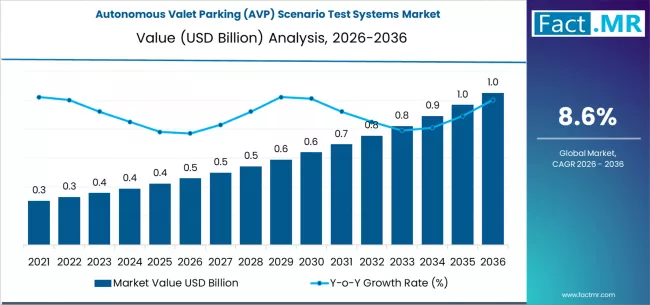
The rapid evolution of autonomous driving technologies is reshaping how vehicles interact with infrastructure and urban environments. One of the most promising applications of this transformation is Autonomous Valet Parking (AVP), which allows vehicles to park themselves in designated facilities without driver intervention. To ensure safety, reliability, and regulatory compliance, extensive testing under diverse and complex conditions is essential. This has led to growing attention toward the autonomous valet parking scenario test systems market, which supports the validation and development of AVP solutions before real-world deployment.
Market Overview
Autonomous valet parking scenario test systems are specialized platforms designed to simulate, analyze, and validate a wide range of parking scenarios. These systems help automotive manufacturers, technology developers, and mobility providers assess vehicle behavior in controlled virtual or physical environments. Scenario testing enables the identification of potential risks, software limitations, and system responses under varied operational conditions.
The market is closely aligned with advancements in autonomous driving software, sensor fusion technologies, and intelligent parking infrastructure. As AVP systems rely on precise coordination between vehicles, sensors, and digital maps, scenario test systems play a critical role in ensuring seamless integration and dependable performance.
Key Drivers Influencing Market Growth
One of the primary drivers of the autonomous valet parking scenario test systems market is the increasing focus on vehicle safety and regulatory compliance. Autonomous parking solutions must meet strict safety requirements before being approved for commercial use. Scenario test systems enable comprehensive testing across multiple edge cases, supporting safer and more predictable AVP deployments.
Another important growth driver is the expansion of smart city initiatives and intelligent transportation systems. As urban areas invest in connected infrastructure and automated mobility solutions, AVP is emerging as a practical use case. This development fuels demand for advanced testing platforms that can replicate real-world parking environments and infrastructure interactions.
The rising involvement of automotive original equipment manufacturers and technology companies in autonomous vehicle development also contributes to market growth. These stakeholders require reliable testing tools to accelerate development cycles while minimizing real-world testing risks and costs.
Technology Trends and Product Innovation
Technological innovation is central to the evolution of AVP scenario test systems. Modern platforms increasingly incorporate high-fidelity simulation environments that replicate complex parking layouts, pedestrian movement, and dynamic obstacles. These simulations allow developers to test autonomous parking functions under diverse conditions without physical limitations.
Another key trend is the integration of artificial intelligence and machine learning into testing frameworks. AI-driven scenario generation helps identify rare or critical situations that may not be encountered frequently in real-world testing. This approach enhances system robustness and supports continuous improvement.
The use of digital twins and virtual testing environments is also gaining traction. Digital replicas of parking facilities enable precise scenario modeling and repeatable testing, improving validation accuracy and reducing development timelines.
Regional Insights
The market shows strong activity in regions with advanced automotive and technology ecosystems. North America is a prominent market due to ongoing investments in autonomous driving research and the presence of major automotive and technology companies. Regulatory engagement and pilot projects further support market development.
Europe represents another key region, driven by a strong focus on vehicle safety standards and sustainable mobility solutions. European automakers and technology providers are actively investing in autonomous parking technologies, increasing demand for scenario test systems.
The Asia-Pacific region is emerging as a dynamic market, supported by rapid urbanization, growing vehicle ownership, and government-backed smart mobility initiatives. Increasing collaboration between automakers and technology firms in the region is expected to boost adoption of AVP testing platforms.
Key Trends and Market Outlook
Several trends are shaping the future of the autonomous valet parking scenario test systems market. One notable trend is the shift toward standardized testing frameworks that support interoperability and regulatory acceptance. Scenario-based testing is increasingly viewed as a foundational component of autonomous vehicle validation.
Another trend is the growing emphasis on virtual validation to complement physical testing. As AVP systems become more complex, virtual scenario testing allows developers to scale testing efforts efficiently and safely.
The market outlook is also influenced by rising collaboration across the automotive value chain. Partnerships between automakers, software providers, and infrastructure developers are accelerating the development and adoption of advanced testing solutions.
Applications and End-Use Outlook
Autonomous valet parking scenario test systems are widely used by automotive manufacturers to validate parking automation functions during vehicle development. These systems help ensure consistent performance across different vehicle models and parking environments.
Technology companies developing autonomous driving software and sensor solutions also represent a key end-user segment. Scenario testing supports algorithm refinement and system integration in complex parking scenarios.
Infrastructure developers and parking facility operators are increasingly exploring AVP-ready environments, using scenario test systems to evaluate infrastructure compatibility and operational readiness.
Competitive Landscape
The competitive landscape of the autonomous valet parking scenario test systems market is characterized by rapid innovation and strategic collaboration. Market participants focus on delivering flexible, scalable, and high-accuracy testing platforms that meet evolving AVP requirements.
Companies are investing in research and development to enhance simulation realism, expand scenario libraries, and integrate advanced analytics. Customer support, customization, and system interoperability are key factors influencing competitive positioning.
Conclusion
The autonomous valet parking scenario test systems market plays a vital role in enabling the safe and reliable deployment of autonomous parking technologies. By supporting comprehensive scenario validation and system optimization, these platforms help bridge the gap between development and real-world implementation.
As autonomous mobility continues to evolve and smart parking solutions gain traction, the importance of robust AVP testing systems will continue to grow. Access to in-depth market intelligence, such as insights from Fact.MR, can help stakeholders understand emerging trends, evaluate opportunities, and develop effective strategies in this rapidly advancing market.
Browse Full Report – https://www.factmr.com/report/autonomous-valet-parking-avp-scenario-test-systems-market